Buying guides
HRV training apps that actually work in 2026 (and the hardware they need)
Honest 2026 guide to HRV training apps and the chest straps, rings, and sensors that make them work. Real protocols, real evidence, Woo-Woo Meter ratings.
“Heart rate variability is one of the few wearable metrics with both a deep physiological basis and a long literature linking it to real-world outcomes.”
Your Oura or WHOOP has been quietly telling you your HRV for months. You've watched the number bob up and down. You've crossed-referenced it with sleep, alcohol, that one bad week at work. And now you've hit the wall every quantified-self reader hits eventually: the number isn't moving. Or it's moving for reasons you can't control. You've read enough Huberman and Attia to know HRV is supposed to be trainable. You're searching for an app.
Here's the honest map: the app is downstream of the sensor. Most "HRV training app" listicles bury this. Elite HRV doesn't work without a chest strap. HRV4Training needs a Polar H10 or a finger camera reading that's noisier than people pretend. HeartMath needs HeartMath's own clip. The app you pick is decided, mostly, by the hardware you already own — and if you own the wrong hardware, no app will get you a real training loop.
What "HRV training" actually means
"Heart rate variability is one of the few accessible biomarkers that reflects real-time autonomic balance."
There are two things people mean by "HRV training" and they aren't the same activity.
Passive tracking is what an Oura ring or WHOOP strap does: it samples your HRV overnight, gives you a morning readiness score, and lets you watch a trend line across weeks. Useful as a lagging biomarker of recovery. Not training. The number reflects what your nervous system did while you slept in response to last night's stress, last week's training load, and how many drinks you had on Friday. You can influence it, but indirectly.
Active training is closed-loop biofeedback: a sensor measures your HRV in real time, you breathe at a paced rhythm (roughly 5.5–6 breaths per minute, depending on your resonant frequency), and you watch your HRV trace push into a coherent waveform on the screen. After 10 minutes, you measure again and the post-session HRV is usually noticeably higher. Over weeks, the baseline shifts. This is the activity with the evidence base.
Most people searching for an HRV training app want the second and own hardware optimized for the first. The mismatch is the whole problem.
The sensor decides whether the app works
HRV is a small-signal measurement. The metric most apps use is RMSSD — the root-mean-square of successive differences between heartbeats — and it asks the sensor to time R-wave to R-wave with millisecond accuracy. Two sensor categories handle this differently.
Chest-strap ECG (the Polar H10, the Garmin HRM Pro Plus) reads the heart's electrical signal directly and times beats with near-clinical accuracy. This is the gold standard for HRV training. A $90 strap outperforms a $400 wrist wearable for in-session HRV.
Wrist/finger PPG (Oura, WHOOP, Apple Watch, most other rings and watches) reads HRV optically — pulsing LEDs measure how blood volume changes under the skin. Good enough for overnight trend lines after the sensor sits still for hours against your skin. Noisy for the second-by-second feedback an active training session needs. The Oura research library is honest about this: their HRV is validated against ECG for overnight averages, not real-time session work.
This is why every serious HRV training app — Elite HRV, HRV4Training, HeartMath — either requires a chest strap or sells its own clip-on sensor. The app authors know the optical signal isn't tight enough.
The apps worth installing
Elite HRV / HRV4Training — the two long-running enthusiast apps. Both pair with a chest strap (Polar H10 is the universal option), both give you morning readiness measurements and paced-breathing training sessions. HRV4Training has a finger-camera mode that works in a pinch and is noticeably less reliable. Elite HRV's UI is friendlier; HRV4Training is more research-oriented. Either is a credible buy paired with a real ECG strap.
HeartMath Inner Balance — the HeartMath Inner Balance sensor plus its app is the longest-running consumer biofeedback product in this category. Closed-loop coherence training: you breathe, you watch the trace push into the green zone, and over weeks you learn to drop into resonance on demand. Older UX than the enthusiast apps, deeper research base, locked to HeartMath's proprietary sensor.
Oura / WHOOP / Apple Health native apps — passive dashboards. Honest about what they are. Useful for trend tracking and recovery scoring. Not training apps. Calling a morning readiness score "HRV training" is the most common misframe in this whole conversation.
Welltory and camera-based PPG apps — your phone's flashlight against your fingertip. The signal is real but noisy enough that day-to-day numbers swing for non-physiological reasons. Fine for curiosity. Don't make training decisions on it.
Best hardware-app pairings
Best overall (cheap, accurate): Polar H10 + Elite HRV or HRV4Training. Around $90 for the strap plus a free or low-cost app subscription. The strap is reference-grade for R-R intervals, talks to every serious HRV app, and doubles as a heart-rate monitor for training. This is the answer for most readers who actually want to train HRV.
Best biofeedback (coherence training): HeartMath Inner Balance sensor + Inner Balance app. Around $180. The most-validated closed-loop biofeedback hardware in consumer wellness. The app feels like an iPad app from 2014, but the mechanism works and the HeartMath research library has more papers behind it than any other consumer biofeedback brand. Our full HeartMath Inner Balance honest review covers the trade-offs.
Best premium (training + recovery overlap): Garmin HRM Pro Plus + Garmin Connect / HRV4Training. Around $130. ECG-grade HRV plus running dynamics and dual-band ANT+/Bluetooth so it talks to a watch and a phone at the same time. Overkill if you only want HRV training; ideal if you already train with a Garmin watch.
Best passive-only: Oura Ring Gen 4. Around $349. Excellent overnight HRV trend data; not a training device. If you've already bought one, keep it for trends and add a chest strap when you decide to train. Our Oura vs. Apple Watch for sleep and best smart rings 2026 posts cover the ring side of this in more depth.
Best for athletes already on strap-based readiness: WHOOP 4.0. Around $30/month on subscription. Passive HRV done well, subscription-locked. Same caveat: a dashboard, not a training loop.
What about vagus nerve stimulators?
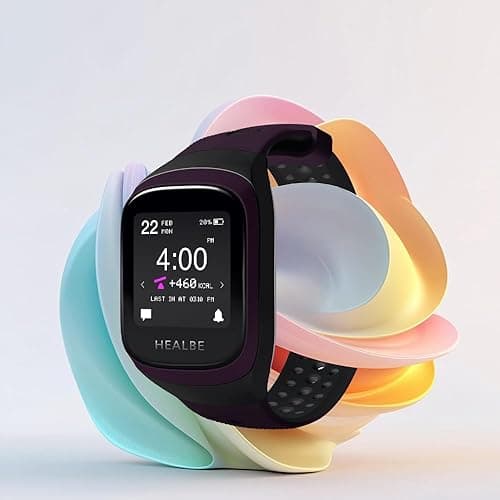
Pulsetto and Apollo Neuro both market HRV improvement and both show up in HRV-training searches. The honest read:
The tVNS literature — captured well in Yap et al.'s 2020 review — shows real, modest effects on HRV markers in small trials. The mechanism (stimulating the auricular branch of the vagus nerve) is plausible. The trials are small. FDA clearance for consumer tVNS devices is wellness-only, not medical. Apollo Neuro is a different mechanism — patterned vibration through a wrist or ankle band — and the evidence base is thinner and more company-adjacent.
Either can complement breathing training. Neither replaces it. If you're choosing between a stimulator and a chest strap, get the strap first; resonant-frequency breathing has more evidence than any consumer stimulator on the market. Our Pulsetto honest review and best vagus nerve devices 2026 cover the stimulator side. Biofeedback for anxiety: which devices actually work covers where they sit relative to true biofeedback.
A 4-week protocol that actually moves the number
Resonant-frequency paced breathing is the practice with the evidence. The protocol most enthusiast apps converge on:
- Find your resonant frequency. Most adults sit between 5.0 and 6.5 breaths per minute. Elite HRV and HRV4Training have built-in tests; if you don't want to bother, default to 5.5 breaths/min (about 5.5 seconds in, 5.5 seconds out).
- Twice daily, 10 minutes per session. Once in the morning before coffee, once in the evening before screens. Measure HRV for 1 minute before and 1 minute after each session.
- Track lnRMSSD weekly, not daily. Day-to-day HRV swings on sleep, alcohol, and stress more than it swings on training. Weekly averages are what you watch.
- Expect a 5–15% increase in lnRMSSD over four weeks if you respond. Some people respond faster, some don't respond meaningfully until week 8. Adherence beats intensity.
- Keep the strap on for the session. Don't try to train with a PPG ring or watch. The signal isn't tight enough for in-session feedback.
The first two weeks are the hardest because the visible change is small. The durable benefit — the learned skill of dropping into paced breathing without a device — outlives the hardware.
Common mistakes
- Comparing your number to strangers. HRV is wildly personal. A 25-year-old endurance athlete's lnRMSSD might be 120; a healthy 50-year-old's might be 30. Both are fine. The only number that matters is your own trend.
- Chasing readiness scores instead of trends. Your morning score is a noisy single measurement. Watch the weekly average and the response to known stressors (alcohol, hard training, bad sleep).
- Mixing PPG-night and ECG-morning data. Different sensors produce different absolute values. Pick one tool for trend tracking and stick with it.
- Quitting after a week. Most non-responders are actually under-doseed responders. Four weeks of twice-daily breathing is the minimum honest test.
- Stacking devices. Five wearables don't train HRV. One chest strap and one app do.
Our honest pick
Woo-Woo Meter: 2/5. HRV itself and resonant-frequency paced breathing have solid evidence behind them — the foundational Shaffer & Ginsberg 2017 overview in Frontiers in Public Health is still the standard reference. The "biofeedback coherence" framing layers a more debatable interpretive scheme on top, but the underlying practice is sound. Apps without an accurate sensor are graph theater and earn a 4/5 on their own. For the rubric, see what is the Woo-Woo Meter.
If you're new and serious, buy a Polar H10 and pair it with Elite HRV or HRV4Training. Ten minutes of paced breathing twice a day for a month. Total cost around $90. This is the highest-evidence, lowest-cost path into actual HRV training.
If you want closed-loop coherence biofeedback and don't mind a proprietary ecosystem with dated UX, buy the HeartMath Inner Balance sensor. Older app, deeper research.
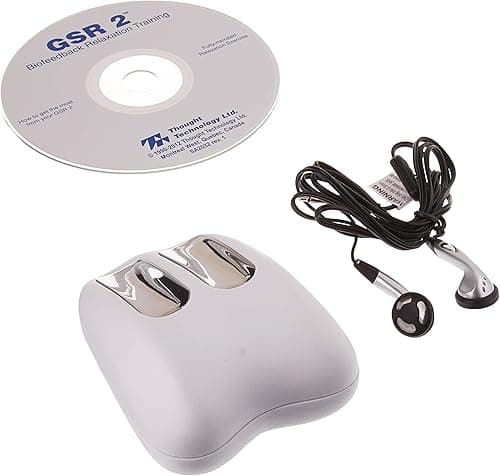
If you already own an Oura Ring or a WHOOP strap, keep it for overnight trends — and buy a chest strap if you actually want to train. The ring is a dashboard. The strap is a gym. A generic home biofeedback unit is the budget alternative; mechanism is right, build quality varies, expect to tolerate rough edges.
Vagus nerve stimulators (Pulsetto, Apollo Neuro) are complementary, not a replacement for breathwork. Buy the breathing tools first.
Products mentioned in this post
Polar H10 Heart Rate Sensor
The gold-standard chest strap for HRV and heart rate — ANT+ and Bluetooth in one.
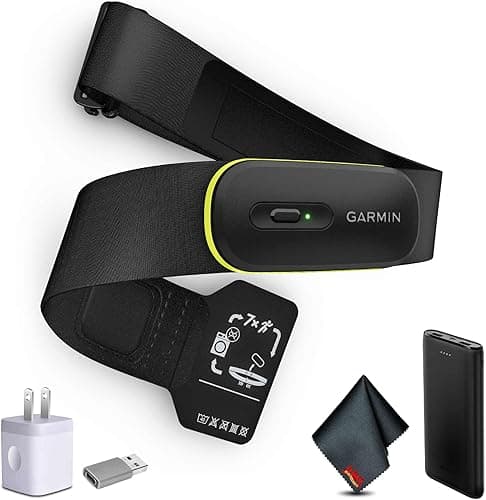
Garmin HRM-Pro Plus
Garmin's premium chest strap with running dynamics and dual-band transmission.

HeartMath Inner Balance Sensor
HeartMath's HRV biofeedback sensor for coherence and resilience training.
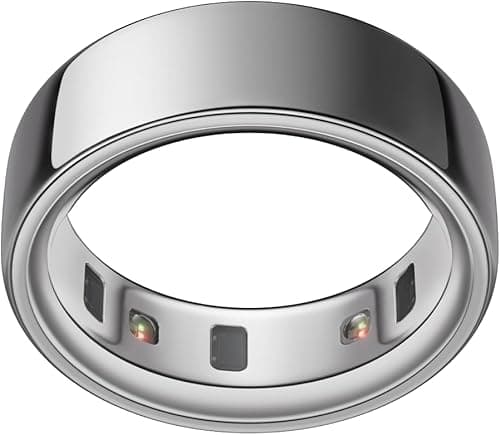
Oura Ring Gen 4 - Heritage
Premium smart ring for sleep, HRV, and daily readiness — no subscription needed for the basics.
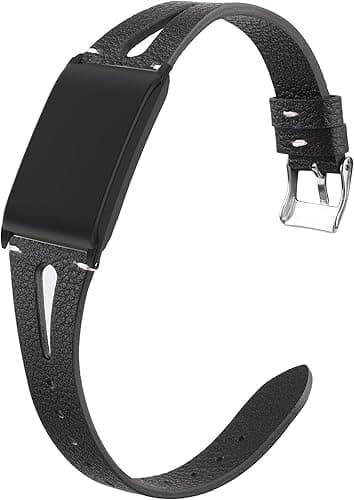
Whoop 4.0 Strap
Subscription-based recovery and strain tracker favored by athletes and high performers.
Pulsetto Vagus Nerve Stimulator
App-controlled non-invasive vagus nerve stimulator for stress, sleep, and anxiety.
Apollo Neuro Wearable
Vibration-based wearable for stress relief and sleep, with growing clinical evidence.
Biofeedback Home Training Device
Home biofeedback training system for stress management and self-regulation.
Frequently asked
- Can I train HRV with just my Apple Watch or Oura Ring?
- Not really — you can track HRV trends with them, but you can't run a real-time training loop. Both use optical (PPG) sensors that are validated for overnight averages, not the second-by-second precision a paced-breathing session needs. The fix is cheap: keep your ring or watch for overnight trend data and add a Polar H10 chest strap (~$90) with Elite HRV or HRV4Training for in-session training. The strap is the gym; the ring is the scoreboard.
- Elite HRV vs HRV4Training — which one should I buy?
- Both pair with a chest strap and both run morning readiness measurements plus paced-breathing sessions. Elite HRV has a friendlier interface and a gentler learning curve. HRV4Training is more research-oriented, exposes more raw data, and has an iPhone-camera-finger mode for situations without a strap (use it cautiously — the signal is noisier). If you're new to HRV training, start with Elite HRV. If you're a quantified-self veteran who wants to export and analyze the data yourself, HRV4Training.
- HeartMath vs Elite HRV — what's the actual difference?
- HeartMath Inner Balance is closed-loop coherence biofeedback: a proprietary clip sensor plus an app that shows your HRV trace pushing into a 'coherence' zone in real time as you breathe. Elite HRV is paced-breathing training plus morning readiness on whatever chest strap you already own. HeartMath has a deeper research base under its specific protocol but locks you to its ecosystem and an aging UI. Elite HRV is more flexible and cheaper if you already have a strap. Both work for the underlying skill: learning to breathe at your resonant frequency.
- How long until my baseline HRV actually changes?
- Acute effects (a higher HRV reading immediately after a 10-minute paced-breathing session) show up the first session. Baseline lnRMSSD changes — the thing that moves the weekly trend line — typically take 4–8 weeks of near-daily twice-a-day practice. A 5–15% increase in lnRMSSD over a month is a strong response. Some people don't show baseline changes until week 8 even with perfect adherence. Sleep, alcohol, and training load confound everything; weekly averages are the honest metric.
- Do I need a chest strap, or is a finger-camera app good enough?
- Good enough for trying it before you commit, not good enough for serious training. Phone-camera PPG (Welltory, HRV4Training's camera mode) reads pulse from a finger pressed against the lens. The signal works on a still hand in good light, but noise from finger movement, ambient light, and circulation differences makes session-by-session comparisons unreliable. Use it for two weeks to confirm you'll stick with the practice, then buy a Polar H10 if you do. The accuracy upgrade is the single highest-ROI piece of HRV hardware you'll buy.
Sources
- [1]An Overview of Heart Rate Variability Metrics and Norms · Frontiers in Public Health · 2017-09-28
- [2]HeartMath Research Library · HeartMath Institute · 2026-01-01unverified
- [3]Critical Review of Transcutaneous Vagus Nerve Stimulation: Challenges for Translation to Clinical Practice · Frontiers in Neuroscience · 2020-04-28
- [4]Oura Research Library · Oura · 2026-01-01unverified
Related reading
More from the desk
Buying guides
WHOOP 4.0 vs Oura Ring Gen 4: which recovery wearable is actually worth it in 2026
Honest WHOOP vs Oura comparison for 2026 — 3-year subscription math, HRV and sleep accuracy, strain vs readiness, and which one fits your actual use case.
Buying guides
Biofeedback for anxiety: which devices actually work in 2026 (an honest review)
Honest 2026 guide to biofeedback devices for anxiety — HeartMath, Muse 2, Pulsetto, Sensate, Apollo Neuro. Real evidence, real prices, Woo-Woo Meter ratings.
Buying guides
Oura Ring vs Apple Watch for Sleep: Which Tracker Is Actually Worth It in 2026?
Oura Ring Gen 4 vs Apple Watch Series 10 for sleep tracking — a head-to-head on accuracy, HRV, wearability, subscription math, and which one to actually buy.