Buying guides
The best smart rings in 2026: an honest buyer's guide
Smart rings have gone mainstream. Here's our straight-talk roundup of the leading options, what each one is best at, and which one is worth your money.
The smart ring took over
Five years ago, asking someone if they wore a smart ring would have sounded weird. In 2026 it's a mainstream category. The form factor finally makes sense: it's small, it's invisible under any work outfit, you don't have to take it off for meetings, and the sensors on the underside of a ring sit closer to the radial artery than anything on a wrist strap.
The downside: there are now a lot of them. This guide is our honest take on the leading options.
What we look for
We score every wearable on five things: sleep accuracy (vs. polysomnography studies where they exist), HRV implementation, daily wearability, app quality and depth, and whether you have to pay forever. We also factor in the Woo-Woo Meter — but for the smart ring category, every credible product is a 1.
The picks
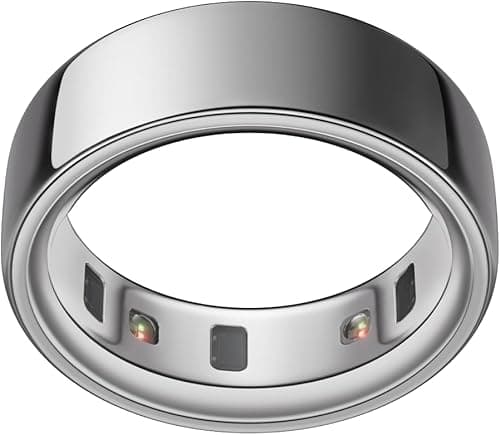
Best overall: Oura Ring Gen 4
Oura is still the category leader for a reason. The longest published research library, the cleanest sleep tracking, and a subscription that's optional for the basics — meaning you can stop paying without bricking the device. The Gen 4 is the most refined version yet.
If you want one wellness device and you sleep poorly, this is the one to get.
Best value alternative: RingConn Gen 2
RingConn is the credible "Oura alternative." The hardware is competitive, the battery life is genuinely longer (we've seen 12-day claims hold up close to that in real use), and there is no subscription at all — you pay once, you own it.
The trade-offs: smaller research library, less polished app, no readiness analytics on Oura's level. For most buyers, those trade-offs are worth saving the subscription cost over time.
Best for serious athletes: Whoop 4.0
Wait, Whoop isn't a ring. We know. But we'd be doing you a disservice not to mention it in a "best ring-class wearable" guide because for hard training, Whoop's strain/recovery model is genuinely better than any ring's. If you train every day and want a single number telling you how hard to push, Whoop is the answer — even though it's a strap.
Who shouldn't buy a smart ring
Three groups:
- People who don't want continuous biometrics in their life. Some people get more anxious watching their data than they would not knowing it. That's a valid choice.
- People who already wear an Apple Watch and use it well. The Watch covers most of what a ring does, plus calls and notifications. Ring + Watch is real overkill for most.
- People who want clinical-grade data for a medical reason. No consumer ring is a substitute for a clinical study. Talk to a doctor.
What we'd actually buy
If money is no object: Oura Ring Gen 4. Best research, best app, best refinement.
If you'd rather not have a subscription at all: RingConn Gen 2. The savings add up and the hardware is genuinely good.
If you're a serious athlete: Whoop 4.0 (it's a strap, fight us).
The bottom line
The smart ring category has gone from novelty to mainstream tool in five years. Every device on this list is a credible buy. The right one for you depends on your relationship with subscriptions, your training intensity, and whether you want the deepest research library or the lightest ongoing cost.
Products mentioned in this post
Oura Ring Gen 4 - Heritage
Premium smart ring for sleep, HRV, and daily readiness — no subscription needed for the basics.
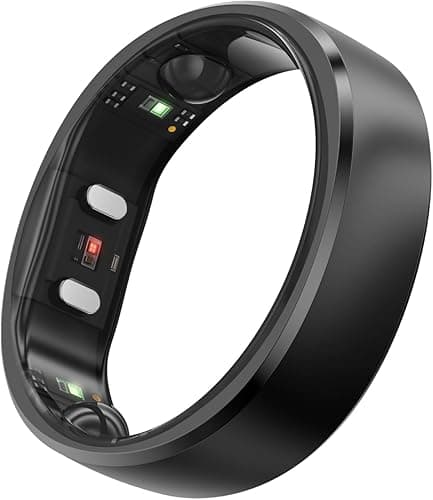
RingConn Gen 2 Smart Ring
Subscription-free smart ring with 12-day battery — a credible Oura alternative under $300.
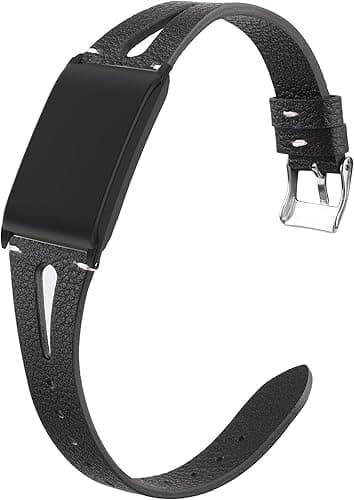
Whoop 4.0 Strap
Subscription-based recovery and strain tracker favored by athletes and high performers.
Frequently asked
- Are smart rings as accurate as chest straps?
- For HRV during quiet states (sleep, rest), modern smart rings are quite close to chest straps in published validation studies. For high-intensity exercise, chest straps remain more accurate.
- Will an Oura subscription stop my ring from working?
- No. Unlike Whoop, Oura's basic functionality continues without the subscription. You lose the deeper analytics, but the ring keeps tracking sleep, HRV, and activity.
- Can you wear a smart ring in the shower or pool?
- Yes for all the major brands. Oura is rated to 100m, Whoop to 10m, RingConn to similar depths. Check the specific product for the exact rating.
Sources
- [1]An Overview of Heart Rate Variability Metrics and Norms · Frontiers in Public Health · 2017-09-28
- [2]Oura Research Library · Oura · 2026-01-01unverified
Related reading
More from the desk
Buying guides
WHOOP 4.0 vs Oura Ring Gen 4: which recovery wearable is actually worth it in 2026
Honest WHOOP vs Oura comparison for 2026 — 3-year subscription math, HRV and sleep accuracy, strain vs readiness, and which one fits your actual use case.
Buying guides
Oura Ring vs Apple Watch for Sleep: Which Tracker Is Actually Worth It in 2026?
Oura Ring Gen 4 vs Apple Watch Series 10 for sleep tracking — a head-to-head on accuracy, HRV, wearability, subscription math, and which one to actually buy.
Buying guides
HRV training apps that actually work in 2026 (and the hardware they need)
Honest 2026 guide to HRV training apps and the chest straps, rings, and sensors that make them work. Real protocols, real evidence, Woo-Woo Meter ratings.