Category deep-dives
Pulsetto review: is the breakout vagus nerve device worth $270?
Pulsetto became the most-searched vagus nerve device in 2025. Here's our straight-talk review — what it is, what the evidence says, and whether it earns its price.
“Transcutaneous vagus nerve stimulation has promising results across small studies, but the field needs larger, sham-controlled trials before any device should be sold as a depression or anxiety cure.”
Why Pulsetto suddenly mattered
Eighteen months ago, "vagus nerve stimulator" was a phrase you mostly read in clinical psychiatry papers. Today it's a $270 device on Amazon with a wait list, an app, and a Google Trends curve that runs straight up. The breakout in the consumer category is Pulsetto — a neck-worn, app-controlled device that delivers transcutaneous vagus nerve stimulation in short daily sessions.
We rate the entire vagus nerve category at 3 on the Woo-Woo Meter (real mechanism, real but limited evidence, consumer products that aren't the same as clinical devices used in studies). Pulsetto is the most popular product in that category right now. So: does it deserve to be?
What Pulsetto actually is
Pulsetto sits on the back of your neck like a pair of headphones turned 180°, with two electrode pads making skin contact over the cervical branches of the vagus nerve. You start a session in the app — typical sessions are around four minutes per side — pick a mode (stress, sleep, focus, etc.), and the device delivers a low-amplitude electrical pulse pattern. You're meant to do one or two sessions a day.
The hardware is honest. The build feels closer to a premium consumer audio product than a medical device. The app is genuinely good — clear modes, session history, no dark patterns. There's no subscription beyond the upfront $270.
What the evidence actually says
Here is what's true: transcutaneous vagus nerve stimulation (tVNS) has a real and growing clinical literature. There are dozens of small RCTs across anxiety, depression, inflammation, and stress endpoints. Most are small. Most use slightly different protocols. The signal is real but the field is not yet at the level of, say, SSRIs for depression.
Here is what's also true: the published trials are not Pulsetto trials. They use lab-grade research devices with calibrated stimulation parameters and sham-controlled designs. Pulsetto is a consumer device with consumer-grade stimulation patterns. The mechanism transfer is plausible — both devices stimulate the same nerve via the same access route — but you should not assume the research findings apply at the same effect size.
The honest position: the mechanism is plausible, the literature is encouraging, and consumer devices like Pulsetto sit in the gap between clinical and lifestyle. That gap is real. It is not the same gap that, say, "scalar energy pendants" sit in. But it is also not the same place that, say, an Omron blood pressure cuff sits.
Who Pulsetto is actually for
Pulsetto is a credible buy if all of these are true:
- You've tried meditation, breathwork, sleep hygiene, and you want hardware that helps on top of those things — not in place of them.
- You can commit to using it daily for at least six weeks. A handful of sessions will not produce anything you could measure.
- You are comfortable buying a wellness device whose evidence base is real but early. The published RCTs are encouraging; they are not definitive.
- You are not treating diagnosed clinical anxiety or depression. If you are, see a clinician about FDA-cleared options before buying anything on Amazon.
It is not a credible buy if you expect prescription-grade results, if you want a thirty-second proof-of-concept, or if you would be devastated to spend $270 on something that turned out not to help you specifically.
How it stacks up against the alternatives
Pulsetto's main competitor is Truvaga — a handheld device from electroCore, the company that makes the FDA-cleared gammaCore prescription tVNS device. Truvaga has the clinical lineage. Pulsetto has the polish, the app, and the form factor that lets you sit still during a session. Both are credible. We have a head-to-head comparison if you want to dig into the specifics.
If you're stress-shopping more broadly and you're not sure tVNS is the right modality at all, the comparison you really want is Pulsetto vs Apollo Neuro. Apollo Neuro doesn't stimulate the vagus nerve electrically — it delivers tactile vibrations meant to nudge autonomic state — and it's worn passively all day instead of in focused sessions. Different mechanism, different use pattern, same buyer. We have that comparison too.
What we'd actually do
If we were buying one device today and our problem was a busy nervous system that resisted meditation, here's what we'd do:
- Start with the cheaper basics — guided breathwork, a sleep tracker, a real bedtime — for thirty days.
- If after those thirty days the nervous-system feeling hasn't moved, try Pulsetto for six weeks of daily use.
- If after six weeks of daily use you can't feel a difference, return it (within the return window) or pass it along.
That's the honest framework for a category at 3 on the Woo-Woo Meter. The device is a credible bet, not a guaranteed win. The published evidence supports trying it. The published evidence does not support promising you a result.
The bottom line
Pulsetto is the most popular consumer vagus nerve device for a reason. It's well-built, it's honestly marketed for what it is, and it sits in a real category with real (if early) clinical literature. The $270 is reasonable for the build quality and the absence of a subscription. The trial period is generous enough to find out whether your specific nervous system responds.
If you're in the right buyer profile — patient, basics-first, comfortable with early evidence — buy it. If you're not, save the money and start with breathwork.
Products mentioned in this post
Pulsetto Vagus Nerve Stimulator
App-controlled non-invasive vagus nerve stimulator for stress, sleep, and anxiety.
Truvaga Vagus Nerve Stimulator
Handheld clinical-grade vagus nerve stimulator — quick daily sessions.
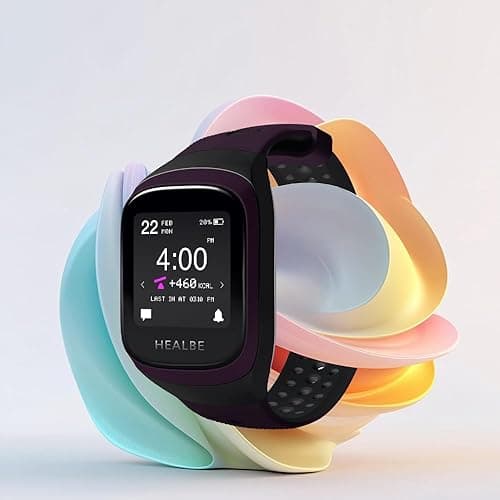
Apollo Neuro Wearable
Vibration-based wearable for stress relief and sleep, with growing clinical evidence.
Frequently asked
- Is Pulsetto FDA approved?
- No. Pulsetto is sold as a wellness device, not a medical device. It is not approved as a treatment for any specific condition. The Truvaga device, from the same family as the FDA-cleared gammaCore prescription device, has more clinical lineage but its consumer version is also not approved as a treatment.
- How long until I'd notice a difference?
- Most published studies use daily sessions for 2–6 weeks before measuring outcomes. Anecdotal reports of immediate post-session calm are common but are not the same as durable change. Plan for at least six weeks of daily use before judging whether it works for you.
- Can I use Pulsetto with prescribed medication?
- Talk to your prescriber. Vagus nerve stimulation can interact with autonomic-affecting medications. Don't substitute Pulsetto for prescribed treatment without clinical guidance.
- What's the return policy?
- Pulsetto offers a trial period through their direct-from-brand purchase channel. Amazon's standard 30-day return policy applies if you buy through Amazon. Check the current terms before you click — they change.
- Pulsetto or Truvaga?
- Pulsetto is the polished consumer experience with the better app and the more meditative neck-worn form factor. Truvaga has the clinical lineage (electroCore makes the FDA-cleared gammaCore prescription device). Read our full Pulsetto vs Truvaga comparison for the side-by-side.
Sources
- [1]Critical Review of Transcutaneous Vagus Nerve Stimulation: Challenges for Translation to Clinical Practice · Frontiers in Neuroscience · 2020-04-28
- [2]510(k) Premarket Notification — Non-invasive Vagus Nerve Stimulator · U.S. Food and Drug Administration · 2017-04-18unverified
- [3]An Overview of Heart Rate Variability Metrics and Norms · Frontiers in Public Health · 2017-09-28
Related reading
More from the desk

Buying guides
Biofeedback for anxiety: which devices actually work in 2026 (an honest review)
Honest 2026 guide to biofeedback devices for anxiety — HeartMath, Muse 2, Pulsetto, Sensate, Apollo Neuro. Real evidence, real prices, Woo-Woo Meter ratings.
Category deep-dives
Vagus nerve devices: what the evidence actually says
Non-invasive vagus nerve stimulation went from obscure neurology to consumer wellness in 18 months. Here's our honest read on the evidence — and what to make of the consumer devices selling it.
Buying guides
Pulsetto vs Truvaga: which vagus nerve stimulator actually delivers in 2026 (honest comparison)
Pulsetto and Truvaga both cost $250–$270 and target the same vagus nerve. Here's the honest head-to-head — app vs. clinical lineage, who should buy which.