Buying guides
Apollo Neuro for sleep in 2026: does the $350 wearable actually help you fall asleep? An honest review
An honest review of Apollo Neuro's Sleep mode at $350 — what it does, who it helps, and the $250 sleep stack that covers most of the same ground.
“Heart rate variability is one of the few wearable metrics with both a deep physiological basis and a long literature linking it to real-world outcomes.”
It's 11:42 PM. You're awake. You've already read the general "is Apollo Neuro worth it" reviews and now you want the one question they skimmed past: does the Apollo Neuro wearable actually help you fall asleep, or just feel like it should? The Sleep mode is the use case Apollo's strongest "works for me" anecdotes are built around — and also the one most affiliate reviews mention in a single paragraph before pivoting back to stress.
This post is the zoom-in. What the descending vibration pattern actually does, how it compares to a $40 sleep mask plus a $30 white-noise machine, and which reader profiles it earns its sticker for. If you want the general device review, our Apollo Neuro honest review covers the broader case. This post answers one thing: should you spend $350 on Apollo for sleep specifically.
The two-minute verdict
Buy Apollo for sleep if you already have a wind-down ritual and want a tactile anchor inside it, you respond strongly to somatic input (weighted blankets, massage, vibration), you travel often and want one device instead of three, and your sleep problem is pre-sleep rumination rather than middle-of-the-night waking.
Don't buy Apollo for sleep if you have diagnosed insomnia, sleep apnea, or shift-work disorder (wrong tool — see our best wearable for sleep apnea 2026 guide and a sleep clinician); you'd skip the wind-down ritual without the device; or you haven't tried a $40 sleep mask, a $30 white-noise machine, and a consistent bedtime first.
Woo-Woo Meter: 2/5. Same as the general Apollo review — plausible mechanism, polished delivery, early-stage clinical evidence. This post doesn't re-rate the device; it sorts readers.
What Apollo's Sleep mode actually does
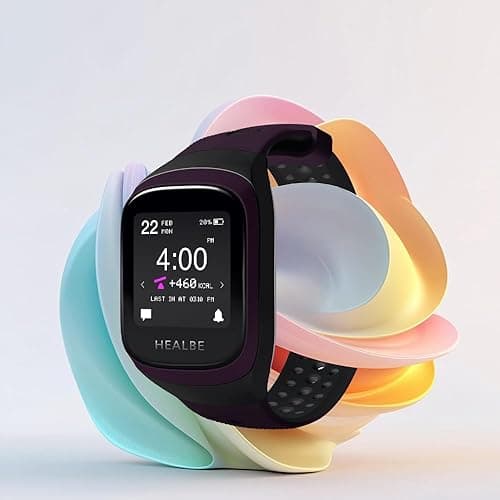
Sleep mode is one of seven app-selectable modes on the Apollo wearable. You strap the band to your wrist or ankle, open the app, pick the session length (typically ~20 minutes), and the device runs a descending pattern of low-frequency vibrations Apollo calls "SAVVI" — infrasonic touch-based input that drifts slower and lighter over the course of the session. The pitch is that this nudges the autonomic nervous system from sympathetic toward parasympathetic dominance, measurable as a short-term bump in heart rate variability.
The honest mechanical read: it's a 20-minute, slowly decelerating tactile rhythm strapped to your body at bedtime. Whether the active ingredient is the vibration itself or the structured 20 minutes of "I'm going to bed now" that the device forces you to commit to is, frankly, an open question — and one Apollo's marketing prefers not to ask.
What the evidence shows for vibration-based sleep onset
"Heart rate variability is one of the few wearable metrics with both a deep physiological basis and a long literature linking it to real-world outcomes."
That framing matters here because Apollo's clinical case rests almost entirely on short-term HRV changes during and immediately after sessions. HRV is a real biomarker — Shaffer & Ginsberg's 2017 overview in Frontiers in Public Health is the foundational reference for what it does and doesn't tell you. But a transient HRV bump from a calming intervention is not the same thing as durable sleep improvement. Most calming inputs — warm baths, slow breathing, a heavy blanket, petting a dog — produce a short-term HRV response. That's the baseline the Sleep mode has to beat to earn $350.
Apollo's published studies on the device itself are small, frequently involve investigators with ties to the company, and lean heavily on session-level state changes rather than durable endpoints like sleep-onset latency measured by polysomnography. The adjacent literature — vibroacoustic therapy, weighted blankets, rocking interventions for sleep onset — supports the general idea that somatic input can shift state, but the consumer-device evidence base specifically for Apollo is thinner than the marketing implies. Compare it to the broader transcutaneous vagus nerve stimulation literature: dozens of small RCTs, and even that category is honestly framed in our vagus nerve devices evidence post as not yet at the level of "prescribe this." Apollo sits further back on that curve.
The honest summary: real mechanism, plausible ritual effect, marketing that runs ahead of the data.
Who Apollo's Sleep mode actually helps (and who it won't)
Three reader profiles, sorted bluntly:
- Pre-sleep rumination + an existing wind-down — strong fit. If your sleep problem is the 30 minutes between "in bed" and "asleep," and you already brush, dim, and read, Apollo's 20-minute tactile descent slots in cleanly. Several user reports we trust describe Apollo Sleep mode as the thing that turned an existing ritual from "sometimes works" into "consistently works." This is the narrow case where Apollo earns its sticker.
- Generic "tired but wired" daily stress — moderate fit. If you're stressed but not specifically ruminating at bedtime, Apollo can still serve as a structured cue — but a Sensate 2 chest puck or a Pulsetto tVNS session may target the upstream stress more directly. See our biofeedback for anxiety post for the broader sort.
- Diagnosed insomnia, sleep apnea, or shift-work disorder — wrong tool. Apollo is not cleared for any sleep condition. If you suspect apnea, screen first with the picks in best wearable for sleep apnea 2026 and see a sleep clinician. If you have chronic insomnia, CBT-I has substantially stronger evidence than any wearable. Apollo is a ritual anchor; it is not a sleep drug, and the wrong reader will end up with a $350 drawer ornament.
Apollo for sleep vs. the cheaper sleep stack
This is the comparison most Apollo Sleep reviews avoid. Here it is honestly:
- Manta Sleep Mask Pro — around $40, true-blackout, weighted feel, no light leak. Covers the visual environment.
- Yogasleep Dohm Classic — around $50, mechanical fan-based white noise, no app, no charging. Covers the auditory environment.
- Hatch Restore 2 — around $170, sunrise alarm with sleep-onset sounds and a guided wind-down routine. Covers the ritual scaffolding.
That stack runs roughly $250 total and covers light, sound, and ritual structure — three of the four levers Apollo's Sleep mode is implicitly competing on. The fourth lever is somatic input, and that's the one the stack doesn't replicate. A weighted MZOO luxury sleep mask adds a mild somatic component for under $25, but it's a static cue, not a 20-minute descending one.
Where Apollo still wins: somatic-responsive sleepers who specifically need the descending tactile cue, travelers who can't pack three devices, and people whose phone-in-bedroom problem is already solved (because Apollo Sleep mode requires the app at bedtime, which is its own sleep hygiene tax). Outside those cases, $350 buys a lot of sleep mask.
Apollo vs. Oura and Whoop for sleep (tracker vs. intervention)
This distinction trips up most buyers. Apollo is an intervention — it tries to do something to your nervous system. The Oura Ring Gen 4 and the Whoop 4.0 are measurement — they tell you what happened. They are not substitutes for each other; if anything, they're complements. If you buy Apollo and want to know whether it's actually working for you rather than just feeling like it should, you need a tracker too. Our Oura Ring vs. Apple Watch for sleep breakdown covers the tracker side in depth.
The honest case for the pairing is narrow: data-curious buyers who will actually look at trend data for 30+ nights and adjust. Most won't. If that's you, fine. If it isn't, skip the tracker and run Apollo on subjective response only.
Apollo vs. Pulsetto, HeartMath, and Sensate for sleep specifically
All four target the same downstream goal — calmer nervous system at bedtime — through different mechanisms.
- Pulsetto (~$269) — direct transcutaneous vagus nerve stimulation at the neck. More mechanistic bet on the vagal pathway, growing clinical literature. For pre-sleep wind-down driven by daytime stress, Pulsetto is often the more direct lever. Our Pulsetto honest review and the Pulsetto vs. Truvaga comparison cover the category.
- HeartMath Inner Balance (~$159) — HRV coherence training via paced breathing with real-time biofeedback. Different mechanism: it teaches you to self-regulate rather than doing the regulation for you. Our HeartMath honest review covers the trade.
- Sensate 2 (~$300) — bone-conduction infrasonic puck on the sternum, 10-minute sessions. The closest mechanistic neighbor to Apollo — both are somatic-input devices — but Sensate is stationary, chest-based, and explicitly pre-sleep rather than ambient.
When each beats Apollo for sleep: Pulsetto if the upstream stress is daytime-driven and bedtime is downstream; HeartMath if you want a skill that outlasts the device; Sensate if you want one-time hardware with no daily charging and the chest form factor doesn't bother you. Apollo wins on wearability across contexts — wrist or ankle, multiple modes, travels easily.
The boring real-world stuff
Battery life is daily-ish; Apollo expects nightly or near-nightly charging if you use Sleep mode regularly. The app dependency is real — no phone, no session — which means a phone in the bedroom at bedtime, which is its own sleep-hygiene problem most sleep clinicians will tell you to fix first. The band can irritate skin under prolonged wear. If you fall asleep mid-session the device does not wake you; the vibration trails off and that's it. The strap is comfortable enough to wear under most sleepwear, less so under tight long sleeves.
None of these are dealbreakers individually. Together they're the difference between "device I use every night" and "device I use for two weeks then forget about." Most $350 wellness wearables end up in the second bucket within 90 days. Apollo's drawer-fate risk is the single largest reason to think twice.
The honest take
Apollo Neuro for sleep is a real product solving a real problem for a specific reader. The marketing oversells it; the honest case is narrower than the ad — and inside that narrow case (pre-sleep rumination, existing ritual, somatic-responsive, traveler), it earns its sticker. Outside it, $350 buys a Manta mask, a Dohm, a Hatch, and enough left over for a year of decent pillows.
Our position: if you already know you respond to somatic input and you already have a wind-down ritual you'll do anyway, Apollo is a defensible buy for sleep. If either of those is missing, fix that first — a $40 mask and a 10:30 PM bedtime will out-perform a $350 wearable that lives on your nightstand.
Products mentioned in this post
Apollo Neuro Wearable
Vibration-based wearable for stress relief and sleep, with growing clinical evidence.
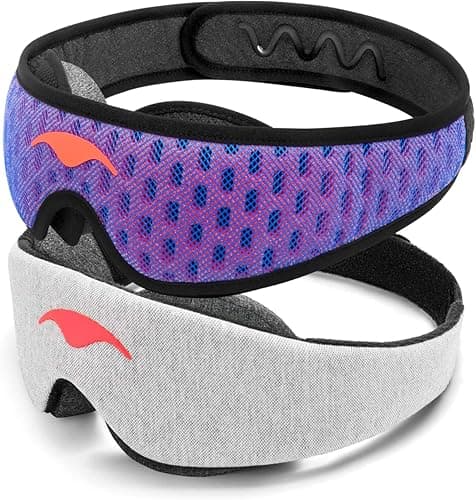
Manta Sleep Mask Pro
Premium contoured sleep mask with zero pressure on your eyes — a top-rated travel pick.
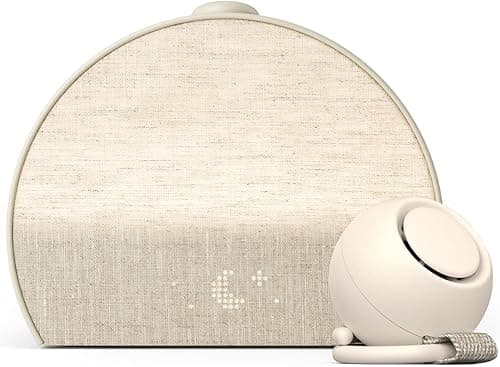
Hatch Restore 2 Sunrise Alarm
Smart sunrise alarm with sound, light, and a TikTok cult following.
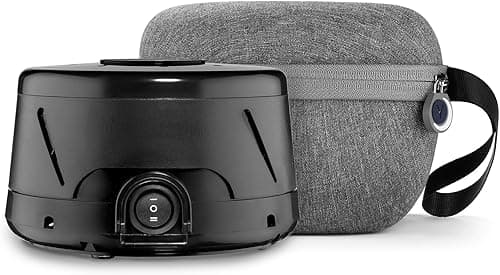
Yogasleep Dohm Classic White Noise
The original mechanical white-noise machine — fan-driven, simple, indestructible.
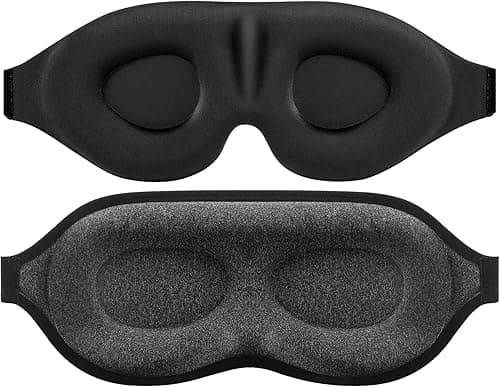
MZOO Luxury Sleep Eye Mask
Amazon's #1 best-selling sleep mask. The cheapest upgrade your sleep can get.
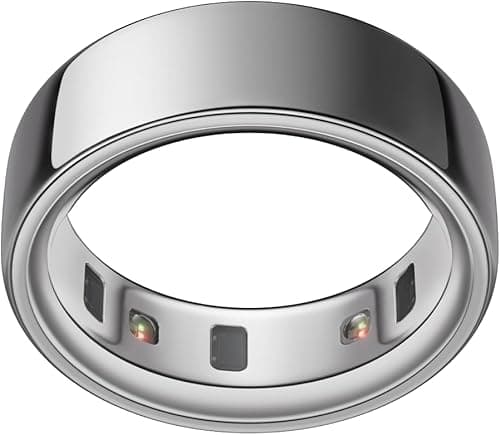
Oura Ring Gen 4 - Heritage
Premium smart ring for sleep, HRV, and daily readiness — no subscription needed for the basics.
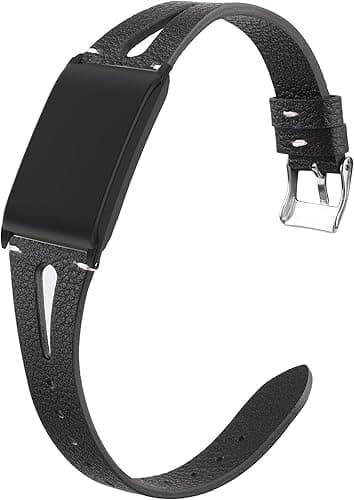
Whoop 4.0 Strap
Subscription-based recovery and strain tracker favored by athletes and high performers.
Pulsetto Vagus Nerve Stimulator
App-controlled non-invasive vagus nerve stimulator for stress, sleep, and anxiety.
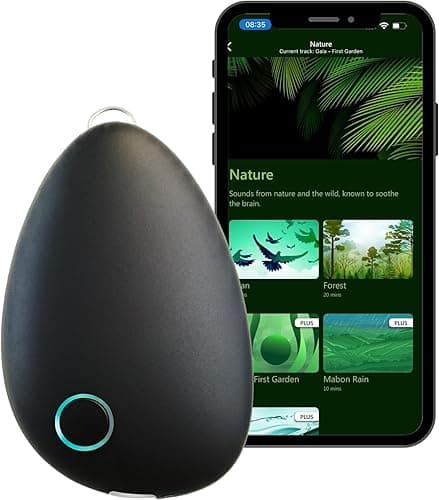
Sensate 2 Relaxation Device
Vagus nerve relaxation device using infrasound vibration for stress and anxiety relief.

HeartMath Inner Balance Sensor
HeartMath's HRV biofeedback sensor for coherence and resilience training.
Frequently asked
- Does Apollo Neuro actually help you fall asleep?
- For a subset of users, yes — primarily those whose sleep problem is pre-sleep rumination and who already keep a consistent wind-down ritual. The 20-minute descending vibration pattern works as a tactile anchor inside an existing routine. Apollo's published studies show short-term HRV changes during sessions, not durable sleep-onset improvements measured by polysomnography. If your sleep problem is middle-of-the-night waking, apnea, or shift work, Apollo is the wrong tool.
- How does Apollo Neuro Sleep mode compare to a weighted blanket or sleep mask?
- A $40 weighted sleep mask plus a $30 white-noise machine plus a disciplined bedtime probably covers 60–70% of the same ritual function for under a tenth of the price. Apollo wins specifically when the descending tactile cue matters — somatic-responsive sleepers and travelers who can't pack three devices. For everyone else, the cheaper sleep stack is a better starting point. If you haven't tried it yet, try it before spending $350.
- Apollo Neuro vs. Oura Ring for sleep — which should I buy?
- They're different categories. Apollo is an intervention (tries to do something to your nervous system); Oura is measurement (tells you what happened). They're complements, not substitutes. If you only buy one and you want to know whether sleep is actually improving, buy the tracker. If you already have a tracker and want a structured wind-down cue, Apollo is the add-on. Buying Apollo without a tracker means running the experiment on subjective response only.
- Is Apollo Neuro safe to wear all night?
- The device is benign in safety terms — Sleep mode runs for roughly 20 minutes and then stops; it doesn't vibrate through the night. Some users get mild skin irritation under prolonged daily wear. App dependency means a phone in the bedroom at bedtime, which is its own sleep-hygiene problem most clinicians will tell you to fix first. It is not cleared as a treatment for any sleep condition.
- Is Apollo Neuro worth $350 for sleep specifically?
- Worth it if you're a somatic-responsive sleeper with pre-sleep rumination and an existing wind-down ritual, especially if you travel often. Not worth it if you have diagnosed insomnia or sleep apnea, if you'd skip the ritual without the device, or if you haven't tried a sleep mask, white-noise machine, and consistent bedtime first. Inside its narrow case Apollo earns its sticker. Outside it, the cheaper sleep stack will out-perform.
Sources
- [1]An Overview of Heart Rate Variability Metrics and Norms · Frontiers in Public Health · 2017-09-28
- [2]Critical Review of Transcutaneous Vagus Nerve Stimulation: Challenges for Translation to Clinical Practice · Frontiers in Neuroscience · 2020-04-28
- [3]HeartMath Research Library · HeartMath Institute · 2026-01-01unverified
- [4]Amazon product listings (current pricing) · Amazon.com · 2026-04-09
Related reading
More from the desk
Buying guides
Apollo Neuro for Sleep: Does the Vibration Actually Help You Fall Asleep? (2026 Honest Take)
Apollo Neuro for sleep, evaluated honestly. What Sleep mode actually does, what the evidence shows, and how it stacks up against Sensate, Muse S, and a $65 baseline.
Buying guides
Apollo Neuro Review 2026: Is the $350 Vibration Wearable Worth It? An Honest Take
An honest review of Apollo Neuro at $350 — what the research actually shows, who it helps, and how it compares to Pulsetto, Sensate, and HeartMath.
Buying guides
WHOOP 4.0 vs Oura Ring Gen 4: which recovery wearable is actually worth it in 2026
Honest WHOOP vs Oura comparison for 2026 — 3-year subscription math, HRV and sleep accuracy, strain vs readiness, and which one fits your actual use case.