Buying guides
Best Wearable for Sleep Apnea 2026: 6 Honest Picks for At-Home Screening (and What They Can't Do)
Six honest picks for at-home sleep apnea screening in 2026 — ranked by what each device is actually for, and direct about when a wearable isn't enough.
You suspect sleep apnea — yours or your partner's — and you'd rather not start with a $1,000 sleep lab if a $130 ring on your finger can tell you whether to bother. That instinct is mostly right. A consumer wearable can do real work here: flag overnight oxygen drops, surface breathing-disturbance patterns, and produce a chart a sleep doctor will actually read. What a wearable cannot do is hand you a diagnosis.
This guide ranks the six wearables we'd actually recommend for at-home sleep apnea screening in 2026, sorted by what each device is for. Every pick rates 1 on our Woo-Woo Meter — pure science gear, no spiritual tax.
What a wearable can (and can't) tell you about sleep apnea
Two metrics matter on a wearable for this question: continuous overnight SpO2 (oxygen saturation, and specifically the oxygen desaturation index — how often your blood oxygen drops by 3% or more per hour) and breathing-rate variability. Most consumer devices can measure the first; far fewer measure the second well enough to claim apnea-specific detection.
Here is the legal and clinical reality. Obstructive sleep apnea is diagnosed by a polysomnography (in-lab sleep study) or a validated home sleep test. As of 2024, the Samsung Galaxy Watch became the first OTC consumer smartwatch to receive FDA clearance for sleep apnea detection — the first regulatory cover for a watch in this category (verify the specific model and clearance language on the FDA 510(k) database before purchase). Every other consumer wearable in this guide is a screener or a trend-tracker, not a diagnostic device. The data quality on modern wearable PPG sensors is real and usable for trend questions,[^shaffer-hrv-overview-2017] but the right framing is: a wearable can rule problems in — telling you it's worth seeing a sleep doc — never out.
The honest hierarchy: dedicated screener > FDA-cleared watch > lifestyle wearable
Most affiliate guides flatten this category by listing ten products as if they were interchangeable. They are not. There are three tiers:
- Tier 1 — dedicated overnight SpO2 monitors. Built for one job: continuous oxygen monitoring through the night, with a report you can hand to a doctor. Best signal, lowest price, no smartwatch features. The Wellue O2Ring lives here.
- Tier 2 — FDA-cleared smartwatches. As of this writing, only the Samsung Galaxy Watch has regulatory clearance for OSA detection on a consumer watch. That's a meaningful editorial distinction.
- Tier 3 — lifestyle wearables with SpO2. Oura, Apple Watch, Fitbit, Garmin, Whoop, RingConn. Useful for night-over-night trend tracking and overall sleep quality. Not designed or cleared for apnea-specific detection.
The honest call is unromantic: if your goal is screening evidence, the right tool is in Tier 1, even if you'd rather wear a $349 ring or a $329 watch. The $130 dedicated device wins on data, and no amount of feature creep on a lifestyle wearable closes that gap.
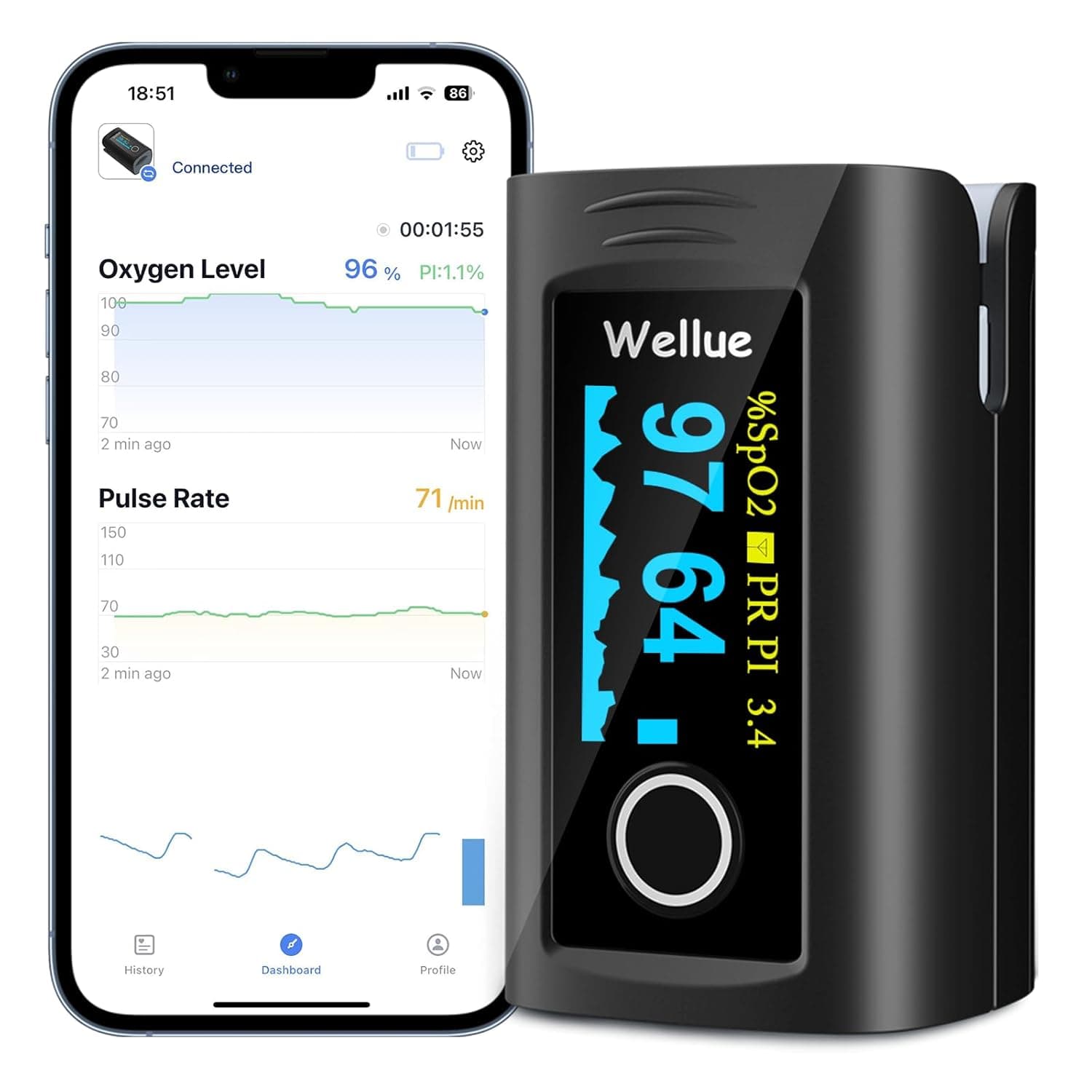
Best dedicated overnight SpO2 monitor — Wellue O2Ring
The Wellue O2Ring is the hero pick. It records continuous SpO2 and pulse rate all night, vibrates softly when oxygen drops below a threshold you set, and exports a PDF report — desaturation events, ODI, average SpO2 — that a sleep specialist will recognize and use. Pricing typically runs around $130 at major retailers,[^amazon-product-listings] which is roughly the cost of a single insurance copay for a sleep consult.
Why this is the right answer for most people asking the question: this is the form factor sleep clinics already use for at-home overnight pre-screening. It does the job a smartwatch can't quite do, at a third of the price of a smartwatch that can. The trade-off is that it is not a watch — no notifications, no fitness tracking, no daytime use case. It's a tool, not a daily driver.
Woo-Woo Meter: 1. Buy this if you want the data, not a watch.
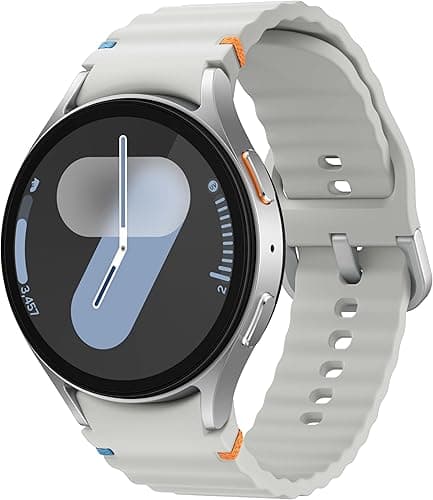
Best FDA-cleared smartwatch — Samsung Galaxy Watch 7
The Samsung Galaxy Watch 7 is, as of 2026, the consumer smartwatch with FDA clearance for moderate-to-severe OSA detection (Samsung first received the clearance in 2024 — verify the exact model and current clearance scope on the FDA 510(k) database before purchase, as device families and clearance language evolve). The detection feature requires two nights of sleep data and is intended for adults who haven't been previously diagnosed.
The case for this pick is narrow but specific: you want a daily-driver smartwatch that also does the screening job with regulatory cover. Pricing typically lands near $200 at retail, sometimes lower during sale cycles,[^amazon-product-listings] which makes it the cheapest watch in the category that can credibly claim apnea detection rather than just SpO2 trending. The trade-off: it's an Android-tilted ecosystem and pairs best with Samsung phones.
Woo-Woo Meter: 1.
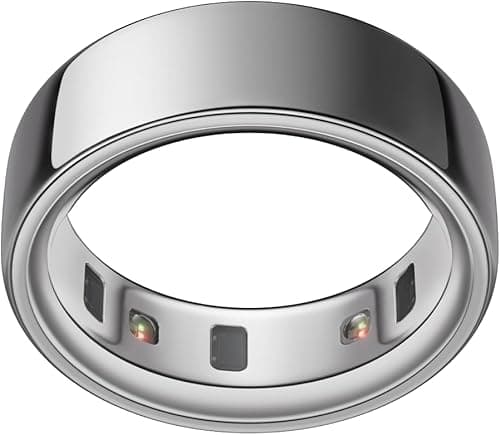
Best smart ring for SpO2 trends — Oura Ring Gen 4
The Oura Ring Gen 4 Heritage does not claim sleep apnea detection — that's important to say up front. What it does well is continuous overnight SpO2 trending across nights, weeks, and months, with the cleanest sleep data of any lifestyle ring on the market. Oura maintains the longest published research library in the smart-ring category.[^oura-research-library]
Who this is for: someone already diagnosed with apnea who wants to monitor CPAP outcomes night over night, or someone using SpO2 as one signal in a broader sleep-quality picture. For lifestyle-ring shopping more broadly, see our smart rings roundup; for the head-to-head against Apple's wearable, see Oura Ring vs Apple Watch for sleep.
What it is not: a screener. If your dominant question is "do I have apnea," a $349 ring is the wrong answer. Buy the $130 Wellue first.
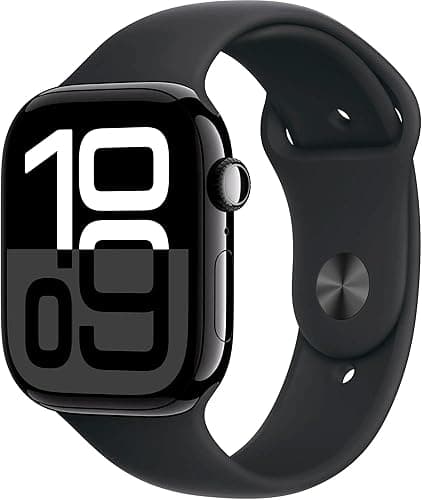
Best Apple-ecosystem pick — Apple Watch Series 10
The Apple Watch Series 10 tracks SpO2, sleep stages, and breathing disturbances during sleep. As of writing, the Series 10's apnea-related features are framed by Apple as informational rather than diagnostic — verify the current FDA clearance status before assuming the watch's sleep-disturbance feature meets the same regulatory bar as Samsung's. For broader sleep tracking it is a strong device, particularly if you already use the Apple ecosystem.
Who this is for: an iPhone owner who wants one wearable for sleep, fitness, notifications, ECG, and fall detection, and who doesn't want to add a second device. Pricing for the GPS 42mm typically runs near $329.[^amazon-product-listings]
For deeper Apple-vs-ring comparison, see Oura Ring vs Apple Watch for sleep.
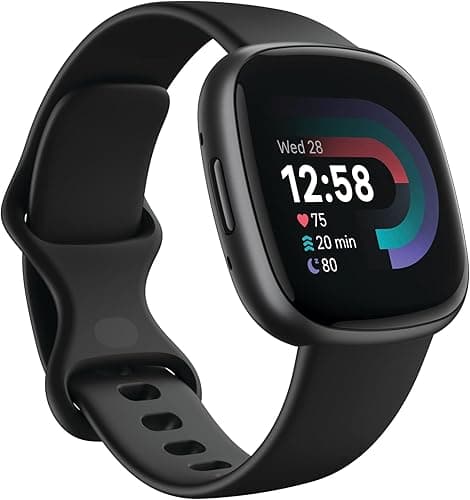
Best budget tracker — Fitbit Charge 6
The Fitbit Charge 6 records overnight SpO2 and a Sleep Score, with deeper sleep-stage detail behind Fitbit Premium. At roughly $140 retail it sits at the budget end of credible lifestyle wearables.[^amazon-product-listings] It is a trend-tracker — fine for noticing patterns over weeks, not built to produce documentation a sleep doctor would treat as evidence.
Who this is for: a budget-constrained buyer who wants a wrist tracker and can wait on Premium-tier analytics. If your dominant question is apnea screening rather than general sleep tracking, the Wellue is a better $130 spend than the Charge is a $140 one.
Best dirt-cheap spot-check — Zacurate 500C
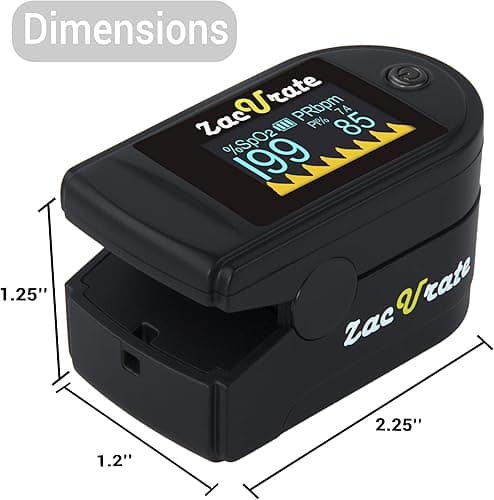
The Zacurate 500C Pulse Oximeter is a fingertip pulse oximeter that retails near $16.[^amazon-product-listings] It is FDA-cleared as a 510(k) medical device for spot-checking SpO2. It will not track overnight automatically — it's a snapshot tool, not a continuous monitor.
Use it as a sanity check before spending more. If you're tired and your daytime SpO2 is dropping below 95% on a spot reading, that's an early signal worth escalating. If your spot readings are normal and your concern is purely sleep-related, the Wellue is the right next step.
What we left out and why
Three lifestyle wearables we considered and didn't rank:
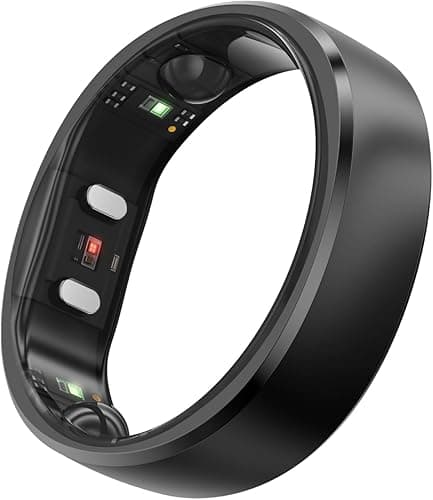
- RingConn Gen 2 (~$299) — credible Oura alternative with no subscription, but the SpO2 implementation isn't optimized for apnea screening.
- Whoop 4.0 (~$239) — strain and recovery tooling is excellent for athletes; sleep apnea is not what Whoop is built for.
- Garmin Venu 3 (~$350) — solid all-around health watch with overnight SpO2; no apnea-specific clearance and no specific feature for it.
All three are good devices. None is the right tool for this specific job.
When to stop tracking and book a sleep study
A wearable's job here is to tell you whether to escalate. Reasons to stop tracking and book a clinical evaluation:
- Overnight SpO2 dropping below 88% repeatedly across multiple nights.
- Witnessed apneas — your partner says you stop breathing in the night.
- Daytime fatigue that's actually impairing — you're falling asleep at meetings, dozing while driving, headaches in the morning.
- An ODI on your Wellue report above 15 events per hour, or any pattern your primary care doctor flags.
The next step is either a referral for an in-lab polysomnography or a validated home sleep test (HSAT) — many insurance plans cover the HSAT and it costs a fraction of a lab study. AASM-accredited sleep centers are the gold-standard referral path. Wearable data is not a substitute, but a clean Wellue report makes the conversation with your doctor faster.
The honest take
The best wearable for sleep apnea in 2026 is a dedicated overnight SpO2 monitor — the Wellue O2Ring — not a smartwatch. Most affiliate guides won't tell you that, because the commission on a $130 ring is smaller than on a $329 watch. We're telling you because it's the truth.
If you want a daily-driver watch that also does the screening job with regulatory cover, the Samsung Galaxy Watch 7 is the only consumer smartwatch with FDA clearance for OSA detection — that's a meaningful editorial difference. If you're already diagnosed and want a lifestyle device for ongoing trend-tracking, the Oura Ring Gen 4 has the best SpO2 trend data of the lifestyle rings.
And the structural caveat worth repeating: a wearable can build the case for a sleep study. It can't replace one. If you're symptomatic, the device's job is to point you toward a doctor, not to keep you home.
Products mentioned in this post
Wellue O2Ring Oxygen Monitor
Continuous overnight SpO2 ring monitor — designed for sleep apnea screening.
Samsung Galaxy Watch 7 (44mm)
AI-powered Galaxy Watch with energy score, sleep coaching, and frequent 30%-off pricing.
Oura Ring Gen 4 - Heritage
Premium smart ring for sleep, HRV, and daily readiness — no subscription needed for the basics.
Apple Watch Series 10 (GPS 42mm)
Apple's mainstream wellness watch — workouts, sleep stages, ECG, blood oxygen, in a single device.
Fitbit Charge 6
Best-selling fitness tracker with built-in GPS and six months of Fitbit Premium included.
Zacurate 500C Pulse Oximeter
Compact, FDA-cleared fingertip pulse oximeter for SpO2 spot-checks.
RingConn Gen 2 Smart Ring
Subscription-free smart ring with 12-day battery — a credible Oura alternative under $300.
Whoop 4.0 Strap
Subscription-based recovery and strain tracker favored by athletes and high performers.
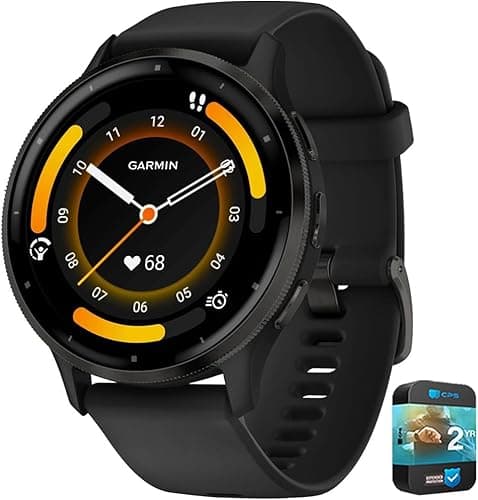
Garmin Venu 3
Garmin's premium AMOLED smartwatch with advanced fitness metrics and multi-day battery life.
Frequently asked
- Can a smartwatch actually detect sleep apnea?
- As of 2026, the Samsung Galaxy Watch is the only consumer smartwatch with FDA clearance for sleep apnea detection (cleared in 2024 — verify the current model and clearance scope on the FDA 510(k) database before purchase). Other smartwatches like Apple Watch, Fitbit, and Garmin track SpO2 and breathing patterns, but their features are framed as informational rather than diagnostic.
- Is a Wellue O2Ring better than a smartwatch for sleep apnea screening?
- For pure screening purposes, yes. The Wellue O2Ring is built specifically for continuous overnight SpO2 monitoring and produces a PDF report with desaturation events and ODI that sleep specialists will recognize. It's the same form factor sleep clinics use for at-home pre-screening. A $130 dedicated device outperforms a $329 lifestyle watch on this specific task.
- Can a wearable replace a sleep study?
- No. Obstructive sleep apnea is diagnosed by a polysomnography (in-lab sleep study) or a validated home sleep test. A wearable can flag patterns worth escalating — repeated overnight SpO2 drops below 88%, high oxygen desaturation index, witnessed apneas — but it cannot deliver a diagnosis. Treat the wearable as the trigger for a clinical conversation, not the destination.
- What SpO2 reading should I worry about during sleep?
- Healthy overnight SpO2 generally stays above 94%. Brief dips to 90% can occur in healthy sleep. Repeated drops below 88%, especially clustered with breathing disturbances, are a signal to escalate to a sleep specialist. An oxygen desaturation index (ODI) above 15 events per hour is also worth a clinical review. Don't self-diagnose from a single night — patterns matter.
- Will my insurance cover a home sleep test if I bring wearable data?
- Insurance coverage for home sleep apnea tests (HSAT) varies by plan but is broadly available in the US for adults with symptoms suggestive of moderate-to-severe OSA. Wearable data on its own is not used to authorize a test, but a clean overnight SpO2 report from a device like the Wellue O2Ring can shorten the conversation with your primary care doctor when requesting a referral.
Sources
- [1]An Overview of Heart Rate Variability Metrics and Norms · Frontiers in Public Health · 2017-09-28
- [2]Oura Research Library · Oura · 2026-01-01unverified
- [3]Amazon product listings (current pricing) · Amazon.com · 2026-04-09
Related reading
More from the desk
Buying guides
WHOOP 4.0 vs Oura Ring Gen 4: which recovery wearable is actually worth it in 2026
Honest WHOOP vs Oura comparison for 2026 — 3-year subscription math, HRV and sleep accuracy, strain vs readiness, and which one fits your actual use case.
Buying guides
Apollo Neuro for Sleep: Does the Vibration Actually Help You Fall Asleep? (2026 Honest Take)
Apollo Neuro for sleep, evaluated honestly. What Sleep mode actually does, what the evidence shows, and how it stacks up against Sensate, Muse S, and a $65 baseline.
Buying guides
Apollo Neuro for sleep in 2026: does the $350 wearable actually help you fall asleep? An honest review
An honest review of Apollo Neuro's Sleep mode at $350 — what it does, who it helps, and the $250 sleep stack that covers most of the same ground.