Buying guides
SAD Lamp vs. Red Light Therapy for Winter: Which One Treats What (2026)
SAD lamps treat winter mood. Red light therapy treats skin and tissue. They're not substitutes — here's the honest comparison and what to actually buy.
“The strongest evidence for photobiomodulation is in skin healing and inflammatory conditions — the recovery and longevity claims are weaker but not implausible.”
Two products keep getting confused. A SAD lamp is a wide white-light box you put on a desk; a red light therapy panel is a glowing red wall of LEDs you stand in front of. Both are sold under the umbrella term "light therapy." They are not the same intervention, they don't treat the same problem, and the wavelengths don't overlap.
This post is for the reader who has narrowed it down to those two categories and is one click away from buying the wrong one. We'll tell you which device the seasonal-depression literature is actually about, where red light therapy's evidence is genuinely strong, and why the cheapest honest answer for most people is to own both.
The Short Answer (So You Can Stop Reading and Go Buy)
If your problem is winter mood, low energy after the clocks change, or full seasonal affective disorder — buy a 10,000-lux SAD lamp. Use it for 20–30 minutes within an hour of waking. That's the device with decades of clinical data behind it.
If your problem is skin, fine lines, post-workout soreness, or scalp and hair — buy a red light therapy panel. The mechanism is real, the strongest evidence is in skin and tissue, and a panel won't fix your November mood crash.
If you have both problems, buy both. They cost less combined than most single recovery devices and they treat genuinely different things.
What a SAD Lamp Actually Does (and Why 10,000 Lux Is the Magic Number)
A SAD lamp emits broad-spectrum white light — typically around 5,000K, no UV — at very high intensity. The target is your eyes, specifically a small population of retinal cells called intrinsically photosensitive ganglion cells. Those cells signal the brain's master clock that it's daytime, suppress morning melatonin, and shift the timing of your circadian rhythm.
The clinical protocol is consistent across the literature: 10,000 lux at the eye, 20–30 minutes, within the first hour of waking, daily through the dark months. Bright light therapy under that protocol has been shown to improve mood scores in seasonal affective disorder and is treated as a first-line intervention alongside SSRIs and CBT in clinical guidelines.[^lam-bright-light-2016]
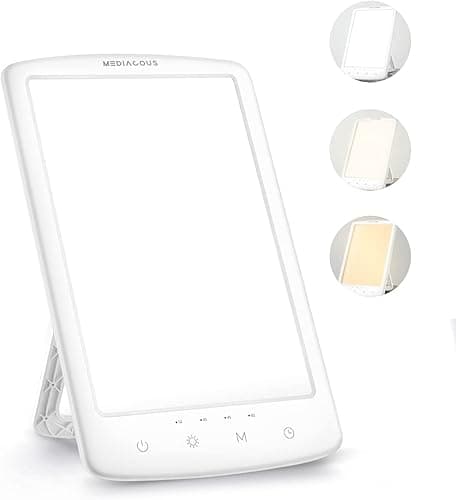
That makes a SAD lamp one of the least woo-woo devices on this site. It's an FDA-recognized clinical category with a 30-year RCT base. The SAD Light Therapy Lamp 10,000 Lux is the entry-level pick — around $40, the right intensity, the right form factor for a desk or breakfast table.
What Red Light Therapy Actually Does (and Why It's Not a Mood Device)
Red light therapy — also called photobiomodulation — uses narrow-band red light around 630–660nm and near-infrared around 810–850nm. The target is not your eyes (you wear goggles). It's your skin and the tissue underneath. Photons at those wavelengths are absorbed by cytochrome c oxidase in your mitochondria, which kicks off a cascade of effects on cellular energy production, inflammation, and circulation.[^hamblin-pbm-mechanisms-2017]
The strongest evidence base is in skin: wound healing, acne, photoaging, and inflammatory skin conditions.[^avci-pbm-skin-2013] There's a reasonable secondary literature on muscle recovery and joint pain, and a smaller, more preliminary literature on hair regrowth and a few other endpoints.
"The strongest evidence for photobiomodulation is in skin healing and inflammatory conditions — the recovery and longevity claims are weaker but not implausible."
That's the honest boundary. RLT has a real mechanism and real clinical wins, but they're concentrated in the skin and tissue lane. We've covered that lane in detail in our red light therapy buying guide, the skin-focused honest review, and the broader benefits explainer.
The Wavelengths Don't Overlap — Here's Why That Matters
Put the two devices on a spectrum and they're in different neighborhoods.
- SAD lamp. Broad white light, ~5,000K, no UV, no significant red or near-infrared output. Designed to hit the eyes at high lux. Targets the circadian system. Outcomes: shifted melatonin onset, improved seasonal mood.
- Red light therapy panel. Narrow bands at 630–660nm (red) and 810–850nm (near-infrared), no blue, designed to hit the body with goggles on. Targets mitochondrial activity in skin and tissue. Outcomes: skin healing, inflammation reduction, recovery.
Different photons. Different organs. Different outcomes. A bright white SAD lamp will not deliver therapeutic doses of 660nm or 850nm light, and a red light panel will not deliver 10,000 lux of broad-spectrum white light to your retinas — and even if it did, you'd be wearing goggles.
This is the part the "one device does everything" marketing gets wrong. The wavelength mismatch isn't a small detail. It's the entire mechanism.
"But I Saw a TikTok Saying Red Light Therapy Helps Mood"
There is a small, growing literature on transcranial near-infrared light and depression — mostly in major depressive disorder, mostly at intensities and treatment protocols that consumer panels don't reproduce, and mostly preliminary. It's interesting research. It is not a reason to skip a $40 device with three decades of clinical backing for the specific problem you actually have, which is winter mood.
If you're already going to buy a panel for skin or recovery, fine — it might do something at the margins for mood. But if mood is the primary problem, a panel is the wrong tool for the job. Buy the SAD lamp.
Picks: The Cheapest Path Through Both Questions
Pricing moves week to week — current pricing on the SKUs below is tracked against live Amazon listings.[^amazon-product-listings]
Best for winter mood: SAD Light Therapy Lamp 10,000 Lux
Woo-Woo Meter: 1 • ~$40
The SAD Light Therapy Lamp 10,000 Lux is the device the seasonal-depression literature is actually about. It hits the clinical intensity, sits on a desk, and pays for itself in a single dark winter. If you have winter blues or full SAD, this is the buy.
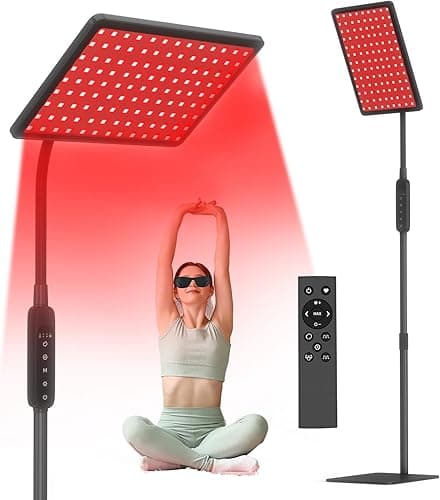
Best RLT panel for skin and recovery: Bestqool 660nm/850nm
Woo-Woo Meter: 2 • mid-three-figures
The Bestqool Red Light Therapy Panel (660nm/850nm) is the workhorse pick from our 2026 best-of. Dual-wavelength, full-body coverage, the right pick for someone serious about skin or recovery. The Scienlodic panel is the value alternate at a lower price and a smaller treatment area.
Compact RLT for skin only: CurrentBody LED Mask or Solawave wand
Woo-Woo Meter: 2 • ~$200–$400
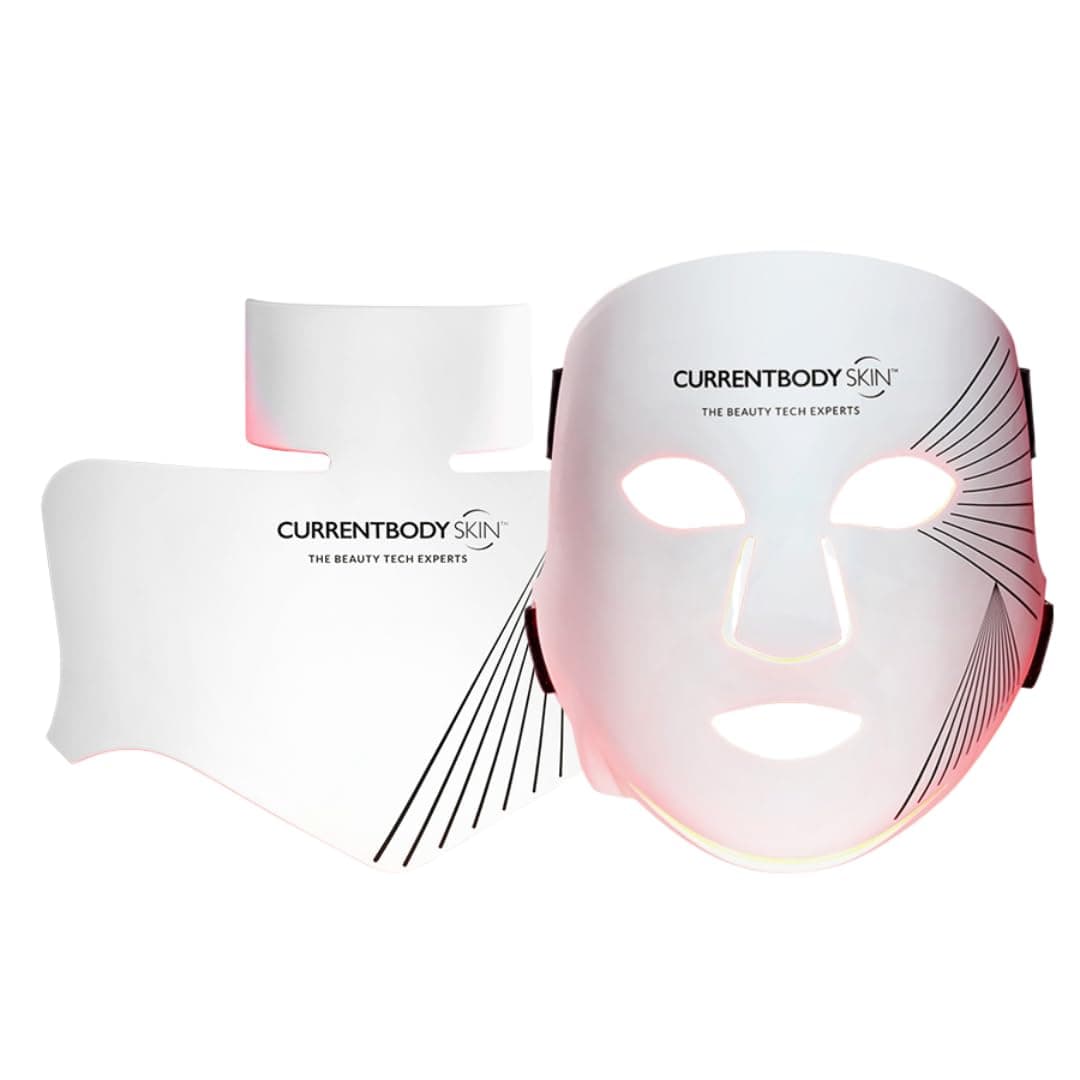
If your scope is purely facial skin, a panel is overkill. The CurrentBody Skin LED Mask is the form-factor pick — sits on the face for ten-minute sessions. The Solawave 4-in-1 Wand is the budget targeted option. We've broken down the trade-off between panel and mask in our panel vs. LED mask head-to-head.
Honest cross-sell: chromotherapy bulb
Woo-Woo Meter: 4 • ~$15
The Chromotherapy Color Light Bulb gets a Woo-Woo 4 because color-light therapy is not a substitute for either device above. It's a mood-lighting object with a spiritual frame. If you like the ritual, fine. Don't buy it expecting clinical outcomes. (If "Woo-Woo 4" is a new framing, our Woo-Woo Meter explainer covers the rating system.)
What a "Winter Wellness" Stack Actually Looks Like
The bridge play, for the reader who can spend a bit: a $40 SAD lamp for the mornings plus a $300 panel for skin or recovery covers two genuinely different problems for under $350 combined. That's less than a single high-end massage gun. Most readers don't need to choose between SAD lamp and red light therapy. They need to stop conflating the two.
The Honest Take
SAD lamps are Woo-Woo Meter 1. Bright-light therapy is one of the most clinically validated interventions in the entire wellness-tech catalog. If your problem is winter mood, the answer is settled: buy the 10,000-lux lamp, use it within an hour of waking, give it two weeks.
Red light therapy is Woo-Woo Meter 2. Real mechanism, strongest evidence in skin and tissue, weaker but not absent for recovery. Buy the Bestqool panel (or the CurrentBody mask for face-only) if those are the problems you have.
The one thing not to do is buy a $400 RLT panel hoping it'll fix your November mood crash. It won't, and a $40 SAD lamp would have.
[^lam-bright-light-2016]: Lam et al., 2016 — bright light therapy for SAD. [^hamblin-pbm-mechanisms-2017]: Hamblin, 2017 — photobiomodulation mechanisms. [^avci-pbm-skin-2013]: Avci et al., 2013 — photobiomodulation in skin. [^amazon-product-listings]: Current Amazon product listings.
Products mentioned in this post
SAD Light Therapy Lamp 10000 Lux
10,000-lux UV-free SAD therapy lamp for circadian and seasonal mood support.
Bestqool Red Light Therapy Panel (660nm/850nm)
Best-selling dual-wavelength (660nm / 850nm) red-light panel on Amazon.
CurrentBody Skin LED Light Therapy Mask
FDA-cleared LED face mask used in clinical anti-aging and skin protocols.
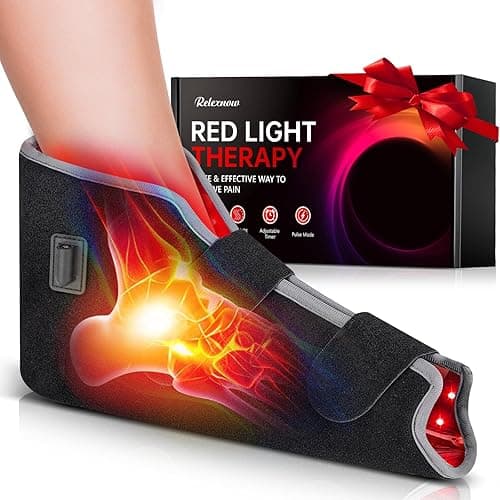
Scienlodic Red Light Therapy Panel
Budget red-light therapy panel with strong reviews — a solid first panel.
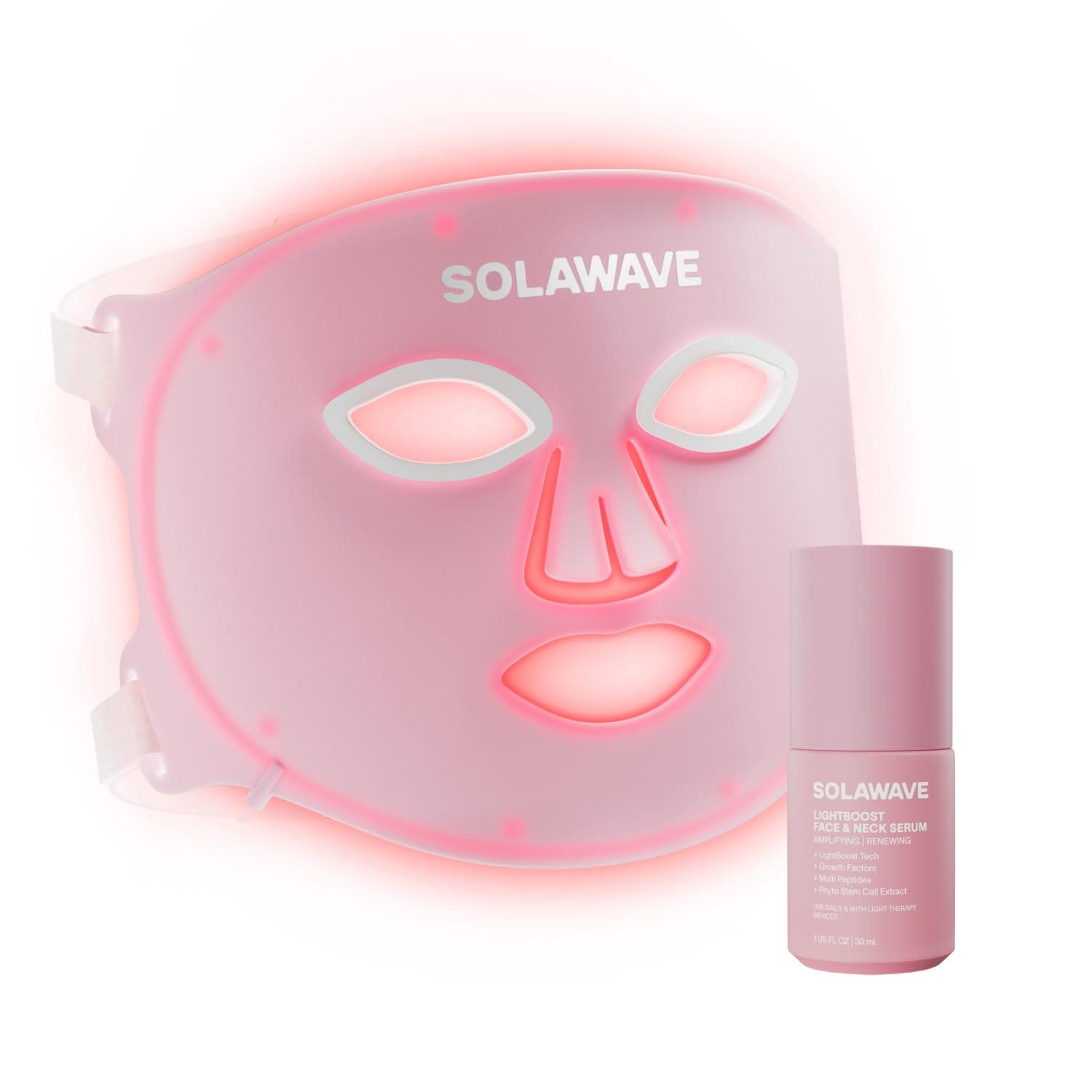
Solawave 4-in-1 Red Light Wand
Handheld 4-in-1 red-light therapy wand built for skincare and microcurrent toning.
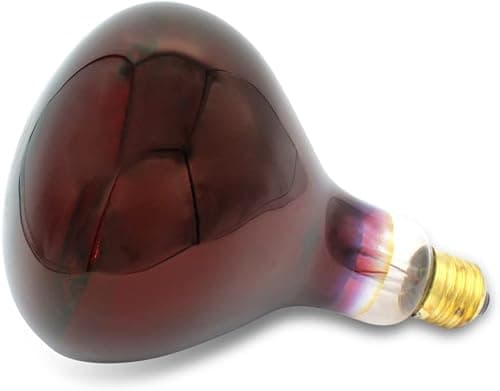
Chromotherapy Color Light Bulb
Color therapy LED bulb for chromotherapy and mood lighting.
Frequently asked
- Can red light therapy replace a SAD lamp?
- No. SAD lamps deliver broad-spectrum white light at 10,000 lux to the eyes, which shifts circadian timing and improves seasonal mood. Red light panels deliver narrow-band red and near-infrared light to the body (with goggles on the eyes) and target skin and tissue. Different wavelengths, different targets, different outcomes — a panel will not fix winter SAD.
- Do you need both a SAD lamp and a red light therapy panel?
- Only if you have both problems. If your concern is winter mood, a SAD lamp alone is enough — and at around $40 it's the cheapest device on the site with this much clinical evidence. If your concern is skin or muscle recovery, an RLT panel alone is enough. People who have both — winter blues plus a skin or recovery goal — get good value owning both, since combined they still cost less than most single high-end recovery devices.
- Can you use a SAD lamp at night?
- No, and it'll backfire if you do. SAD lamps work by suppressing melatonin and signaling 'morning' to your circadian clock. Used at night they'll push your sleep window later and worsen sleep quality. The standard protocol is 20–30 minutes within the first hour of waking, not in the evening.
- Is red light therapy safe for the eyes?
- The wavelengths used in red light therapy panels (around 660nm red and 850nm near-infrared) are generally considered low-risk for skin exposure, but the intensities used in panels are high enough that direct staring is uncomfortable and not recommended. Most reputable panels ship with goggles, and you should wear them. SAD lamps are designed for the eyes; RLT panels are not.
- How long until each one starts working?
- SAD lamps typically show mood improvements within one to two weeks of consistent morning use during the dark months — that's the timeline most clinical trials report. Red light therapy for skin tends to need four to eight weeks of consistent sessions (three to five times a week) to show measurable change in fine lines, tone, or healing. Both are daily-discipline devices, not one-shot treatments.
Sources
- [1]Efficacy of Bright Light Treatment, Fluoxetine, and the Combination in Patients With Nonseasonal Major Depressive Disorder · JAMA Psychiatry · 2016-01-01
- [2]Mechanisms and applications of the anti-inflammatory effects of photobiomodulation · AIMS Biophysics · 2017-05-19
- [3]Low-Level Laser (Light) Therapy (LLLT) in Skin: Stimulating, Healing, Restoring · Seminars in Cutaneous Medicine and Surgery · 2013-03-01
- [4]Amazon product listings (current pricing) · Amazon.com · 2026-04-09
Related reading
More from the desk
Buying guides
Best Red Light Therapy Devices of 2026: One Honest Pick Per Use Case
We picked one red light therapy device per use case for 2026 — full-body panel, face mask, handheld, and budget — with prices, Woo-Woo ratings, and no padding.
Buying guides
Red Light Therapy for Hair Regrowth: An Honest Review of What Panels, Caps, and Wands Can Actually Do
Honest review of red light therapy for hair loss — which device class has the real evidence, why we don't sell laser caps, and what our catalog can or can't do.
Buying guides
Red Light Therapy for Skin: An Honest Review of What the Evidence (and Our Catalog) Actually Supports
Skin is where red light therapy's evidence is strongest — but only for some goals. An honest, goal-by-goal guide to masks, wands, and panels for skin.