Buying guides
Best Red Light Therapy Devices of 2026: One Honest Pick Per Use Case
We picked one red light therapy device per use case for 2026 — full-body panel, face mask, handheld, and budget — with prices, Woo-Woo ratings, and no padding.
“The strongest evidence for photobiomodulation is in skin healing and inflammatory conditions — the recovery and longevity claims are weaker but not implausible.”
Most "best red light therapy devices 2026" lists are twelve products deep, ranked by which brand paid the affiliate fee, and silent on the irradiance numbers that actually decide whether a device works. We are not doing that.
This post picks one device per use case — full-body panel, face mask, handheld, budget panel — gives each a Woo-Woo Meter rating, and refuses to recommend anything we haven't listed in our catalog. If you came here to buy one device this weekend, you should leave at the table below. If you want the framework instead of the ranking, the red light therapy buying guide is its sibling post.
The 30-second answer
| Use case | Pick | Approx. price | Woo-Woo |
|---|---|---|---|
| Best Overall Full-Body Panel | Bestqool 660nm/850nm Panel | ~$160 | 2 |
| Best Face Mask | CurrentBody Skin LED Mask | ~$380 | 2 |
| Best Handheld / Spot Treatment | Solawave 4-in-1 Wand | ~$90 | 3 |
| Best Budget Panel | Scienlodic Red Light Panel | ~$130 | 2 |
Prices reflect current Amazon listings and shift; treat them as a tier, not a quote. Skim-readers can stop here. Everyone else: the picks below explain why each device wins its slot, who it's wrong for, and what we'd say if you asked us in person.
What "best" means in this guide
"The strongest evidence for photobiomodulation is in skin healing and inflammatory conditions — the recovery and longevity claims are weaker but not implausible."
That framing matters before any ranking. Red light therapy works best where the evidence is strongest. We rate every pick on the Woo-Woo Meter — our scale for how far the marketing has run from the science — and "best" here means best for a specific use case, not best-overall-for-everyone. We only recommend devices we actually list in our catalog. If you don't see Joovv, Mito, or PlatinumLED below, scroll to "Picks we considered and didn't include" for the honest reason.
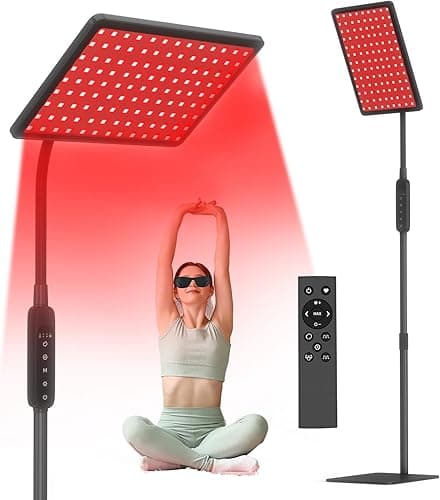
Best Overall Full-Body Panel — Bestqool 660nm/850nm
Woo-Woo Meter: 2 | View product
The Bestqool 660nm/850nm panel is the pick for the buyer who wants one device that handles both skin and deep-tissue recovery and has space for a panel on a stand or door frame. Dual-wavelength matters: 660nm (visible red) is absorbed strongly at the surface for skin work; 850nm (near-infrared) penetrates deeper into muscle and joint tissue. The mechanistic case for using both — surface plus depth — is laid out in Hamblin's 2017 review of photobiomodulation mechanisms.
Who it's for: someone willing to commit to a real panel, sit or stand 6–12 inches away, and treat 10–20 minutes per session a few times a week. Who it's not for: the renter without wall space or the buyer who only wants face work — a mask is the better tool there.
Best Face Mask — CurrentBody Skin LED Mask
Woo-Woo Meter: 2 | View product
The CurrentBody Skin LED Mask is the cleanest pick for a skin-only buyer: FDA-cleared, hands-free, a 10-minute session you can run while you read email, and a clinical-trial program behind the brand that most LED-mask competitors don't have. Skin is also the use case with the strongest evidence base in the entire photobiomodulation literature — Avci's 2013 review covers the mechanistic and clinical case for low-level light therapy in skin rejuvenation, acne, and wound healing.
Who it's for: anti-aging, fine lines, tone, post-procedure healing — and anyone who knows they will not stand in front of a panel three times a week. Who it's not for: deep-tissue recovery (the mask doesn't cover muscle groups) or anyone who wants near-infrared depth (it's a red/visible-light mask). For the longer-form review of the mask category and our take on goal-by-goal expectations, read the red light therapy for skin honest review.
Best Handheld / Spot Treatment — Solawave 4-in-1 Wand
Woo-Woo Meter: 3 | View product
The Solawave 4-in-1 wand is the right form factor when you want to treat one wrinkle, one breakout, or one bruise — not your whole face or body. Portable, combines red light with microcurrent and warmth, and reasonably priced as a touch-up tool.
The honest caveat is built into the Woo-Woo rating. Multi-modal devices stack claims (red light + microcurrent + galvanic + warmth) faster than any single mechanism's evidence base supports, and the dose per session on a wand this size is small. It's not a treatment device; it's a touch-up. Buy it if you travel, want something for a targeted spot, or want to test the technology on one area before committing to a panel. Don't buy it as a substitute for a panel or mask.
Best Budget Panel — Scienlodic Red Light Therapy Panel
Woo-Woo Meter: 2 | View product
The Scienlodic panel is the honest entry point: dual-wavelength, real panel form factor, and roughly a third the price of the higher-end panels in the category. It's what we'd buy for a friend who keeps asking whether red light therapy "actually does anything" and isn't ready to spend $500+ to find out.
The trade-off is also honest. The treatment area is smaller and the irradiance is lower than the Bestqool, which means longer sessions to hit the same dose. That's the deal at this price tier. What it isn't: a wand pretending to be a panel. It's a real panel at a budget price, with the trade-offs named up front.
Picks we considered and didn't include
Joovv, Mito Red Light, PlatinumLED, Red Light Rising, Hooga — all common names in the SERP, none in our catalog. We don't list them and we haven't independently verified their irradiance specs at the distances marketed. Our policy is simple: we'd rather rank four devices we'll stand behind than twelve we've Googled. If we add a Joovv-class panel to src/data/products.ts in a future cycle, it can earn a slot. Until then, recommending it would be the affiliate-listicle move this post exists to push back against.
How to choose between the picks
A decision tree, not a 2,000-word irradiance explainer:
- Skin only, no patience for posing in front of a panel? → CurrentBody Skin LED Mask.
- Skin and recovery, have wall or door space? → Bestqool 660nm/850nm panel.
- Travel, or one targeted spot you want to treat? → Solawave wand.
- Curious, want to try the technology cheap? → Scienlodic panel.
If you're stuck between a mask and a panel, the panel vs LED face mask comparison is the form-factor decision in long form. If you want the irradiance / wavelength / dose framework, the red light therapy buying guide covers it.
What red light therapy is actually good for in 2026
One paragraph, not a chapter. The strongest evidence is in skin: acne, photoaging, post-procedure healing — covered in detail in Avci's 2013 review and unchanged in the years since. Promising but smaller-trial evidence sits behind muscle recovery and inflammation, supported mechanistically by Hamblin's 2017 work. Weaker-evidence claims — longevity, fat loss, hair regrowth, mood — are where most of the SERP's marketing energy goes; they're the lanes the science hasn't validated yet. For the full breakdown, read red light therapy benefits explained. The takeaway for a buyer: don't pay panel money expecting hair regrowth. Pay panel money for skin and recovery, where the evidence actually lives.
Listing red flags to watch out for
These apply across all four picks and to anything else you're cross-shopping:
- Irradiance without a measurement distance. "200 mW/cm²" means nothing without "at X inches." Reputable manufacturers state both.
- "1000 LEDs!" with no wattage. LED count is a marketing number. Wattage and irradiance are the real ones.
- Missing FDA clearance language on devices that should have it. Face masks marketed for specific skin indications should say so explicitly. Vague "FDA registered" isn't the same as "FDA cleared."
- AliExpress-relabeled panels with no brand history. If the brand has no website older than the listing, walk away.
Current Amazon listings are the working pricing source for all four picks above, and prices on this category move week to week.
Our honest take
Red light therapy is one of the more evidence-supported lanes on the Woo-Woo Meter — three of our four picks land at 2, and the one at 3 (Solawave) earns the higher rating because of the multi-modal claims, not the red-light part itself. The four devices above cover every realistic 2026 buyer in this category. The rest of the SERP is mostly affiliate noise.
If you can only buy one device this year and you're not sure which: a face mask if your goal is skin, a full-body panel if your goal is recovery. Don't buy both at once — use one consistently for eight weeks, decide whether it earned its place, and only then add the second.
Products mentioned in this post
Bestqool Red Light Therapy Panel (660nm/850nm)
Best-selling dual-wavelength (660nm / 850nm) red-light panel on Amazon.
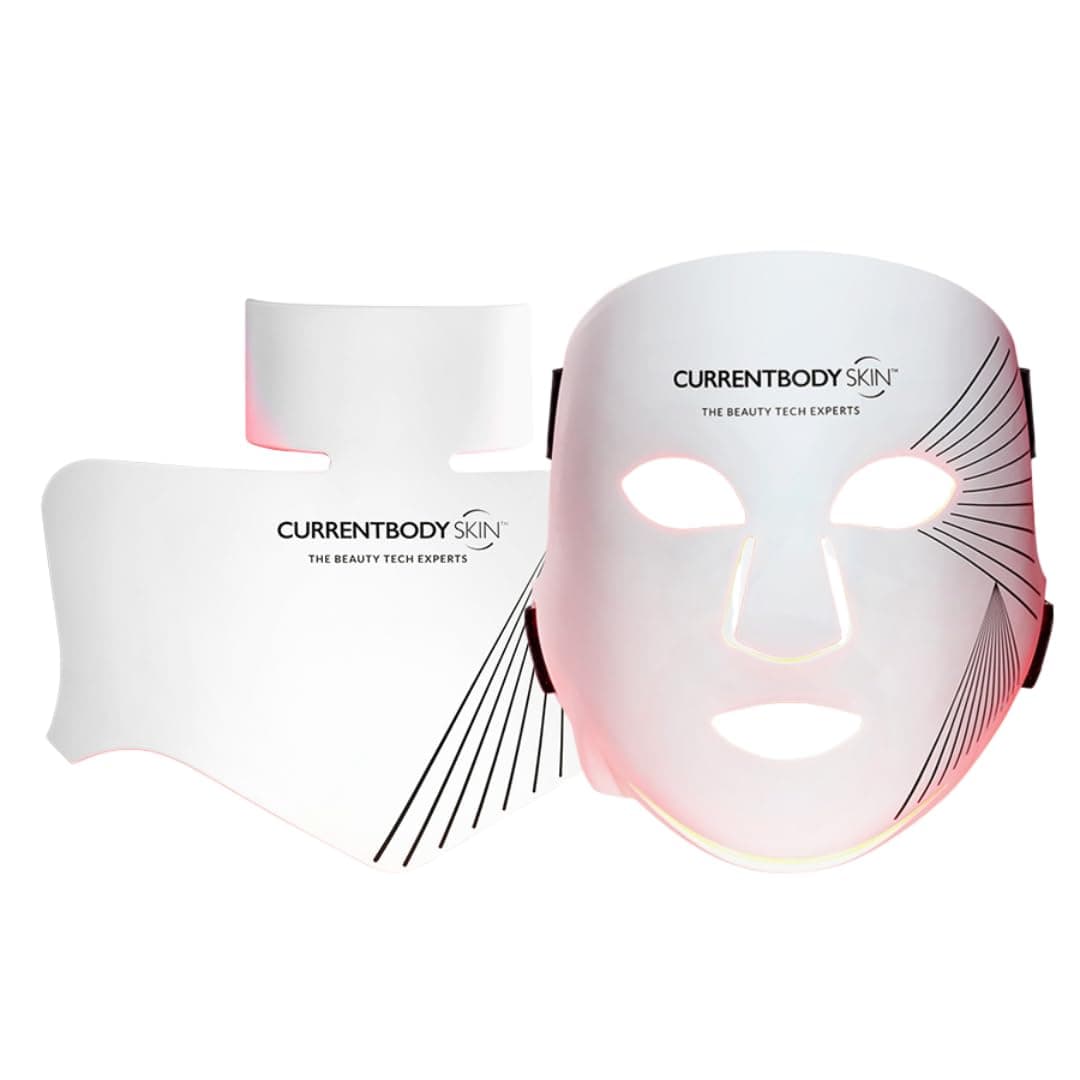
CurrentBody Skin LED Light Therapy Mask
FDA-cleared LED face mask used in clinical anti-aging and skin protocols.
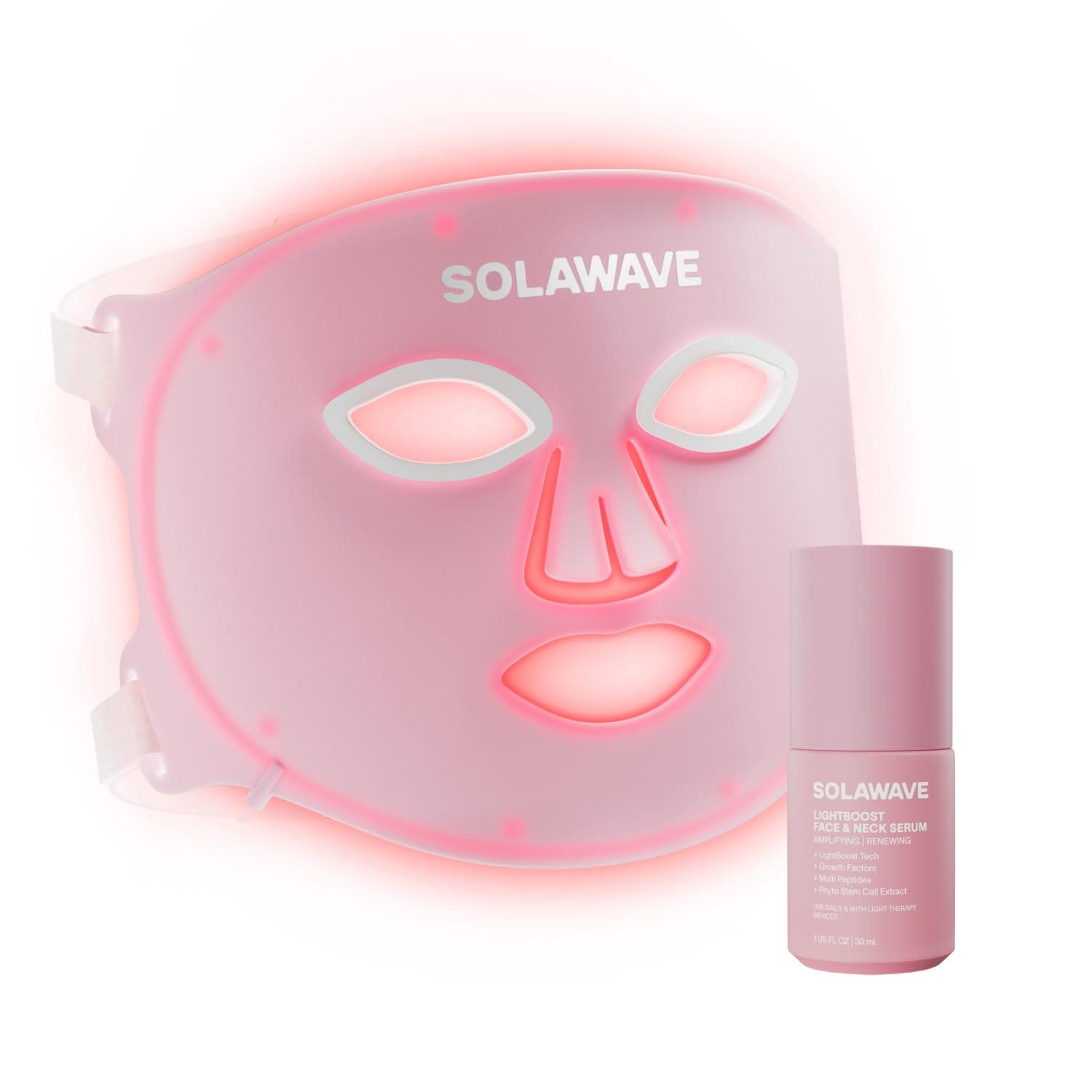
Solawave 4-in-1 Red Light Wand
Handheld 4-in-1 red-light therapy wand built for skincare and microcurrent toning.
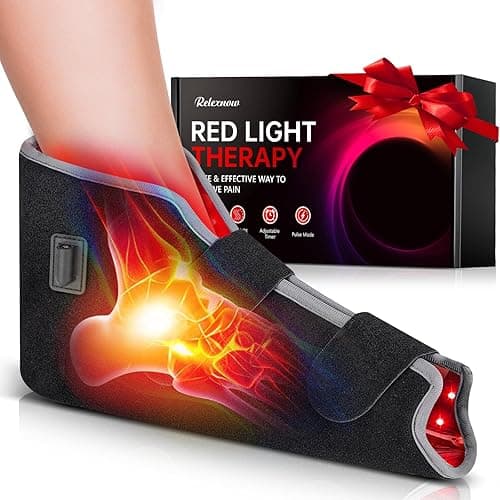
Scienlodic Red Light Therapy Panel
Budget red-light therapy panel with strong reviews — a solid first panel.
Frequently asked
- What is the best red light therapy device in 2026?
- There isn't one. Best depends on use case. For skin only, the CurrentBody Skin LED Mask is the cleanest pick — FDA-cleared, hands-free, and clinical-trial backing. For both skin and recovery, the Bestqool 660nm/850nm panel is the best one-device option. For a spot-treatment or travel tool, the Solawave wand. For a curious budget buyer, the Scienlodic panel.
- Is a red light therapy panel or face mask better?
- It depends on your goal and your space. A mask is better if your goal is skin only and you want a hands-free 10-minute session. A panel is better if you want to treat both skin and muscle/joint tissue and have room to mount or stand it. Masks are usually red/visible light only; panels typically include 850nm near-infrared for deeper tissue penetration.
- How much should I spend on a red light therapy device?
- Roughly $100–$200 for a budget panel or handheld wand to test the category, $300–$400 for an FDA-cleared face mask, and $500+ for higher-end full-body panels. Spending more on a panel mostly buys you larger treatment area and higher irradiance, not better wavelengths — most credible panels at any tier already use 660nm and 850nm.
- Does red light therapy actually work?
- Yes, for some uses, with caveats. The strongest evidence is in skin: acne, photoaging, and post-procedure healing have consistent clinical support. Muscle recovery and inflammation have promising but smaller-trial evidence. Longevity, fat loss, hair regrowth, and mood claims are where the marketing has run ahead of the science — treat those as unproven.
- Why doesn't this list include Joovv or Mito Red Light?
- We only rank devices we list in our catalog and have spec-checked. Joovv, Mito, PlatinumLED, and similar brands are well-known but not currently in our product set, and we'd rather recommend four devices we'll stand behind than twelve we haven't independently verified.
Sources
- [1]Mechanisms and applications of the anti-inflammatory effects of photobiomodulation · AIMS Biophysics · 2017-05-19
- [2]Low-Level Laser (Light) Therapy (LLLT) in Skin: Stimulating, Healing, Restoring · Seminars in Cutaneous Medicine and Surgery · 2013-03-01
- [3]Amazon product listings (current pricing) · Amazon.com · 2026-04-09
Related reading
More from the desk
Category deep-dives
Red Light Therapy Benefits Explained: What the Science Actually Shows
Tiered by evidence strength: what red light therapy is solidly shown to do, what's plausible, and which claims are marketing running ahead of the science.
Buying guides
Red light therapy panels: a buyer's guide for 2026
Photobiomodulation has the strongest evidence in skin and wound healing — and the marketing has gone everywhere. Here's how to actually shop a red light panel.
Buying guides
SAD Lamp vs. Red Light Therapy for Winter: Which One Treats What (2026)
SAD lamps treat winter mood. Red light therapy treats skin and tissue. They're not substitutes — here's the honest comparison and what to actually buy.