Buying guides
Red Light Therapy for Hair Regrowth: An Honest Review of What Panels, Caps, and Wands Can Actually Do
Honest review of red light therapy for hair loss — which device class has the real evidence, why we don't sell laser caps, and what our catalog can or can't do.
“The strongest evidence for photobiomodulation is in skin healing and inflammatory conditions — the recovery and longevity claims are weaker but not implausible.”
You noticed thinning at the crown, or a temple line creeping back, or more hair in the shower than there used to be. Maybe you've tried minoxidil and didn't love it, or you're not ready to start finasteride, and somewhere along the scroll you hit a Reddit thread or an Instagram ad telling you red light therapy can regrow hair. Now you're staring at $400 laser caps, $300 panels, and $150 wands wondering which one — if any — does what the marketing claims.
This post is the honest answer. We'll tell you which device class actually has clinical evidence for hair regrowth, why we don't sell that class, and which products in our own catalog are wrong for hair (by name). If you want the broader category context, the red light therapy buying guide is the parent hub.
The 30-second answer
Yes, low-level light therapy has real human data for androgenic alopecia (the patterned thinning that affects most men and a meaningful share of women) — but most of that data comes from FDA-cleared fitted laser caps, not from generic panels, wands, or face masks. If hair is your only goal, the honest pick is a clinical-trial-grade fitted cap, and we don't carry one. We'll explain why, and what we do carry that can serve as an adjunct if hair is one goal among several.
If hair is one of several goals — skin, recovery, sleep — an at-home panel can earn its place in the routine at modest, plausible benefit. Wands and face masks are off-target for the scalp.
What "red light therapy for hair" actually means
Photobiomodulation (PBM) at 630–680 nm and 800–850 nm penetrating the scalp is hypothesized to extend the anagen (growth) phase of the follicle and stimulate dermal papilla activity. The proposed mechanism is light absorption by cytochrome c oxidase, which modestly increases mitochondrial signaling and reduces local inflammation — laid out in Hamblin's 2017 review of PBM mechanisms.
The mechanism is real. What determines whether your device works on your head is dose at the scalp — and that depends on form factor, wavelength, irradiance, and how consistently you actually sit under it. The marketing tends to skip the dosing question; the trials don't.
What the evidence actually says
"The strongest evidence for photobiomodulation is in skin healing and inflammatory conditions — the recovery and longevity claims are weaker but not implausible."
That framing matters here. Skin remains PBM's strongest evidence base. Hair is the next-strongest device-specific clinical area — but only inside one form factor. Cleanly separated, here's the picture:
Fitted laser caps with FDA 510(k) clearance for androgenic alopecia — HairMax, Capillus, iRestore, Theradome, Kiierr, and similar. Multiple sham-controlled RCTs at 12–26 weeks show modest but measurable terminal hair count gains, mostly in vertex (crown) thinning, mostly in early-stage AGA. This is the strongest evidence in the hair lane and it is specific to fitted-cap devices at validated dosing. The FDA 510(k) clearance language ("clearance" — not "approval") tracks this device class.
Generic full-body or face panels at scalp distance. Direct hair-regrowth RCTs on these specific devices are very thin. The mechanism transfers from caps to panels — same wavelengths, same biology — but the dose at the scalp doesn't always replicate the cap protocols, and panels weren't designed with the curvature of a head in mind. A reasonable adjunct, not a primary device.
Handheld wands and LED face masks. Not designed for the scalp. Treatment area is too small (wands) or geometrically wrong (masks — the hood doesn't reach above the hairline, and the wavelength mix is tuned for facial skin chromophores). Off-label, off-target, not recommended for hair as a primary goal. Avci's 2013 review covers the broader safety and use profile of low-level light therapy and it's clear which forms have been studied where.
The benefits explainer in our red light therapy benefits explained post puts it in one line: if hair is your main reason for buying, you're shopping a cap, not a panel. This post is the long-form realization of that sentence.
Why we don't carry laser caps (and what that means for this post)
Honest disclosure up front: our catalog is panels, masks, and wands. We don't currently list a clinical-grade fitted cap. We're saying so before we recommend anything because the alternative — pretending a panel is a cap — is the move that makes the rest of the SERP untrustworthy.
If you want the device class with the strongest hair-specific clinical evidence, you're shopping outside our catalog. We'd rather lose the click than mis-sell you a $400 panel as a cap substitute. When a cap-class device shows up in our product set, we'll say so.
What our catalog can actually do for hair
Two honest options if you want something we sell that can serve as a hair adjunct:
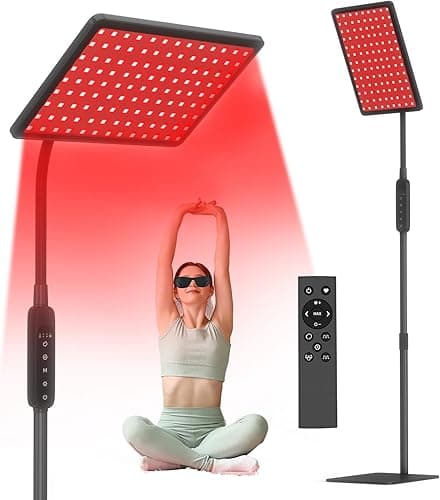
- Bestqool 660nm/850nm panel — higher-irradiance dual-wavelength panel. Used at 6–12 inches from the scalp for 10–15 minutes per session, this delivers a dose in the range LLLT studies operate in. Honest take: a defensible at-home adjunct, especially if you're already buying it for skin or recovery and adding the scalp as a third use case. Not a cap-equivalent, but the closest thing we sell.
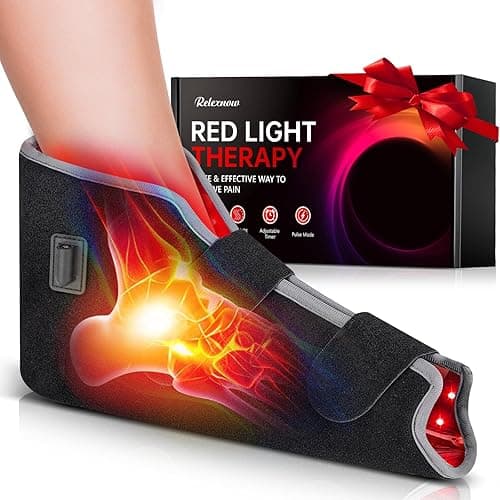
- Scienlodic red light therapy panel — budget alternative. Lower irradiance means longer sessions to hit a comparable dose, and the smaller treatment area is the limiting factor for full-scalp coverage. The right pick if you're testing the category cheaply or already own the panel for other reasons.
Neither is sold as a hair device. Both can serve as one if you understand the trade-off and you're not expecting cap-RCT results from a panel-RCT-free device.
What our catalog can't do for hair
This is the section the affiliate-puff articles refuse to write. By name:
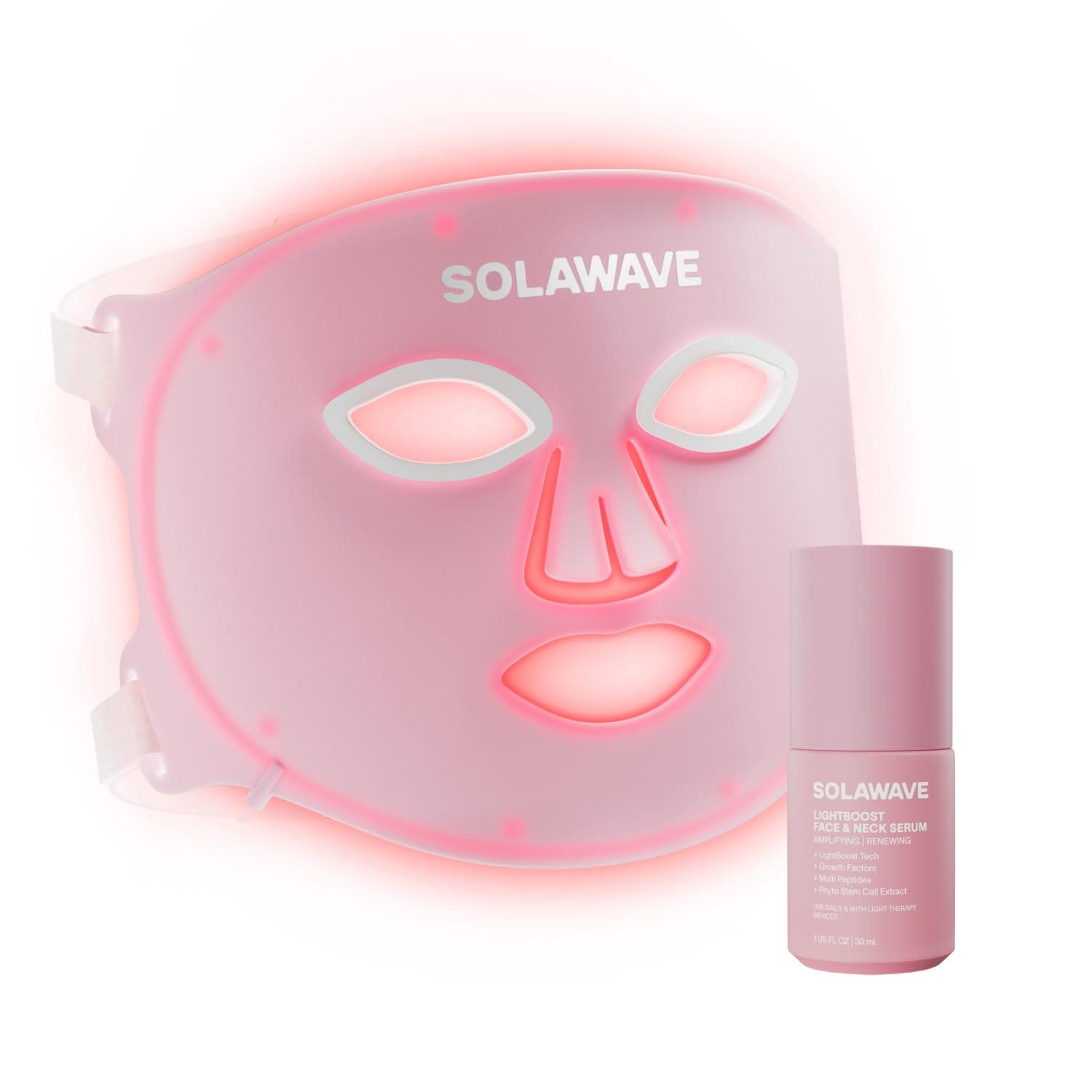
- Solawave 4-in-1 wand — face wand. Tiny treatment area, low total dose per session, designed for periorbital skin and individual blemishes. Do not buy this for hair. It's a perfectly reasonable spot-treatment tool for the face — wrong tool for the scalp.
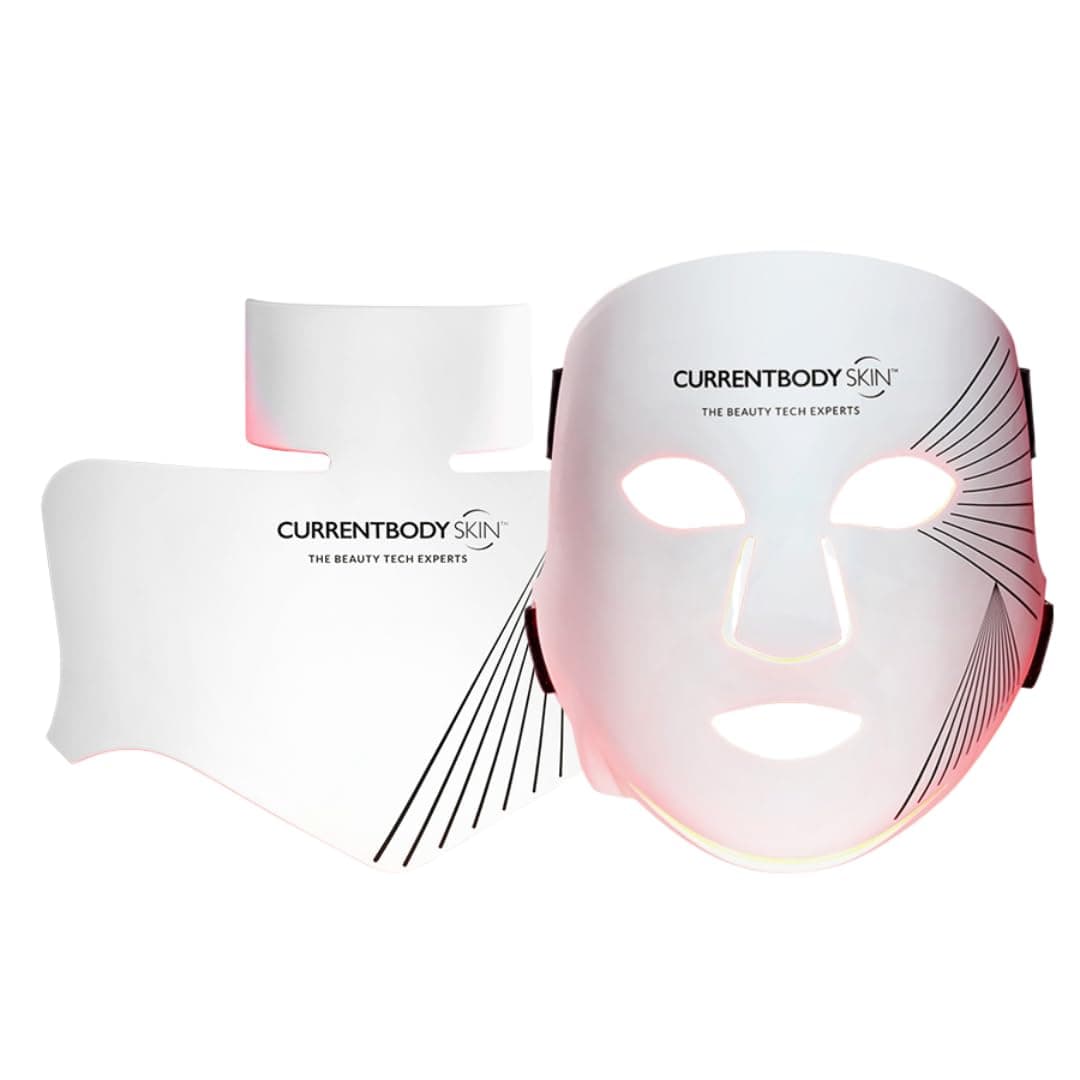
- CurrentBody Skin LED face mask — face mask. The hood doesn't reach the scalp, the wavelength mix is tuned for skin chromophores, and the form factor was built for cheekbones and the periorbital area. Not for hair. Buy it for skin if skin is the goal.
If you came here from our panel vs LED face mask comparison, the takeaway is the same: form factor matters, and "red light is red light" is the affiliate-listicle shortcut, not the truth.
Panel vs cap — the honest cost-and-evidence trade-off
A clinical fitted cap runs roughly $400–$1,200 and has device-specific RCT data for AGA. A high-irradiance panel runs roughly $300–$700, has category PBM data but not device-specific hair RCTs, and earns its keep by serving multiple use cases — skin, recovery, scalp as a bonus. Current Amazon listings are the working pricing source on the panel side; both numbers move week to week.
The honest framing the SERP is missing:
- One device for hair only? Buy the cap. It's the device class the trials were run on.
- One device for hair plus skin plus post-workout recovery? The panel is the more honest dollar. You're paying for a multi-use tool with modest scalp benefit as one of several jobs. See best red light therapy devices of 2026 for the broader panel picks.
We'd rather you understood that trade-off and left to buy a cap than pretended our panel was something it isn't.
Realistic timelines and expectations
The trial protocols that worked needed 16–26 weeks of consistent daily or every-other-day use before evaluating results. Realistic outcomes:
- Early-stage AGA (Norwood 2–3, or early female pattern): modest terminal hair count gains. Visible-but-subtle is the honest expectation.
- Moderate AGA (Norwood 4–5): slowed progression, sometimes some regrowth at the vertex. Less impressive than the marketing photos.
- Advanced AGA (Norwood 6–7) or scarring alopecias: minimal benefit. Light therapy supports living follicles. It does not resurrect dead ones.
If you're four weeks in and not seeing change, that's not a failure signal — it's the protocol. If you're six months in and seeing nothing on early-stage thinning, your device, your dose, or the diagnosis is the issue.
Stacking with other interventions
Light therapy stacks well with topical minoxidil and oral finasteride or dutasteride. The mechanisms are non-redundant — minoxidil acts on follicle vascularization and the hair cycle, finasteride/dutasteride blocks DHT, and PBM acts on follicle mitochondrial activity. The clinical trials with the strongest results were typically adjunctive, not monotherapy.
The honest reframe: the device alone is rarely the whole answer for AGA. If you're not on a topical or an oral and you're not willing to consider one, light therapy is unlikely to be a complete solution by itself. That's not a sales pitch for pharma — it's what the trial data actually shows.
Safety, contraindications, and red flags
Generally well-tolerated. No UV exposure. The main caveats:
- Eye protection during sessions — especially relevant for panels at scalp distance, where the light can spill across your face.
- Photosensitizing medications — some retinoids, doxycycline, isotretinoin, St. John's Wort. Ask your prescriber.
- Active scalp dermatoses — psoriasis flares, seborrheic dermatitis, scalp folliculitis. Treat the underlying condition first.
- Scarring alopecias — talk to a dermatologist before spending money on a device. Different mechanism, different prognosis.
The general PBM safety profile is well-characterized in Avci's 2013 review.
Marketing-claim red flags to ignore
If a listing says any of the following, walk away:
- "Regrows hair anywhere." It doesn't. Light therapy is most credible at the vertex in early-stage AGA.
- "Cures baldness." No device does. Selling a cure is a regulatory and scientific red flag.
- "FDA-approved for hair regrowth." Clearance is not approval. Devices in this class get 510(k) clearance, not premarket approval. Brands that conflate the two are testing your knowledge of the difference.
- Before/after photos under different lighting. Salon lighting versus bathroom lighting alone can fake half the apparent regrowth in this category.
- No irradiance specs and no labeled wavelengths. If the listing won't tell you the dose, you can't compare it to the trials.
- Cap-shaped devices under $150. The diode count and dose almost certainly don't match the marketing. Real clinical-grade caps cost what they cost for a reason.
Our honest take
Woo-Woo Meter: 2. The mechanism is real. The device-specific clinical evidence is concentrated in fitted laser caps for early-to-moderate androgenic alopecia. Outside that narrow lane, the evidence weakens fast. For the full rubric, see what the Woo-Woo Meter means.
The closing position by reader profile:
- Hair is your only goal. Buy a clinical-grade fitted laser cap (HairMax, Capillus, Theradome, iRestore, Kiierr class). We don't carry one and we won't pretend our panels are a substitute. This is the device class the trials were run on.
- Hair is one of several goals (skin, recovery, sleep). The Bestqool 660nm/850nm panel is a defensible all-rounder. Treat hair as a secondary, modest-benefit adjunct — not the headline use case. The Scienlodic panel is the budget alternative if you want to test the category before spending more.
- You bought a wand or a face mask hoping it would help your hair. Return it. Wrong tool. Use the Solawave wand or CurrentBody mask for skin — that's where their evidence actually lives, as covered in our red light therapy for skin honest review — and stack a panel or a cap for the scalp.
- You're not on minoxidil or finasteride yet. Be honest with yourself. The trial evidence that's strongest for PBM in AGA is adjunctive. Light therapy alone is rarely the whole answer.
You walk away from this page knowing what to buy, what not to buy from us, and what to buy from someone else if that's what your head actually needs. That's the trade we're willing to make.
Products mentioned in this post
Bestqool Red Light Therapy Panel (660nm/850nm)
Best-selling dual-wavelength (660nm / 850nm) red-light panel on Amazon.
Scienlodic Red Light Therapy Panel
Budget red-light therapy panel with strong reviews — a solid first panel.
Solawave 4-in-1 Red Light Wand
Handheld 4-in-1 red-light therapy wand built for skincare and microcurrent toning.
CurrentBody Skin LED Light Therapy Mask
FDA-cleared LED face mask used in clinical anti-aging and skin protocols.
Frequently asked
- Does red light therapy actually regrow hair?
- For androgenic alopecia (patterned thinning), yes — modestly, and mostly inside one device class. Fitted laser caps with FDA 510(k) clearance have multiple sham-controlled RCTs showing measurable terminal hair count gains over 12–26 weeks, mostly at the vertex in early-stage AGA. Generic panels share the mechanism but lack device-specific hair RCTs, and wands and face masks aren't designed for the scalp. Light therapy supports living follicles — it doesn't resurrect dead ones.
- Is a laser cap or a red light therapy panel better for hair?
- For hair only, the cap. The clinical trials were run on fitted-cap devices at validated dosing, and a panel can't perfectly replicate that dose at the scalp. For hair plus skin plus recovery, a panel is the more honest dollar — you're paying for a multi-use tool with scalp benefit as one of several jobs, not a hair-first device.
- Why doesn't Wellness Devices sell laser caps for hair regrowth?
- We don't currently list a clinical-grade fitted cap in our catalog. Rather than recommend a panel as a cap substitute, we say so — if hair is your only goal, you're shopping outside our product set. When a cap-class device joins the catalog, we'll add it.
- How long does red light therapy take to work on hair?
- The trial protocols that worked needed 16–26 weeks of consistent daily or every-other-day use before evaluating. If you're four weeks in and not seeing change, that's the protocol — not a failure signal. Six months in with nothing on early-stage thinning is when you re-examine your device, your dose, or your diagnosis.
- Can red light therapy replace minoxidil or finasteride?
- Rarely, on its own. The clinical trials with the strongest PBM results in AGA were typically adjunctive — light therapy stacked with topical minoxidil and/or oral finasteride or dutasteride. The mechanisms are non-redundant. Light therapy alone is unlikely to be a complete answer for moderate-to-advanced AGA.
Sources
- [1]Mechanisms and applications of the anti-inflammatory effects of photobiomodulation · AIMS Biophysics · 2017-05-19
- [2]Low-Level Laser (Light) Therapy (LLLT) in Skin: Stimulating, Healing, Restoring · Seminars in Cutaneous Medicine and Surgery · 2013-03-01
- [3]Amazon product listings (current pricing) · Amazon.com · 2026-04-09
Related reading
More from the desk
Buying guides
Red Light Therapy for Skin: An Honest Review of What the Evidence (and Our Catalog) Actually Supports
Skin is where red light therapy's evidence is strongest — but only for some goals. An honest, goal-by-goal guide to masks, wands, and panels for skin.
Category deep-dives
Red Light Therapy Benefits Explained: What the Science Actually Shows
Tiered by evidence strength: what red light therapy is solidly shown to do, what's plausible, and which claims are marketing running ahead of the science.
Buying guides
Red Light Therapy Panel vs. LED Face Mask: Which Is Actually Worth Your Money?
Panels cover your whole body for less per square centimeter. Masks are hands-free and face-specific. Here's how to pick the right red light form factor.