Buying guides
Red Light Therapy Panel vs. LED Face Mask: Which Is Actually Worth Your Money?
Panels cover your whole body for less per square centimeter. Masks are hands-free and face-specific. Here's how to pick the right red light form factor.
“The strongest evidence for photobiomodulation is in skin healing and inflammatory conditions — the recovery and longevity claims are weaker but not implausible.”
You've already decided on red light. Now what?
If you're reading this, you're probably past the "does red light therapy work?" stage. You've seen the studies, you've watched the dermatologist TikToks, and you're ready to buy something. The question that's actually holding you up: panel or mask?
They both emit the same wavelengths. They both claim to do the same things. One costs half as much and looks like a solar panel. The other straps to your face and costs more than some people's rent. The decision matters more than most comparison articles admit, because the wrong form factor is the one that ends up in your closet after three weeks.
What red light therapy actually does (30-second primer)
Photobiomodulation (PBM) uses specific wavelengths — typically 660nm (visible red) and 850nm (near-infrared) — to stimulate mitochondrial activity via cytochrome c oxidase. The downstream effects include reduced inflammation, increased collagen synthesis, and improved cellular energy production.
That mechanism is well-characterized and not seriously disputed. What is disputed is how far you can extend it — the skin healing and anti-inflammatory evidence is solid, while the longevity, fat loss, and cognitive claims outrun the data. For a deeper look at the evidence tiers, check our red light therapy buying guide.
Panels: the whole-body workhorse
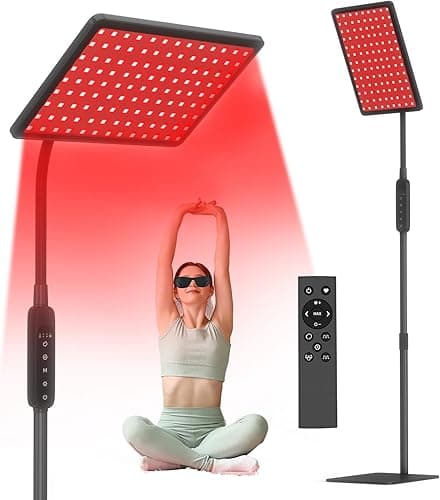
A full-size red light panel — like the Bestqool 660nm/850nm panel or the Scienlodic panel — is a large, wall-mounted or door-hung array of LEDs emitting dual-wavelength light.
What panels do well:
- Versatility. Face, back, knees, shoulders — you're not locked into one body part. If you care about joint recovery or full-body treatment, panels are the only option.
- Higher irradiance per dollar. Panels deliver more milliwatts per square centimeter at a lower price point than masks. A mid-range panel runs $150–$300 and covers a treatment area many times larger than any mask.
- Dual-wavelength coverage. Most panels include both 660nm and 850nm LEDs, giving you both the surface-level red and the deeper-penetrating near-infrared.
Where panels fall short:
- Not hands-free for face. You stand or sit at a fixed distance (typically 6–12 inches). For facial treatment, that means holding still and staring at a red wall for 10–20 minutes.
- Distance matters. The effectiveness drops off with distance. You need to be consistent about positioning, which is harder than it sounds over months of daily use.
- Space. A full-size panel needs wall space and a mounting solution. Not great for small apartments.
LED face masks: targeted and hands-free
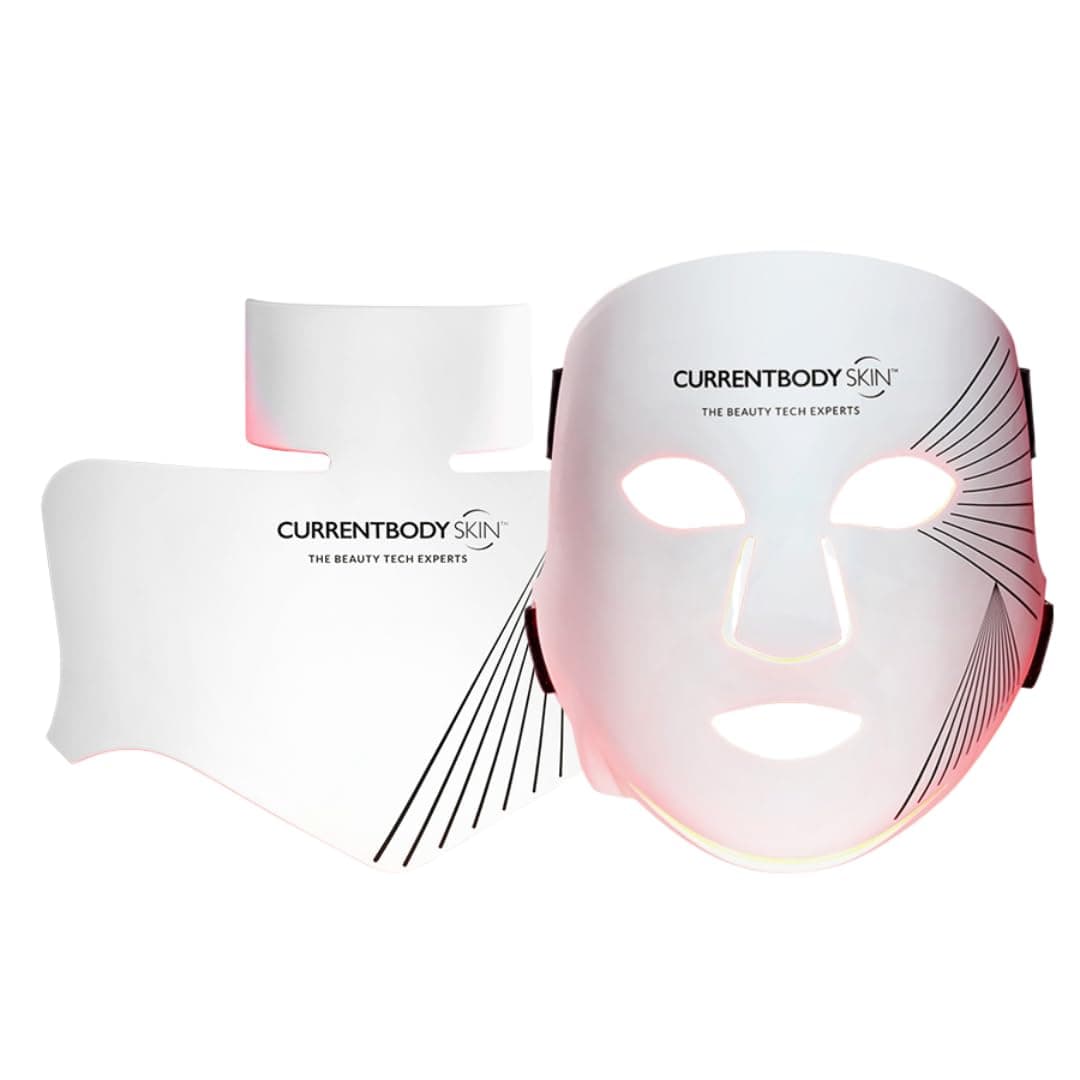
An LED face mask — like the CurrentBody Skin LED mask — is a flexible silicone or rigid shell that sits directly on your face, with LEDs positioned at a consistent, close distance from your skin.
What masks do well:
- Consistent dose delivery. The LEDs sit at a fixed distance from your skin every session. No guessing about positioning. For facial protocols specifically, this consistency matters.
- Hands-free. Strap it on and do something else. Read, listen to a podcast, sit on the couch. The compliance advantage is real — if a device is easier to use, you use it more.
- FDA-cleared options. Several masks (including CurrentBody's) have FDA clearance for specific skin conditions, which means at least some regulatory review of safety and efficacy claims.
Where masks fall short:
- Face only. If you also want to treat your back, knees, or anything below your chin, you need a second device.
- Higher price per treatment area. A quality LED mask runs $300–$400+ and covers roughly 300 cm² of face. A panel at the same price covers 10–20x the area.
- Lower total irradiance. Most masks deliver lower power density than panels. They compensate with closer distance, but the total energy delivered per session is typically less.
The third option: wands and targeted devices
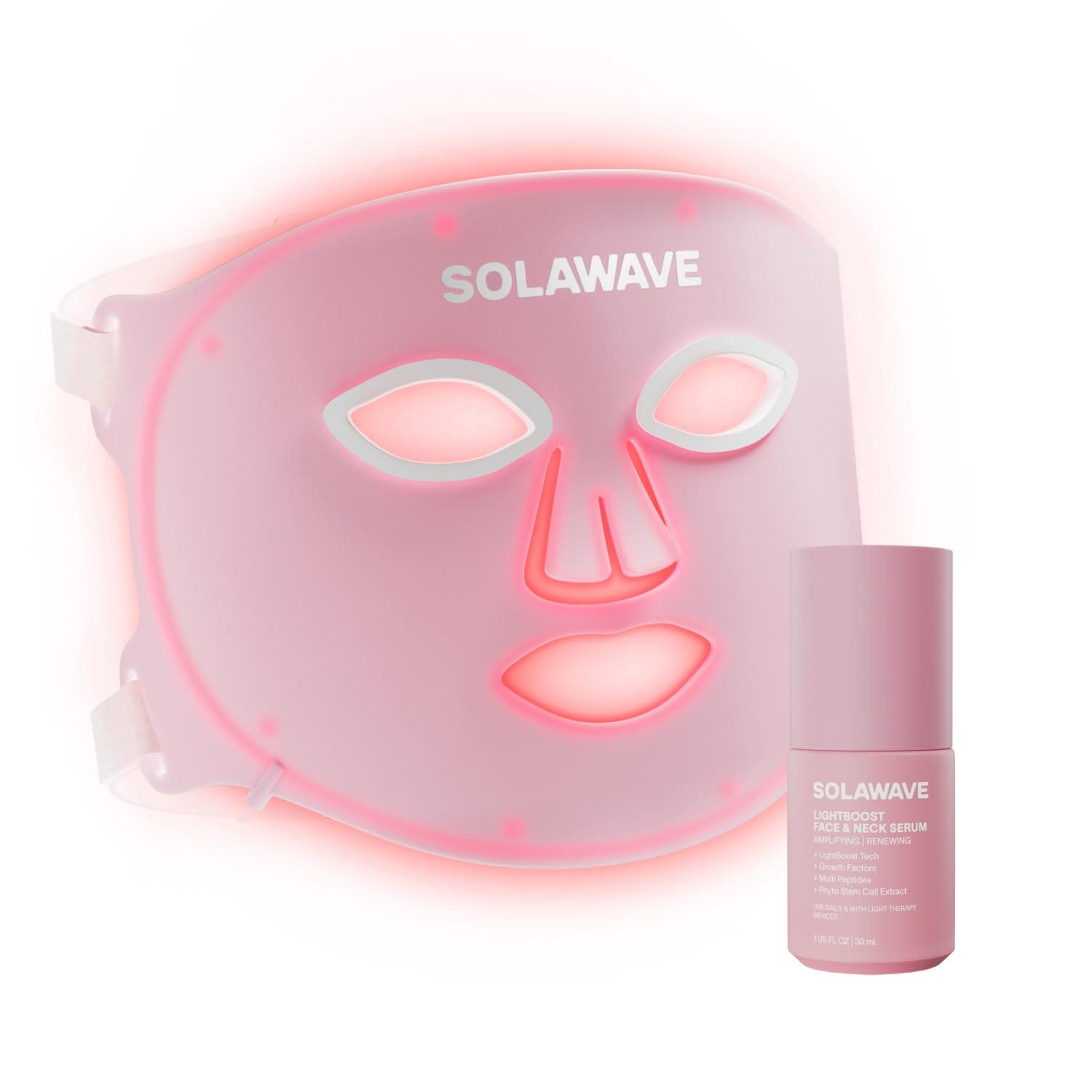
Worth mentioning: the Solawave 4-in-1 wand occupies a different niche entirely. It combines red light with microcurrent, therapeutic warmth, and facial massage in a handheld device.
Wands are for spot treatment and travel. They're not a substitute for either a panel or a mask — the treatment area is tiny and the power output is low. But if you travel frequently and want something portable, or if you want to target specific spots (acne scars, fine lines around the eyes), a wand is a reasonable complement, not a replacement.
Head-to-head: panels vs. masks
| Factor | Panel | Mask |
|---|---|---|
| Skin anti-aging | Effective (requires consistent positioning) | Effective (built-in positioning) |
| Full-body recovery | Yes — the main advantage | No |
| Acne / inflammation | Yes | Yes |
| Convenience | Moderate (stand/sit at fixed distance) | High (hands-free, strap on) |
| Travel-friendly | No | Some models fold, but still bulky |
| Price per cm² treated | Much lower | Much higher |
| Typical treatment time | 10–20 min per area | 10 min per session |
| Evidence strength | Same wavelength, same mechanism | Same wavelength, same mechanism |
The bottom row is important. The evidence doesn't favor one form factor over the other — it favors the wavelengths and dose. A panel and a mask emitting 660nm at the same irradiance will produce the same biological effect. The difference is entirely about how the device fits into your life.
What the evidence actually supports
The strongest clinical evidence for PBM is in skin healing and inflammatory conditions. A 2013 review in Seminars in Cutaneous Medicine and Surgery found consistent evidence for LLLT improving skin rejuvenation, treating acne, and accelerating wound healing. A 2017 paper in AIMS Biophysics detailed the anti-inflammatory mechanisms and found broad support for PBM across multiple tissue types.
Neither paper compared panels to masks — because from a photobiology perspective, the form factor doesn't matter. What matters is wavelength (660nm and/or 850nm), irradiance (power at the skin surface), and total dose (time × irradiance). A cheap panel delivering the right dose beats an expensive mask delivering the wrong one, and vice versa.
The recovery and longevity claims you'll see on Instagram? Weaker evidence. Not implausible — there are small studies and reasonable mechanisms — but not the same quality as the skin data. Don't buy either device expecting it to "reverse aging." Buy it because the skin and inflammation evidence is real and the cost per treatment is low enough to justify the experiment.
Our picks: which to buy based on your goal
"I mostly want facial anti-aging." The CurrentBody Skin LED mask is purpose-built for this. FDA-cleared, consistent dose delivery, hands-free. You'll pay more per square centimeter, but for a face-only protocol the convenience premium is worth it.
"I want whole-body recovery plus face." The Bestqool panel is the best value in this tier. Dual-wavelength, enough coverage for torso and face, and a price point that makes daily use feel reasonable rather than extravagant.
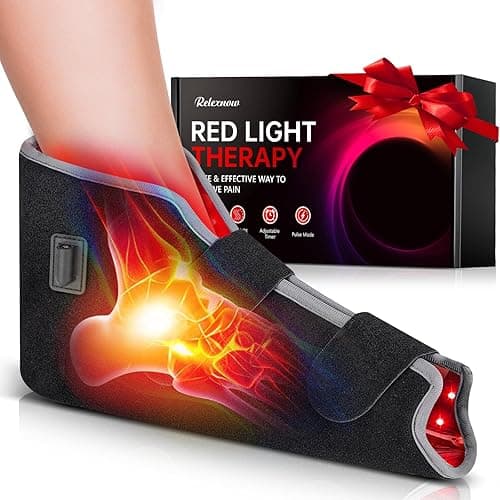
"I want the cheapest effective option." The Scienlodic panel is consistently the lowest-priced dual-wavelength panel that still delivers credible irradiance numbers. If budget is the constraint, start here.
"I travel and want something portable." The Solawave wand is the most practical travel option. It won't replace a panel or mask for daily home use, but it's better than nothing on the road.
For more context on how we evaluate these products, see what the Woo-Woo Meter means and our full red light therapy buying guide.
The honest take
Woo-Woo Meter: 2 out of 5 (Science-leaning — real evidence, some oversold claims)
Panels are the better value for most people. They do everything a mask does for face, plus they treat your whole body, at a lower cost per square centimeter. If you want red light therapy and you're not sure which form factor, buy a panel.
Masks are worth the premium in one specific case: you want hands-free facial treatment and you know — honestly — that the convenience is the difference between using it daily and letting it collect dust. A mask you wear every night beats a panel you used for two weeks in January.
Neither device will make you look 25 again. But for skin quality, inflammation, and recovery, the evidence is solid enough to justify the spend — as long as you pick the form factor you'll actually use. Like our cold plunge vs. sauna blanket comparison, the best device is the one that fits your routine, not the one with the best spec sheet.
Products mentioned in this post
Bestqool Red Light Therapy Panel (660nm/850nm)
Best-selling dual-wavelength (660nm / 850nm) red-light panel on Amazon.
Scienlodic Red Light Therapy Panel
Budget red-light therapy panel with strong reviews — a solid first panel.
CurrentBody Skin LED Light Therapy Mask
FDA-cleared LED face mask used in clinical anti-aging and skin protocols.
Solawave 4-in-1 Red Light Wand
Handheld 4-in-1 red-light therapy wand built for skincare and microcurrent toning.
Frequently asked
- Do LED face masks really work for wrinkles?
- There's consistent clinical evidence that red and near-infrared light at 660nm and 850nm stimulates collagen production and improves skin texture. Results take 8-12 weeks of consistent use. They won't erase deep wrinkles, but most users see measurable improvement in fine lines and skin tone.
- How long should I use a red light therapy panel per session?
- Most protocols call for 10-20 minutes per treatment area at 6-12 inches from the panel. Closer distance means higher irradiance, so you can shorten the session. The key variable is total dose (time × power at the skin surface), not just time.
- Can I use a red light panel on my face instead of buying a mask?
- Yes. The light doesn't know what device it came from. A panel emitting 660nm at the same irradiance as a mask will produce the same effect. The trade-off is convenience — you'll need to sit or stand at a fixed distance instead of strapping on a mask and going hands-free.
- Is red light therapy safe for daily use?
- At the power levels used in consumer devices, daily use is generally considered safe. There are no known cumulative toxicity risks from PBM at therapeutic doses. The main risk is eye exposure to bright light — use the eye protection that comes with panels, and masks inherently shield your eyes.
- What's the difference between red light and near-infrared?
- Red light (620-660nm) penetrates skin to about 2-3mm and is best for surface-level skin conditions. Near-infrared (810-850nm) penetrates deeper into tissue and is better for joint, muscle, and deeper inflammation. Most quality devices include both wavelengths.
Sources
- [1]Mechanisms and applications of the anti-inflammatory effects of photobiomodulation · AIMS Biophysics · 2017-05-19
- [2]Low-Level Laser (Light) Therapy (LLLT) in Skin: Stimulating, Healing, Restoring · Seminars in Cutaneous Medicine and Surgery · 2013-03-01
- [3]Amazon product listings (current pricing) · Amazon.com · 2026-04-09
Related reading
More from the desk
Buying guides
Red Light Therapy for Skin: An Honest Review of What the Evidence (and Our Catalog) Actually Supports
Skin is where red light therapy's evidence is strongest — but only for some goals. An honest, goal-by-goal guide to masks, wands, and panels for skin.
Buying guides
Red Light Therapy for Hair Regrowth: An Honest Review of What Panels, Caps, and Wands Can Actually Do
Honest review of red light therapy for hair loss — which device class has the real evidence, why we don't sell laser caps, and what our catalog can or can't do.
Category deep-dives
Red Light Therapy Benefits Explained: What the Science Actually Shows
Tiered by evidence strength: what red light therapy is solidly shown to do, what's plausible, and which claims are marketing running ahead of the science.