Buying guides
Theragun vs Hypervolt: which percussion massager is actually worth it in 2026
Theragun vs Hypervolt in 2026 — stall force, noise, ergonomics, and the compliance math nobody else does. Plus a $50 alternative that fits 80% of buyers.
You've narrowed it to two percussion guns: a Theragun and a Hypervolt. You're trying to figure out whether the brand-name premium is worth it, which one is actually quieter, and whether a $50 budget mini does enough of the job to make the $349 flagship feel silly. This guide answers those questions and skips the unboxing-review approach that dominates the SERP.
The short version: the Hypervolt 2 Pro is the buy-it-for-life pick for serious lifters and anyone treating others. The Theragun Prime is the mid-tier sweet spot — Therabody's triangle handle is the genuine ergonomic advantage if you're treating your own back. The Bob and Brad Q2 Mini at one-seventh the price is the right starting point if you're not yet sure how often you'll actually pick this thing up. Every device on this list rates 1 on our Woo-Woo Meter.
The 60-second answer
- Hypervolt 2 Pro (around $349) — best for serious lifters, PTs, and anyone using it 4+ times per week. Higher stall force, quieter motor, better attachment quality.[^amazon-product-listings]
- Theragun Prime 5th Gen (around $200) — best mid-tier balance. Therabody's triangle handle is the real ergonomic differentiator at this price, especially for self-treating the posterior chain.[^amazon-product-listings]
- Theragun Mini 2nd Gen (around $149) — for travel, calves and forearms, or as a second device. Not a primary recovery tool.[^amazon-product-listings]
- Bob and Brad Q2 Mini (around $50) — honest budget pick from the YouTube PT duo. The right "test the category" choice before spending $300.[^amazon-product-listings]
If you only read one line: most buyers don't need the $349 flagship. They need to find out whether they'll use a percussion gun at all. The $50 Q2 answers that question. Upgrade when usage proves the case.
What a percussion massager actually does (and what it doesn't)
The mechanism is unromantic. A motor drives a head into muscle tissue at 1,800–3,200 percussions per minute. Short-term effects are real: meta-analyses support reductions in perceived delayed-onset muscle soreness and small improvements in range of motion in the minutes-to-hours window after treatment. The mechanism is mainstream physical-therapy territory.
What the evidence does not support: long-term performance gains, "lymphatic detox," "cellular regeneration," or anything involving fascia "melting." If a retailer page is leaning on that language, treat it as marketing, not science. The boring mechanical claim — transient soreness reduction and short-term ROM gain — is enough to justify a buying decision if you actually use the device.
This is the part most reviews skip: a percussion gun is a tool that pays off with consistency. Twice a week post-workout for a year beats five sessions in one excited month. That distinction matters more than which brand you pick.
Hypervolt 2 Pro vs Theragun Prime — the actual head-to-head
These are the two flagship-class devices most "vs" searchers are choosing between. Spec differences that actually matter:
Stall force. The Hypervolt 2 Pro is rated noticeably higher than the Theragun Prime — roughly twice the resistance before the motor bogs down. Meaningful if you're working dense glute, quad, or lat tissue, or if you're treating clients who range in body composition. Not meaningful if you mostly do calves and forearms.
Noise. Hyperice's QuietGlide motor is the quieter device in real use. Theragun's design has gotten quieter over generations, but the Prime is still the louder of the two. If you live with someone who hates the sound of recovery gear, this matters.
Ergonomics. Therabody's triangle handle is the actual product-design IP in their lineup. It lets you reach your own upper back, mid-traps, and lats without the wrist contortion that a pistol grip forces. Hypervolt's pistol grip is fine for treating someone else and awkward for self-treating the posterior chain. If you live alone and your main pain is your own upper back, the triangle handle is worth real money.
Attachments. Hypervolt 2 Pro ships with five heads; Theragun Prime ships with four. In practice, most people end up using two: a standard ball and a flat or bullet head for trigger points. Attachment count is the least useful spec on the box.
App and connectivity. Both have Bluetooth and companion apps with guided routines. Both apps are fine. Neither will be the reason you keep using the device. Treat this as a non-factor.
Battery life. Roughly comparable at 2.5–3 hours of realistic use. Not a differentiator unless you're a touring PT.
The honest read: if you're treating others or training hard four-plus days a week, the Hypervolt's stall force and noise advantages justify the premium. If you're treating yourself and your back is the main target, the Theragun's handle is the better ergonomic choice and you save about $150.
When to step down inside the Therabody lineup
The Theragun Mini exists for a narrower use case than its marketing implies. It's the right answer if you travel weekly, if your main use case is calves or forearms, or if your alternative is leaving a bigger device in a drawer. It is not a primary recovery tool — stall force and amplitude are both meaningfully lower than the Prime.
If you're shopping for a travel-only gun, the deeper breakdown is in our best compact massage gun for travel 2026 guide, which gets into TSA rules and the case for skipping the Mini entirely.
The honest case for the Bob and Brad Q2 Mini at $50
Two physical therapists with millions of YouTube subscribers built a budget mini for roughly one-seventh the price of the flagship Hypervolt. It is louder. The attachments are cheaper plastic. The stall force is lower. The build quality is what you'd expect at $50.
It also works on 90% of the muscles 90% of consumer buyers actually treat. Calves, quads, forearms, the meaty part of the upper traps. The places where a tool that exists beats a tool that doesn't.
The argument for starting here is compliance, not performance. If you've never owned a percussion gun, you don't yet know if you're the person who'll use it three times a week or the person who'll use it twice and forget about it. A $50 Q2 lets you find that out without losing $300. If your usage proves the case after three months, upgrade to a Hypervolt 2 Pro then — you'll buy it with conviction instead of optimism.
Who should buy which
- Hypervolt 2 Pro: lifters training four-plus days per week, PTs and coaches treating others, anyone with chronic deep-tissue work to do on glutes, IT band, or lats. Worth the premium because you'll actually use it.
- Theragun Prime: the mid-tier sweet spot. Strong enough for serious self-use, the triangle handle reaches your own back without help, and you pay ~40% less than the Hypervolt.
- Theragun Mini: travel, calves and forearms, or as a second device. Not a primary tool.
- Bob and Brad Q2: the "test the category" pick. Also the right answer for casual users — post-run twice a week, occasional desk-job neck — who won't get $300 of value out of a flagship.
If your main recovery problem isn't muscle density, a percussion gun is the wrong tool. Lower-leg swelling and circulation respond better to compression — the FIT KING leg compression boots are a useful pick for runners. Chronic localized pain that isn't soreness is closer to best TENS unit for back pain territory.
The honest case for buying neither
A foam roller is $20 and addresses most of what most readers think they need a percussion gun for. A lacrosse ball is $4 and unloads a trigger point in the upper trap as well as any $349 device. If you've never been consistent with the cheap tools, the expensive ones won't fix that — consistency is a habit problem, not a hardware problem.
For temperature-based recovery, the trade-offs are in cold plunge vs sauna blanket. For circulation in the legs specifically, compression. For soreness in dense muscle that's already a habit to treat, a percussion gun.
Our pick
Buy the Hypervolt 2 Pro if you train hard four-plus days a week, treat other people, or have specific chronic deep-tissue work to do. Best stall force, quietest motor, best ergonomics for treating others. Buy it for life.
Buy the Theragun Prime if you want the mid-tier sweet spot. The triangle handle is the real reason this device exists, and you pay ~40% less than the Hypervolt to get it.
Buy the Bob and Brad Q2 Mini if you're not yet sure you'll use a percussion gun consistently, or if your usage is genuinely casual. $50 to test the category is rational; upgrade later when usage proves the case.
Buy the Theragun Mini if your primary use case is travel or calves and forearms only.
Buy nothing if you have never been consistent with a foam roller. The $349 device will not solve that — the $4 lacrosse ball will tell you whether the consistency problem is real before you spend.
Products mentioned in this post
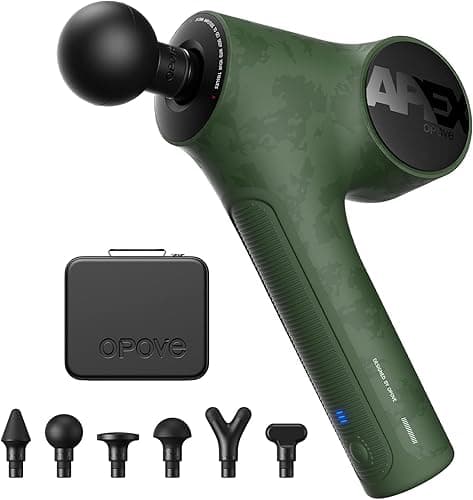
Hypervolt 2 Pro
Hyperice's premium percussion gun with whisper-quiet glide tech and five speeds.
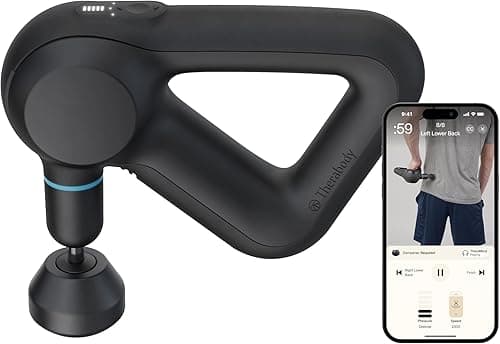
Theragun Prime (5th Gen)
Therabody's mid-range percussion gun — Bluetooth, deep tissue, the best-value Theragun.
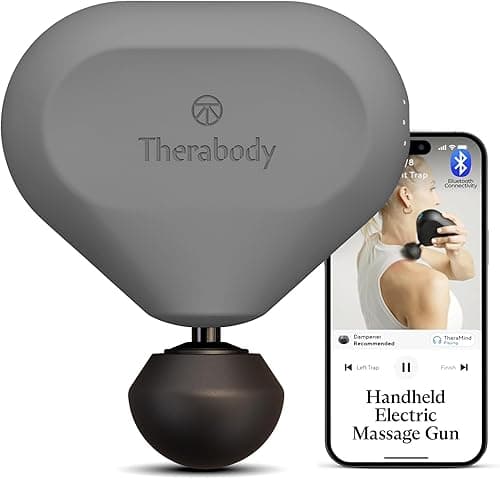
Theragun Mini (2nd Gen)
Pocket-sized percussion massager — Therabody's best-selling on-the-go recovery tool.
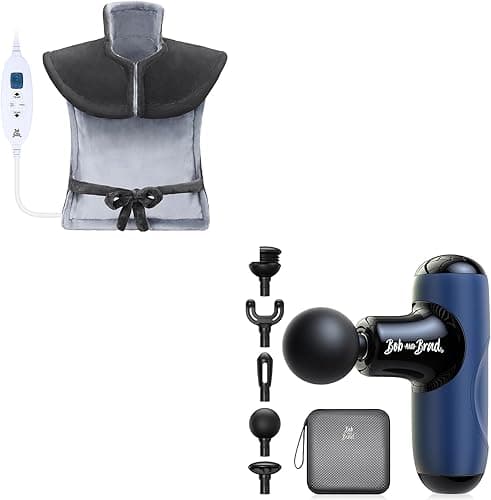
BOB AND BRAD Q2 Mini Massage Gun
Bob and Brad's category-leading mini massage gun — the budget benchmark.
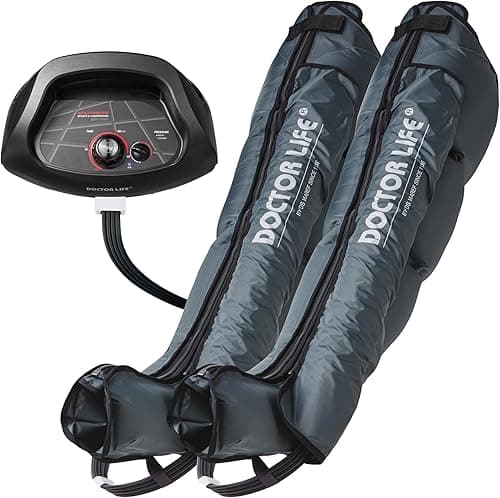
FIT KING Leg Compression Boots
Air-compression recovery boots at a fraction of Normatec's price.
Frequently asked
- Is the Hypervolt 2 Pro better than the Theragun Prime?
- It depends on use case. The Hypervolt 2 Pro has higher stall force and a quieter motor — better for serious lifters, PTs treating others, and deep-tissue work on dense muscle groups. The Theragun Prime has Therabody's triangle handle, which is meaningfully better for self-treating your own upper back and posterior chain, and it costs ~40% less. If you're solo and treat your own back, the Prime is the right call. If you're treating others or training hard four-plus days a week, the Hypervolt earns the premium.
- Is a Theragun or Hypervolt actually worth the money over a $50 budget gun?
- For roughly 80% of consumer buyers, the recovery benefit of a $349 flagship over a $50 Bob and Brad Q2 is small in absolute terms. You're paying for build quality, lower noise, higher stall force on dense tissue, and better attachments — real differences, but not 7x the recovery effect. The honest play is to start with the budget mini, find out whether you'll actually use it three times a week, and upgrade with conviction once usage proves the case.
- Which percussion massager is quietest?
- Among the four guns in our catalog, the Hypervolt 2 Pro is the quietest in real use — Hyperice's QuietGlide motor is the meaningful spec advantage here. Theragun has improved over generations but the Prime is still the louder of the two flagship devices. Both budget minis (Bob and Brad Q2, Theragun Mini) are louder than the Hypervolt 2 Pro.
- What's the difference between Theragun Prime and Theragun Pro?
- The Pro adds higher stall force, a rotating arm, a longer warranty, and a higher price tag — it sits in the same flagship tier as the Hypervolt 2 Pro. The Prime is the mid-tier model: same Therabody triangle handle and core build, less stall force, fewer attachments, around $200. For most home users, the Prime is the better value in the Therabody lineup. The Pro is the right pick if you're treating clients or you need the rotating arm for self-treatment angles.
- Do percussion massagers actually work?
- For short-term effects, yes — meta-analyses support reduced perceived soreness and small improvements in range of motion in the minutes-to-hours window after treatment. This is mainstream physical-therapy territory. Long-term performance gains and recovery-acceleration claims are weaker, and 'lymphatic detox' or 'cellular regeneration' marketing language isn't supported by the evidence. Treat it as a tool that helps with acute soreness and tightness, not a replacement for sleep, hydration, and progressive overload.
Sources
- [1]Amazon product listings (current pricing) · Amazon.com · 2026-04-09
Related reading
More from the desk
Buying guides
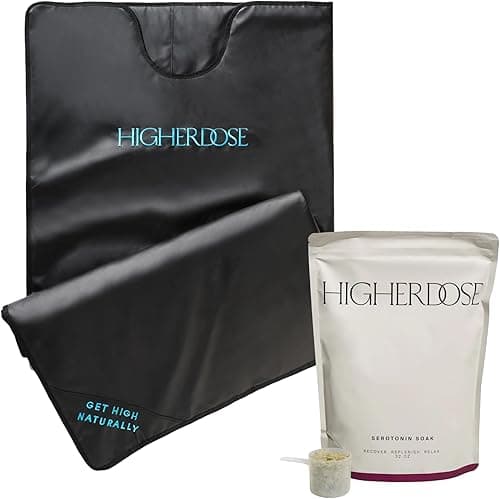
Best infrared sauna blanket 2026: how to pick one (and when to buy a tent instead)
Best infrared sauna blanket in 2026 — HigherDOSE V4 vs LifePro vs the $150 generic, plus the compliance math nobody else does and when to buy a tent instead.
Buying guides
WHOOP 4.0 vs Oura Ring Gen 4: which recovery wearable is actually worth it in 2026
Honest WHOOP vs Oura comparison for 2026 — 3-year subscription math, HRV and sleep accuracy, strain vs readiness, and which one fits your actual use case.
Buying guides
HRV training apps that actually work in 2026 (and the hardware they need)
Honest 2026 guide to HRV training apps and the chest straps, rings, and sensors that make them work. Real protocols, real evidence, Woo-Woo Meter ratings.