Buying guides
Best infrared sauna blanket 2026: how to pick one (and when to buy a tent instead)
Best infrared sauna blanket in 2026 — HigherDOSE V4 vs LifePro vs the $150 generic, plus the compliance math nobody else does and when to buy a tent instead.
“The Finnish sauna cohort is the closest thing the heat-therapy world has to a smoking-gun observational dataset — frequent users had dramatically lower all-cause mortality.”
You've narrowed it to an infrared sauna blanket. You're choosing between a $599 HigherDOSE you've seen on Instagram, a $230 LifePro that keeps showing up in honest reviews, and a $150 generic that looks suspiciously identical from the heating elements out. You also half-suspect a sit-up sauna tent might be the real answer. This guide picks between them, does the compliance math out loud, and tells you when to buy nothing at all.
The short version: the HigherDOSE Infrared Sauna Blanket V4 is the buy-it-for-life premium pick if you'll actually use it three-plus times a week. The LifePro Infrared Sauna Blanket is the rational mid-tier choice that hits the same temperature spec without the marketing premium. A generic infrared sauna blanket at around $150 is the honest "test the category" pick before you commit to $600. And if your use case is reading or sitting up, the SereneLife Portable Infrared Sauna tent is a different product and often the right one. Every device on this list rates 2 on our Woo-Woo Meter.
The 60-second answer
- HigherDOSE V4 (around $599) — premium pick. Lowest EMF claim in the category, best build, credible resale market on Facebook Marketplace at 50–60% of MSRP. Worth it if compliance is a sure thing.[^amazon-product-listings]
- LifePro (around $230) — best mid-tier. Hits roughly the same max temperature, no gemstone marketing layer, fastest path to actually owning and using a sauna blanket.[^amazon-product-listings]
- Generic infrared sauna blanket (around $150) — honest budget pick. Rougher build, iffy warranty, same heating-element range as the premium units. The right number to test the category before you spend $600.[^amazon-product-listings]
- SereneLife portable infrared sauna tent (around $400) — different format. Sit-up posture, hands and head outside the unit, longer sessions, better if you want a ritual rather than a recovery tool.[^amazon-product-listings]
If you only read one line: most buyers don't need the $599 flagship. They need to find out whether they'll actually unroll a sauna blanket three times a week. The $150 generic or the $230 LifePro answers that question for a fraction of the cost.
What an infrared sauna blanket actually is (and isn't)
The mechanism is unromantic. Far-infrared heating elements wrapped in a zip-up enclosure raise your core temperature for 30–45 minutes while you lie inside it. The targeted physiological response — heat shock proteins, increased blood flow, a parasympathetic rebound afterward — is the same general direction as a cabin sauna, at a lower dose.
It is not a clinical-grade hyperthermia device. It is a credible at-home approximation of low-temperature sauna use. The category's gold-standard evidence is for traditional Finnish saunas at 80–100°C; blankets run cooler at the surface and produce a smaller core-temperature delta. The benefit transfer is plausible and real but partial. Anyone who tells you a blanket equals a cabin sauna is selling you something.
The "detoxification" and "sweat out toxins" marketing language is the part of this category that earns skepticism. Sweat is not a meaningful elimination route for most toxicants — your liver and kidneys are doing that job, and they don't need your help from a heated zip bag. The boring mechanical claim — raise core temp, 3–4 times a week, get cardiovascular and recovery adaptations — is enough to justify the purchase. Ignore the rest.
What the evidence actually says
The strongest single dataset in the heat-therapy literature comes from a 20-year Finnish prospective cohort. In ~2,300 middle-aged men, frequent sauna use (4–7 sessions per week) was associated with roughly 40% lower all-cause mortality compared to once-per-week use, with a clean dose-response curve for cardiovascular mortality and dementia incidence.[^laukkanen-sauna-mortality-2015] That's observational, not randomized, and the effect size is the kind of number that makes statisticians nervous — but the dose-response shape and the size of the cohort make it the strongest evidence in the whole hormetic-stress space.
The honest caveat: that data is for traditional Finnish saunas at high temperatures, not infrared blankets. Infrared-specific trials exist but the corpus is smaller, the sessions are shorter, and the temperature dose is lower. Smaller studies on infrared show cardiovascular and recovery signal that points the same direction, but the body of evidence is much thinner than the marketing implies.
Net read: heat hormesis is real, the dose-response curve is genuine, and an infrared blanket gives you a lower-dose version of an effect that has unusually strong outcome data at the high-dose end. A lower-dose version of a real thing is still better than zero dose — if you actually use it. That conditional is doing all the work.
Sauna blanket vs portable tent: the format decision matters more than the brand
Most buyers are stuck between two HigherDOSE-vs-LifePro tabs and don't realize a sit-up tent is the better product for their use case. Quick filter:
- Blanket: lay-down posture, 30–45 minute sessions, lowest footprint, folds and stores in a closet. Best if your use case is "post-workout recovery while scrolling my phone" or "I want to sweat and then go to sleep."
- Tent (portable sauna): sit-up posture with your hands and head outside the unit, can read or work or hold a coffee, comfortable for sessions longer than 45 minutes, larger footprint when assembled. Best if your use case is a sauna ritual — morning coffee, evening book — rather than a strict recovery tool.
If you're claustrophobic about full-body enclosure, or you want to share a unit between two people regularly, the tent wins on both counts. If you want to do this on the couch in front of TV, the blanket wins.
HigherDOSE V4 vs LifePro: the actual head-to-head
The two units most buyers are choosing between. Spec differences that actually matter:
Max temperature. Roughly comparable on paper, both topping out near 80°C surface temperature. HigherDOSE claims more even distribution across the body; LifePro tends to run hotter in the middle and slightly cooler at the feet. Real-world delta is smaller than the marketing suggests.
EMF. HigherDOSE leans hard on its low-EMF claim. The measured number is genuinely lower than the category baseline. Whether that matters at sauna distances and session lengths is unsettled scientifically — the honest position is "lower is better, all else equal, but don't pay a 2.5x premium for EMF alone."
Build and materials. HigherDOSE wraps an amethyst and tourmaline layer into the construction. The "negative ions" and "crystal healing" marketing claims around it are unfalsifiable and worth ignoring. The heat distribution that layer produces is genuinely more even — that's the part of the premium that's mechanical, not mystical. LifePro skips the gemstone story and ships a straightforward, well-made heating element layer.
Warranty. HigherDOSE: 1-year, extendable. LifePro: 1-year standard. Neither warranty is the deciding factor.
Resale. This is the underrated HigherDOSE argument. The V4 has a credible secondary market on Facebook Marketplace at roughly 50–60% of MSRP. If you fall off the wagon at month four, you can recover meaningful value. LifePro and generic blankets don't have that floor.
The honest case for the generic budget pick
A $150 generic blanket from a competent OEM uses heating elements in the same range as the premium units. The build is rougher, the marketing copy is thinner, and the warranty story is iffy. The argument for buying it isn't performance — it's compliance.
If you've never used a sauna blanket and aren't sure you'll be the person who uses it three times a week, the right move is to underspend the first time. A $150 outlay buys you three months of honest usage data on yourself. If you actually use it, upgrade with conviction. If you don't, you spent $150 instead of $599 finding out you're not a sauna-blanket person. That asymmetry isn't intuitive but it's the rational play for first-time buyers.
Who should buy which
- HigherDOSE V4: committed user, ritual already established, EMF-skeptical, design-conscious, will use 3+ times a week. The premium buys real build quality, even heat distribution, and the resale floor.
- LifePro: the rational mid-tier buy. Hits the temperature spec, no premium for branding, easy path to "I own a sauna blanket and use it."
- Generic budget blanket: the "test the category" pick. Also the right answer for users who genuinely will only use it twice a week.
- SereneLife tent: the format outlier. Buy if your use case is sit-up sauna with a book, not lay-down recovery with a phone.
Heat + cold: the contrast protocol
Most readers shopping for a sauna blanket are also eyeing a cold plunge for the other half of the protocol. The pairing logic and the friction tradeoffs are covered in cold plunge vs sauna blanket; the budget side of the cold question is in best cold plunge for small spaces. If you're stacking heat and cold, do them on different days or with significant separation — the cardiovascular load of back-to-back contrast inside one session is more than most home protocols call for.
Cold pairings that make sense at different price tiers: Ice Barrel 300 as the most popular mid-tier hard tub, the BINYUAN portable ice bath tub as the budget entry point. If recovery is your real goal and not heat specifically, lower-leg compression with the FIT KING leg compression boots addresses a different recovery problem (circulation, swelling) better than any sauna will.
Compliance is the real variable
A $599 HigherDOSE you use twice a month is a $599 mistake. A $150 generic you actually use three times a week is a working tool. Buyers consistently overestimate their compliance with new home equipment — the honest move is to underspend the first time and upgrade once your usage data proves the case. This is the same logic that drives our buying-guide advice across categories like recovery wearables (Whoop vs Oura) and percussion massagers (Theragun vs Hypervolt): hardware doesn't fix consistency, and price doesn't fix it either.
If you're a winter buyer eyeing both heat and light therapy at once, the trade-off between SAD lamps and red-light panels is its own decision — covered in SAD lamp vs red light therapy for winter.
The honest case for buying neither
If you live within walking distance of a gym with a sauna, a $40/month membership beats every option on this page. A real cabin sauna at 80–100°C, three or four times a week, with someone else owning the maintenance and the floor space, is what the Finnish cohort data was actually measuring. The reason to buy a home unit is friction reduction — if you don't have friction to reduce, you don't need to spend $230–$600 to approximate something that's already half a mile away.
Our pick
Buy the HigherDOSE V4 if you're a committed user with the ritual habit already established, you care about EMF, and you'll actually use it three-plus times a week. The premium buys build quality, smoother heat distribution, and a credible resale floor.
Buy the LifePro if you want the rational mid-tier. Same temperature spec, no marketing premium, fastest honest path to owning a sauna blanket you'll use.
Buy the generic infrared sauna blanket at around $150 if you've never used one and aren't yet sure you'll be consistent. Test the category cheap; upgrade with conviction once usage proves the case.
Buy the SereneLife tent if your use case is sit-up sauna ritual rather than lay-down recovery. Different product, often the right one.
Buy nothing if you live near a gym with a sauna. A $40/month membership beats every blanket on this page for any user who can reduce friction without home equipment.
Products mentioned in this post
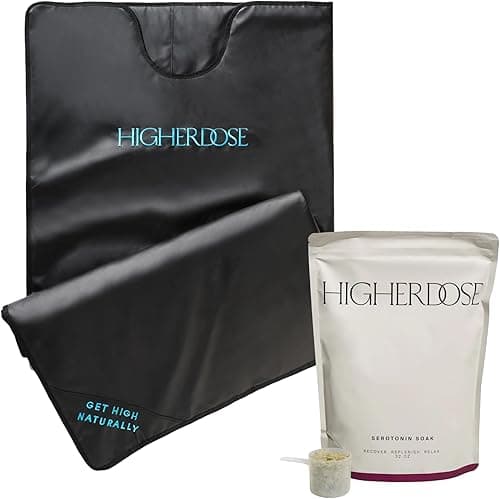
HigherDOSE Infrared Sauna Blanket V4
Premium medical-grade infrared sauna blanket with a 90-day trial — the influencer favorite.
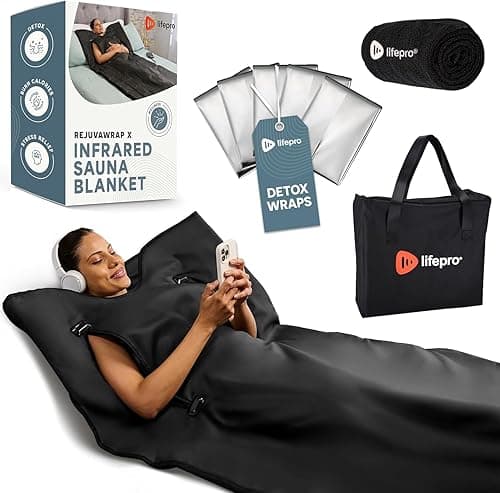
LifePro Infrared Sauna Blanket
Amazon's best-selling infrared sauna blanket — recovery and relaxation in one wrap.
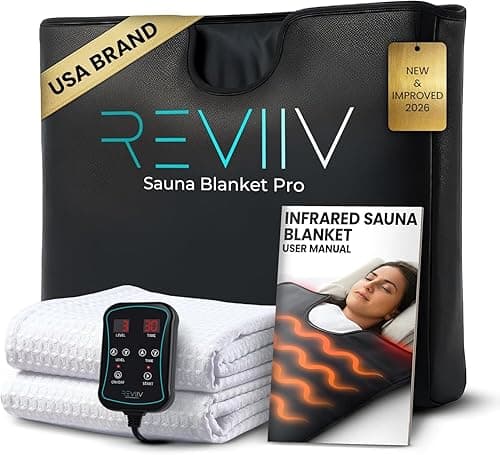
REVIIV Infrared Sauna Blanket
Portable infrared sauna blanket for detox and recovery practice.
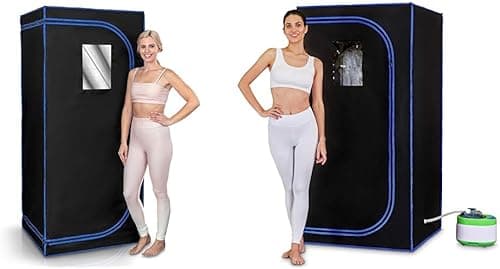
SereneLife Portable Infrared Sauna
Full-body portable infrared sauna tent for at-home heat therapy.
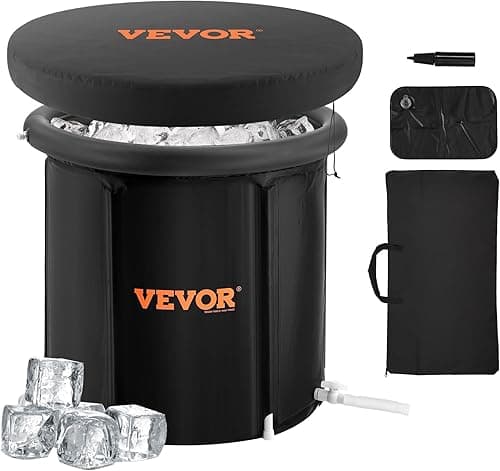
Ice Barrel 300 Cold Plunge
The portable cold plunge that brought ice baths into normal homes.
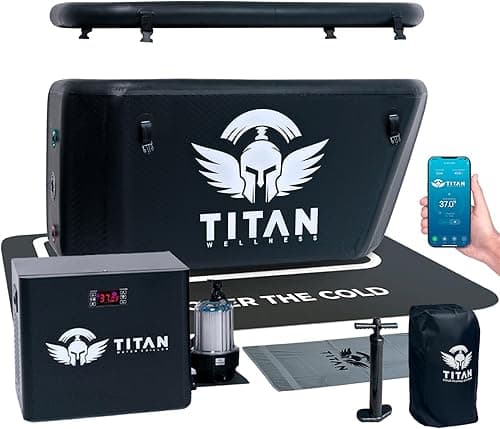
BINYUAN Portable Ice Bath Tub
Foldable budget ice bath — the cheapest way to start a cold plunge practice.
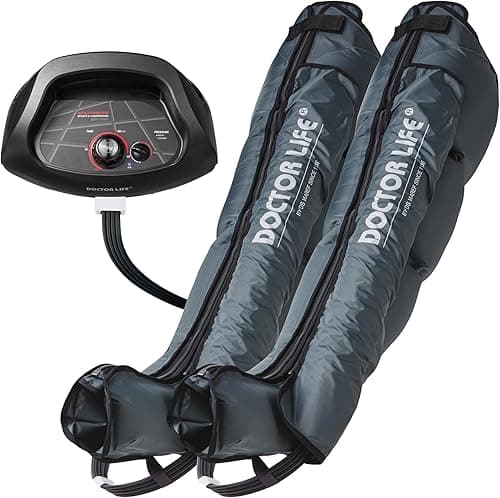
FIT KING Leg Compression Boots
Air-compression recovery boots at a fraction of Normatec's price.
Frequently asked
- Is an infrared sauna blanket as good as a real sauna?
- No, but it's a credible lower-dose approximation. Cabin saunas run 80–100°C and produce a large core-temperature delta; blankets run cooler at the surface and produce a smaller delta over a longer session. The strongest evidence in the heat category (the Finnish prospective cohort) is for traditional saunas, not infrared blankets, and the benefit transfer is partial. If you have easy access to a real sauna, that's better. If you don't, a blanket is a reasonable home substitute.
- Is the HigherDOSE V4 worth $599 over the $230 LifePro?
- For a committed user — three-plus sessions a week, established ritual, design-conscious, EMF-skeptical — yes. You get smoother heat distribution, lower measured EMF, better build quality, and a credible resale market at 50–60% of MSRP if you ever stop using it. For a first-time buyer who isn't yet sure they'll be consistent, no. The LifePro hits the same temperature spec, and the $370 difference is better spent on either a budget unit to test the category or on something else entirely.
- Do infrared sauna blankets actually detoxify the body?
- No — and this is the part of the category that earns skepticism. Sweat is not a meaningful elimination route for most toxicants; your liver and kidneys handle that. The genuine mechanism is heat hormesis: raising core temperature triggers heat-shock proteins, cardiovascular adaptation, and a parasympathetic rebound. That's the real benefit. Ignore the 'detox,' 'lymphatic drainage,' and 'negative ion' marketing language — the boring mechanical claim is enough to justify the purchase.
- Sauna blanket vs portable sauna tent — which should I buy?
- Format decision, not brand decision. Buy the blanket if your use case is lay-down recovery, post-workout, scrolling-your-phone sessions of 30–45 minutes. Buy a tent if you want sit-up posture with your hands and head out, longer sessions, the ability to read or work, or if you're claustrophobic about full-body enclosure. The tent is also more practical if two people share the unit regularly. Neither is universally better — they answer different use cases.
- How often should I use an infrared sauna blanket?
- The Finnish cohort data on cabin saunas showed dose-response benefits up to 4–7 sessions a week. Most consumer recommendations for infrared blankets land at 3–5 sessions per week, 30–45 minutes each. More isn't automatically better — your body needs time to adapt, and very frequent high-intensity heat exposure has its own cardiovascular load. Start at twice a week, build from there, and don't chain it with a cold plunge in the same session unless you know what you're doing.
Sources
- [1]Association Between Sauna Bathing and Fatal Cardiovascular and All-Cause Mortality Events · JAMA Internal Medicine · 2015-04-01
- [2]Amazon product listings (current pricing) · Amazon.com · 2026-04-09
Related reading
More from the desk
Category deep-dives
Cold plunge vs sauna blanket: which one actually moves the needle?
Two of the most popular hormetic-stress wellness practices compared. The science, the practicality, and which one to start with.
Buying guides
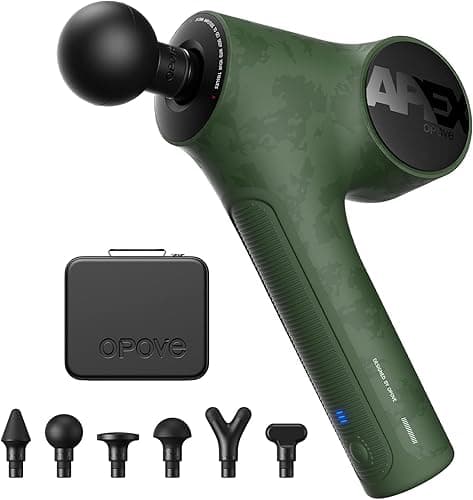
Theragun vs Hypervolt: which percussion massager is actually worth it in 2026
Theragun vs Hypervolt in 2026 — stall force, noise, ergonomics, and the compliance math nobody else does. Plus a $50 alternative that fits 80% of buyers.
Buying guides
WHOOP 4.0 vs Oura Ring Gen 4: which recovery wearable is actually worth it in 2026
Honest WHOOP vs Oura comparison for 2026 — 3-year subscription math, HRV and sleep accuracy, strain vs readiness, and which one fits your actual use case.