Buying guides
Best Singing Bowls for Meditation in 2026: An Honest Buyer's Guide
An honest buyer's guide to singing bowls for meditation — Tibetan vs. crystal, what to look for, and why we rate the whole category a Woo-Woo 5.
“A well-tuned crystal singing bowl is a beautifully made instrument with a real and consistent psychoacoustic effect on practitioners. That's a different kind of useful than a randomized controlled trial — and it's still useful.”
Walk into a sound bath, lie back on a mat, and for forty-five minutes someone rings a bronze bowl near your head. You leave feeling different. Not "cured." Different. If you want to bring that feeling home for $35 to $80, a singing bowl is the object you buy.
This guide is for the person who's already tried it and liked it — who doesn't need to be sold on the practice, and doesn't want to be oversold on what the bowl "does." We rate this whole category a 5 on our Woo-Woo Meter, and we mean it as a compliment. Here's how to pick a bowl that actually sounds good.
Why a Singing Bowl Belongs on the Woo-Woo Meter
Every product on this site gets a 1–5 Woo-Woo Meter rating. Singing bowls are a 5 — the top of the scale, reserved for tools we rate on craft, experience, and tradition rather than on randomized controlled trials.
That's not a put-down. It's an acknowledgement that bowls live in a different evidence category than blood pressure cuffs or red-light panels. They're instruments. The real question isn't "what does this treat" — it's "does this sound good enough to anchor a practice you'll actually keep up." We'll answer that question honestly. We won't pretend a bronze bowl cures anxiety.
Tibetan vs. Crystal: The One Decision That Matters
Almost every other choice flows from this one. The two categories produce fundamentally different sound.
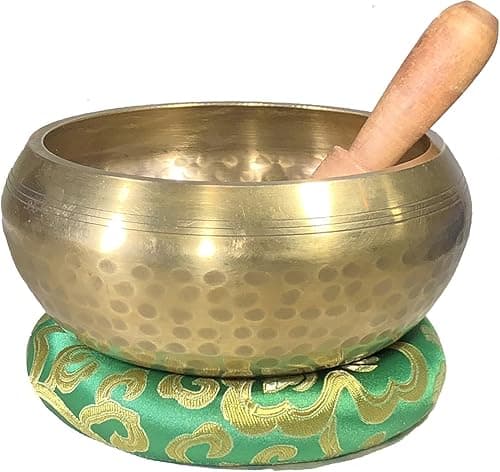
Tibetan singing bowls are hand-hammered from a bronze alloy, usually 5–7 inches across, with warm, complex overtones that shift as you play. A well-made Tibetan bowl has ritual and cultural roots stretching back centuries. It's forgiving for beginners — you can strike it or rim it and it will sing. The character is layered: you hear a fundamental note and several overtones dancing around it.
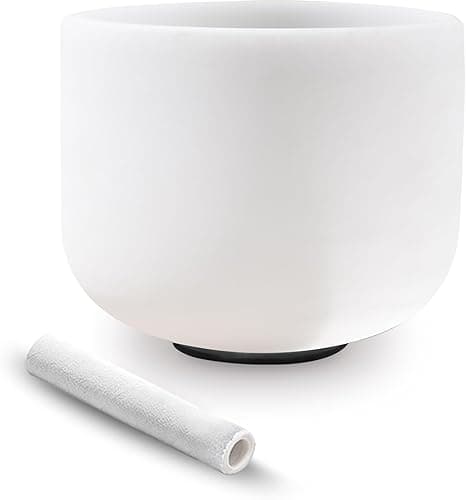
Crystal singing bowls are fused quartz, usually 7–10 inches across, tuned to a specific frequency (often 432Hz or 528Hz). They produce a clean, sustained single-note drone — louder, more piercing, more presence in a room. They require a lighter touch and a stable surface. These are the instruments you see in YouTube sound baths with the big clear domes.
Short version: Tibetan is warm, complex, and forgiving. Crystal is clean, loud, and precise. Most home practitioners start Tibetan and graduate to crystal if they want more presence. A dedicated head-to-head comparison is coming — this post stops at the fork.
How to Choose a Bowl That Actually Sounds Good
The difference between a $35 bowl that rings beautifully and a $35 bowl that clanks has almost nothing to do with price alone. It comes down to a handful of details:
- Size. 5–6 inches is the sweet spot for home use. Smaller than 5, you lose sustain — the sound dies in a second. Much larger, and the bowl gets awkward to strike cleanly while holding.
- Hand-hammered vs. machine-pressed. A real hand-hammered Tibetan bowl has visible irregular divots across the surface. That irregularity is what produces the overtones. Machine-pressed bowls look visually perfect and sound acoustically flat. If the listing says "hand-hammered," check the photos for proof.
- The mallet. A cheap felt mallet muffles the sound. A wooden mallet with a thin leather or suede wrap gives you the strike range you need. Upgrading the mallet is the cheapest improvement you can make.
- The cushion. The bowl must sit on a soft surface or the bottom rim deadens the sound. A ring cushion is standard. Skip any set that doesn't include one.
- Tuning claims. Crystal bowls are genuinely tuned to a labeled frequency. Traditional Tibetan bowls generally aren't — any seller who advertises an exact chakra-note match on a hand-hammered bowl is usually guessing.
Watch out for the stock-photo trap. Some listings use gorgeous studio photos of bowls that were never tuned or tested for sound. Prioritize listings with audio samples or high review counts that mention the sound specifically — pricing and stock are tracked via current Amazon listings and move around.
Our Picks for 2026
Five picks, one for each buyer profile. Prices reflect current Amazon listings and move around.
Best Starter: Tibetan Singing Bowl Set
Woo-Woo Meter: 5 • ~$35
The default first bowl. The Tibetan Singing Bowl Set (5.5") is hand-tuned bronze alloy, 5.5 inches — right in the sweet spot for home practice. Comes with a wooden striker and cushion, so you're not hunting for accessories. Warm overtones, forgiving technique, cultural depth. If you're buying one bowl to find out whether you like the practice, buy this one.
Committed Practitioner: Crystal Singing Bowl (432Hz)
Woo-Woo Meter: 5 • ~$60
For the person who's spent six months with a Tibetan bowl and wants a second, louder instrument. The Crystal Singing Bowl 8" (432Hz) is tuned to 432Hz — a traditional frequency in crystal-bowl practice; make of that what you will. The sound is very different from a Tibetan: one sustained drone that fills a room. Louder, more presence, less forgiving. Worth the upgrade if you've built a real practice.
Budget & Portable: 528Hz Tuning Fork
Woo-Woo Meter: 5 • ~$25
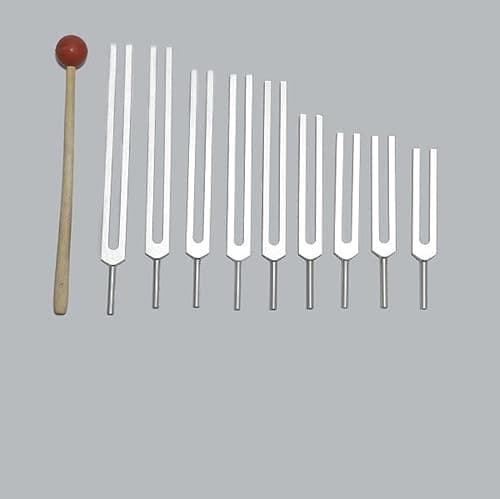
Not a bowl, but the cheapest way to bring Solfeggio-frequency work into a home practice. The 528Hz Tuning Fork Set (Solfeggio) gives you portability and a clean, focused single tone you can hold to any part of the body or room. The 528Hz framing is spiritual, not acoustic — we note that. Good for travel, good as a gateway tool.
Practitioner Kit: 7-Piece Solfeggio Forks
Woo-Woo Meter: 5 • ~$45
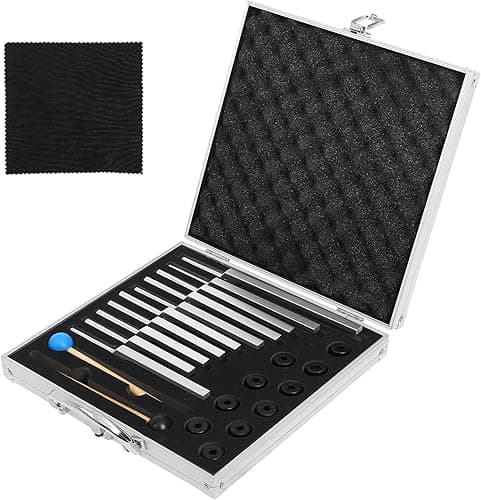
The full seven-fork set — one fork per traditional chakra frequency. The Solfeggio Tuning Fork Set (7-piece) is for someone already doing frequency or chakra work, not a beginner pick. If that sentence sounds like a different language, skip this one.
Gift & Ritual Add-On: Chakra Stones Set
Woo-Woo Meter: 5 • ~$15
The Chakra Stones Healing Crystals Set isn't a bowl either, but it sits alongside bowl work in most practices — arranged on a mat, held during meditation, or given as a gift with a bowl. Seven polished stones for the seven chakra points. An easy, inexpensive add-on, especially as a thoughtful gift.
What the Science Actually Shows (and Doesn't)
Be direct about this: peer-reviewed evidence for singing-bowl-specific benefits is thin. A handful of small pilot studies on sound meditation sessions have reported reductions in tension, anxiety, and depression — but none of them isolate the bowl from the broader meditative context. That's a real limitation, not a hidden one.
What the research more clearly supports is the broader meditative mechanism. Guided meditation reliably shifts the autonomic nervous system toward parasympathetic dominance and produces measurable changes in heart rate variability. A singing bowl is probably working through that same pathway — attention anchoring, parasympathetic shift, the subjective sense of spaciousness — rather than through any bowl-specific cellular effect.
"A well-tuned crystal singing bowl is a beautifully made instrument with a real and consistent psychoacoustic effect on practitioners. That's a different kind of useful than a randomized controlled trial — and it's still useful."
If you want a tool with a more measurable nervous-system story for the same "calm me down" goal, read our best vagus nerve devices guide or the vagus nerve evidence deep-dive. Those products sit in a different evidence bucket. Neither replaces a bowl — and the buyer is often the same person.
Care, Playing, and the Mistakes Everyone Makes
A few practical notes so your purchase actually works:
- How to play a Tibetan bowl. Hold it flat on the cushion or your open palm. Strike the outer rim gently with the mallet — a small tap, not a whack. To make it sing, run the mallet around the outer edge slowly and with steady pressure. Let the sound build; don't force it.
- Crystal bowls need a lighter touch. Too hard a strike and they crack. Rim-playing works best with a suede-wrapped striker.
- Don't store bowls on hard surfaces. Keep them on a cushion or soft cloth when not in use. The rim dents easily.
- Clean with a damp cloth, never a wet one. Water inside the bowl dulls the sound until fully dry.
- Most beginner disappointment traces to three mistakes: striking too hard, using a cheap felt mallet, or sitting the bowl on a hard table. Fix those and almost any decent bowl sings.
The Honest Take
If you already meditate and want a sensory anchor that makes the practice stickier, a singing bowl is a beautiful, useful thing to own. Spend $35 on a solid Tibetan set or $60 on a 432Hz crystal bowl and you'll get a lifetime of use. Either belongs on the shelf of anyone serious about a home practice.
What a bowl is not is a medical device. If a brand tells you it will "align your chakras," "rebalance your cellular frequency," or "heal inflammation," that's marketing running ahead of what the object actually does. The bowl is an instrument. It earns a Woo-Woo 5 because it's honest about what it is — a tool for a practice, not a cure.
If you want something with a more measurable nervous-system story for the same stress-and-calm goal, the best vagus nerve devices guide is the sister post to this one. Different evidence bucket, same buyer. Both can belong in the same practice. That's what the Woo-Woo Meter is for.
Products mentioned in this post
Tibetan Singing Bowl Set (5.5")
Hand-tuned Tibetan singing bowl set for meditation and sound healing.
Crystal Singing Bowl 8" (432Hz)
Quartz crystal singing bowl tuned to 432Hz for chakra alignment and sound bath work.
528Hz Tuning Fork Set (Solfeggio)
Solfeggio 528Hz tuning fork — used in chakra and frequency healing practice.
Solfeggio Tuning Fork Set (7-piece)
Full seven-piece Solfeggio tuning fork set for practitioners and home practice.
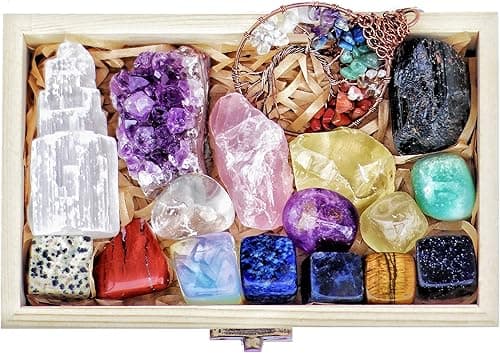
Chakra Stones Healing Crystals Set
Seven-stone chakra healing crystal set — an entry-level spiritual wellness kit.
Frequently asked
- What's the best singing bowl for beginners?
- A 5–6 inch hand-hammered Tibetan bowl with a wooden striker and cushion. That size is forgiving, produces good sustain, and the complex overtones make it easy to hear whether your technique is working. The Tibetan Singing Bowl Set (5.5") in our picks is a representative example in the $35 range.
- Tibetan vs. crystal singing bowl — which is better?
- Neither is universally better; they're different instruments. Tibetan bowls are hand-hammered bronze, with warm, complex overtones and ritual roots. Crystal bowls are fused quartz tuned to a specific frequency, with a clean single-note drone and more room-filling presence. Most home practitioners start Tibetan and add a crystal bowl later if they want more volume and focus.
- Do singing bowls really work?
- Honest answer: peer-reviewed evidence for singing-bowl-specific benefits is thin — a few small pilot studies on sound meditation sessions show reductions in tension and anxiety, but none isolate the bowl from the broader meditative context. The bowl almost certainly works through the same parasympathetic-shift mechanism as any focused meditation practice. That's still real and useful — just not a medical claim.
- What size singing bowl should I buy?
- 5–6 inches is the sweet spot for Tibetan bowls used at home — enough mass for good sustain, small enough to hold and play comfortably. Crystal bowls run larger, typically 7–10 inches, because they need the diameter to produce their characteristic sustained drone. Smaller than 5 inches and most bowls lose sustain and sound thin.
- Does the 432Hz tuning actually matter?
- Acoustically, no — 432Hz has no special property that 440Hz lacks. The 432Hz framing is a spiritual tradition within crystal-bowl practice, not a physics claim. If the tradition speaks to you, the bowl will still be well-tuned and beautifully made. If it doesn't, you're not missing anything by picking a bowl at a different frequency.
Sources
- [1]Amazon product listings (current pricing) · Amazon.com · 2026-04-09
- [2]An Overview of Heart Rate Variability Metrics and Norms · Frontiers in Public Health · 2017-09-28
Related reading
More from the desk
Buying guides
Crystal Singing Bowl vs. Tibetan Singing Bowl: An Honest Head-to-Head for Home Meditation
Crystal vs. Tibetan singing bowl, picked honestly: which to buy first for home meditation, what each one sounds like, and the chakra claims to ignore.
Buying guides
Solfeggio Frequencies for Meditation: An Honest Review of the Tones, the Tradition, and the Tools Worth Buying
An honest look at the Solfeggio frequency tradition, what the science actually shows, and which tuning forks and bowls are worth owning for daily practice.
Buying guides
Best Tuning Forks for Sound Healing in 2026: An Honest Buyer's Guide
An honest buyer's guide to tuning forks for sound healing — weighted vs. unweighted, the Solfeggio question answered, and three home picks under $50.