Buying guides
Solfeggio Frequencies for Meditation: An Honest Review of the Tones, the Tradition, and the Tools Worth Buying
An honest look at the Solfeggio frequency tradition, what the science actually shows, and which tuning forks and bowls are worth owning for daily practice.
“A well-tuned crystal singing bowl is a beautifully made instrument with a real and consistent psychoacoustic effect on practitioners. That's a different kind of useful than a randomized controlled trial — and it's still useful.”
If you've spent any time on meditation YouTube or Spotify, you've met them: 528 Hz the "love frequency," 417 Hz "to release negativity," 396 Hz "to dissolve fear." The labels are confident. The marketing is dramatic. The history is shorter than the marketing suggests, and the science is thinner than either side of the internet wants to admit.
This post is for two readers. The first heard "528 Hz repairs DNA" on a podcast and wants to know whether there's anything substantive behind the claim. The second already meditates, owns a singing bowl or a cushion, and wants to know whether a Solfeggio tuning-fork set is a worthwhile addition or just a $40 way to do what a free Spotify playlist already does. We'll answer both, rate the practice on our Woo-Woo Meter, and tell you what we'd actually buy.
What "Solfeggio Frequencies" Actually Refers To
The modern Solfeggio scale — usually presented as 396, 417, 528, 639, 741, and 852 Hz, with 174, 285, and 963 Hz often added — is not a preserved Gregorian tradition. It's a 1974 reconstruction. The naturopath Joseph Puleo described arriving at the six core numbers via a numerological reduction (the "Pythagorean reduction") of verse numbers in the Book of Numbers, then mapped them onto the syllables of the medieval Ut queant laxis hymn that gave Western music the names do, re, mi, fa, sol, la.
The hymn is real. The six syllables are real. The specific Hz assignments and the "ancient sacred frequency" framing are 20th-century. That doesn't make the practice worthless — plenty of contemporary contemplative tools are recent inventions — but it does mean the "rediscovered ancient code" framing you'll see on healing-blog SERP results is marketing, not history.
The Science: What's Claimed vs. What's Shown
The claims you'll encounter, in roughly descending order of frequency: stress reduction, DNA repair, cellular healing, chakra alignment, manifestation, oxidative stress reduction, and "raising your vibration." Here's the honest map.
Stress and tonic anxiety. A small 2018 paper in a peer-reviewed integrative-medicine journal reported reduced tonic stress markers in subjects exposed to 528 Hz audio. It's a real, published study — and it's also a single small trial without the replication, sham-controlled design, and effect-size data that would make it clinically actionable. There are a handful of similar small studies. The signal is suggestive, not settled.
DNA repair, cellular healing, "miracle tone" claims. No peer-reviewed clinical evidence supports these. The lineage usually traces to non-replicated lab assays or to repackaged interpretations of unrelated work. Treat them as marketing copy.
Chakra alignment as a physical event. Not a measurable claim. Useful as a contemplative framework; not useful as a physiology claim.
The honest summary is the same one we used in our hydrogen water review: promising slivers, broad claims. A small literature suggests something might be happening with focused-attention exposure to specific tones. The literature does not support what most product pages tell you. Don't conflate the two.
Why the Practice Still Works for Many People
Here's the part skeptic blogs skip and the believer blogs overstate. A ten-minute single-tone meditation, anchored on a clean fork strike or a struck bowl, produces a reliable shift in attention and a measurable downshift toward parasympathetic state for many practitioners. That's not magic. That's psychoacoustics, breath entrainment, and the same focused-attention effect that makes mantra repetition, breath counting, and candle gazing useful contemplative anchors.
"A well-tuned crystal singing bowl is a beautifully made instrument with a real and consistent psychoacoustic effect on practitioners. That's a different kind of useful than a randomized controlled trial — and it's still useful."
That sentence is the whole brief for this category. The Solfeggio frequencies aren't doing something mystical to your cells. The practice of sitting still with one tone for ninety seconds is doing exactly what it would do with any other clean attentional anchor — and that's enough to justify the purchase, if you'll actually use it.
Solfeggio Music vs. Solfeggio Instruments
The honest comparison most reviews dodge: a Spotify "528 Hz Sleep" playlist is free, and a tuning-fork set is $25 to $120. What does the physical instrument add?
Tactile resonance. A weighted fork pressed to the breastbone transmits a buzz through bone that no speaker reproduces. That sensation is the entire point of in-person sound bath work, and it's not in your earbuds.
Single-tone clarity. Most Solfeggio playlists are processed audio with reverb tails, pad swells, and atmospheric layers. A struck fork or bowl gives you one clean pitch, decaying naturally. For attention work, the cleaner signal is genuinely a different experience.
Ritual. Striking a fork, listening for the sustain, restriking when it fades — that loop builds a session structure that hitting "play" doesn't. For some practitioners that scaffolding is the difference between meditating daily and meaning to.
For others, none of that matters and a free playlist is exactly right. Be honest with yourself about which type of practitioner you are before spending $45.
The Tools We'd Actually Recommend
Three picks, plus one alternative for readers who want to leave the Solfeggio frame.
Best Full Scale: Solfeggio 7-Piece Tuning Fork Set
Woo-Woo Meter: 4 • ~$45
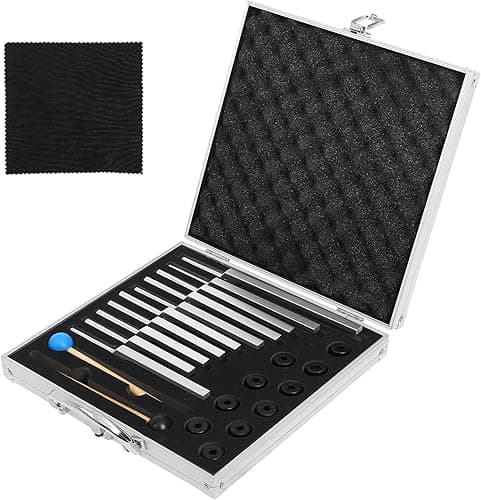
The Solfeggio Tuning Fork Set (7-piece) covers the six core Solfeggio frequencies (396, 417, 528, 639, 741, 852 Hz) plus the 963 Hz "spiritual order" tone often added in modern sets. One fork per traditional chakra in the standard nine-tone tradition, a striker, and a storage case. This is the right pick if you already know you want to cycle through the full scale as a structured ten-minute practice. If "cycle through the chakras" sounds like a foreign language, start with the single fork below and revisit this one in three months.
Best Entry Point: 528 Hz Tuning Fork Set
Woo-Woo Meter: 4 • ~$25
The 528Hz Tuning Fork Set (Solfeggio) is a single unweighted fork engraved at 528 Hz with a striker. It's the cheapest honest way to find out whether daily fork practice is going to stick for you. The 528 Hz framing is spiritual, not acoustic — there's nothing physically special about 528 versus 530 — but if the tradition speaks to you, this is the lowest-risk entry point in the category. Tone sustains for 30 to 60 seconds, the engraving is on the metal, and at $25 you don't need to manifest anything to justify the purchase.
Adjacent Pick: 432 Hz Crystal Singing Bowl (With a Caveat)
Woo-Woo Meter: 4 • ~$60
A note before the recommendation: 432 Hz is not part of the Solfeggio scale. It's a separate "natural tuning" tradition that the internet routinely lumps in, and shoppers ask about it constantly because both frames travel together on YouTube. We'll be the post that says it cleanly: if you want Solfeggio, buy a Solfeggio fork. If you want the 432 Hz tuning experience as a sound bath, the Crystal Singing Bowl 8" (432 Hz) is a beautifully resonant frosted-quartz bowl that fills a room and pairs naturally with breath work. Different tradition, real instrument. We don't mind owning both.
For the deeper bowl decision — quartz vs. bronze, room-filling vs. intimate — our crystal vs. Tibetan singing bowl head-to-head is the sister post.
Alternative: Tibetan Singing Bowl
Woo-Woo Meter: 4 • ~$35
For readers who want a non-tuned, traditional sound-healing instrument and are willing to leave the Solfeggio framework behind, the Tibetan Singing Bowl Set (5.5") is the honest exit. Bronze, hand-hammered, layered overtones, no Hz number on the box because that's not what the tradition cares about. If the Solfeggio frame stops appealing once you read this post, this is where you go.
How to Actually Use Them
A practical ten-minute Solfeggio session, no robes required:
- Strike clean. Hold the fork by the stem. Tap one prong firmly against the rubber striker — not against a hard surface. For a bowl, run the mallet around the rim until the tone blooms.
- Settle. Eyes closed. Bring the vibrating prongs near one ear or place the stem on the breastbone for tactile transfer. Listen for the full sustain — usually 20 to 60 seconds.
- Single-tone or scale. For the 528 Hz fork: stay on the one tone for the full ten minutes, restriking when the sound fades. For the 7-piece set: ninety seconds per fork, ascending through the scale, one full cycle.
- Breathe with it. Inhale on the strike, exhale through the sustain. That's the whole technique.
For the deeper how-to on fork strike technique and weighted vs. unweighted forks, our tuning forks buyer's guide is the longer read. For the bowl side of a meditation kit, our singing bowls guide covers the same ground for the bowl-curious.
The Honest Take — Woo-Woo Meter: 4 / 5
We rate this category a 4 on the Woo-Woo Meter, and we mean every part of that number.
The "ancient sacred Solfeggio" framing is a 1974 invention dressed in medieval clothing. The specific Hz assignments are post-hoc numerology, not preserved Gregorian science. The clinical evidence base is small, mostly underpowered, and weak on replication. We're not going to tell you 528 Hz repairs your DNA, because that claim has no published support and we don't sell fairy tales.
And — the practice is real. A ten-minute session with a well-made 7-piece Solfeggio set is a reliable contemplative anchor that helps a lot of practitioners actually sit still and breathe. The instruments are durable, beautifully made, and cheaper than almost any other meditation device on the market. We'd buy the 7-piece set. We'd start most readers on the single 528 Hz fork for $25 first, just to see if the practice sticks.
What we won't tell you: that the frequencies are tuned to the universe, that they manifest abundance, or that ancient monks knew a healing code modern science suppressed. None of that is true. The forks are still worth owning.
Products mentioned in this post
Solfeggio Tuning Fork Set (7-piece)
Full seven-piece Solfeggio tuning fork set for practitioners and home practice.
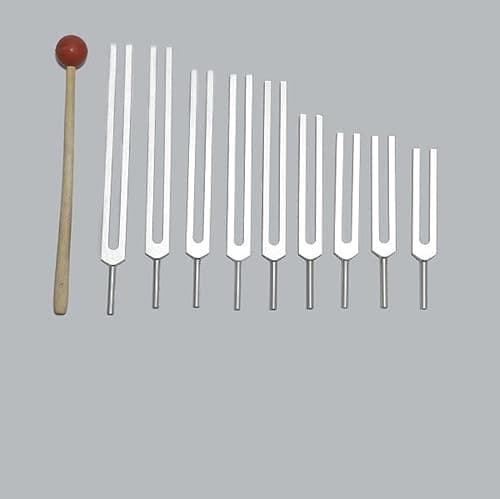
528Hz Tuning Fork Set (Solfeggio)
Solfeggio 528Hz tuning fork — used in chakra and frequency healing practice.
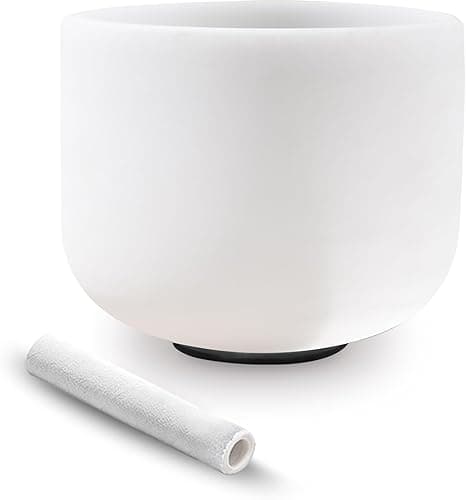
Crystal Singing Bowl 8" (432Hz)
Quartz crystal singing bowl tuned to 432Hz for chakra alignment and sound bath work.
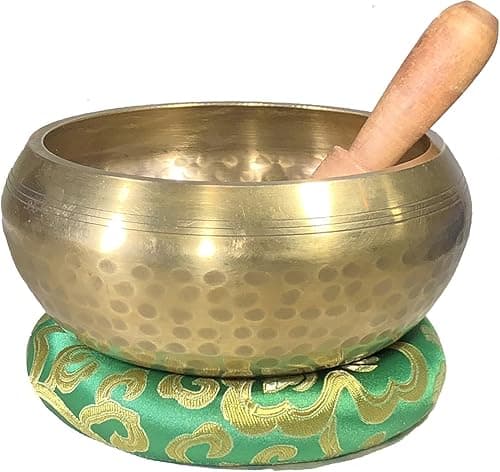
Tibetan Singing Bowl Set (5.5")
Hand-tuned Tibetan singing bowl set for meditation and sound healing.
Frequently asked
- Do Solfeggio frequencies actually work?
- It depends on what 'work' means. As a meditation anchor — a clean tone you sit with for ten minutes a day — yes, they reliably help many practitioners drop into a focused, calmer state, the same way mantra repetition or breath counting does. As a physical healing intervention — DNA repair, cellular tuning, chakra balancing as a measurable event — no, the peer-reviewed evidence does not support those claims. Buy the practice, not the mysticism.
- Are Solfeggio frequencies actually ancient?
- Not in the way the marketing implies. The six core frequencies (396, 417, 528, 639, 741, 852 Hz) were assembled in 1974 by Joseph Puleo via a numerological reading of verse numbers in the Book of Numbers, then mapped onto syllables from the medieval Ut queant laxis hymn. The hymn is genuinely medieval. The Hz assignments and the 'sacred lost frequencies' framing are 20th-century. That doesn't make the practice useless, but it does make the 'ancient' label misleading.
- Is 432 Hz a Solfeggio frequency?
- No. 432 Hz comes from a separate 'natural tuning' tradition and is not part of the six- or nine-tone Solfeggio scale. Both traditions get lumped together in YouTube playlists and product listings, which is where most reader confusion comes from. If you want Solfeggio, buy a Solfeggio fork. If you want the 432 Hz experience as a sound bath, a 432 Hz crystal singing bowl is a different but equally valid instrument — just call it what it is.
- Should I buy a Solfeggio tuning fork set or just listen to a Spotify playlist?
- If you're not sure you'll meditate consistently, start with the free playlist for two weeks. If you're already a daily meditator, the physical fork adds three things a playlist can't: tactile bone-conducted vibration when you place the stem on your breastbone, a single clean unprocessed tone instead of a layered audio track, and a strike-listen-restrike ritual that builds a more structured ten-minute session. For some practitioners that's a meaningful upgrade. For others a playlist is exactly right.
- Which Solfeggio frequency should a beginner start with?
- 528 Hz, almost always. It's the most-cited tone in the tradition, the cheapest to buy as a single fork, and the easiest to find good content around if you want to go deeper. The specific Hz isn't acoustically magic — there's nothing physically special about 528 versus 530 — so if a different frequency in the scale calls to you (174, 396, 639, 852), buy that one instead. Default to 528 Hz only if you have no preference.
Sources
- [1]Amazon product listings (current pricing) · Amazon.com · 2026-04-09
Related reading
More from the desk
Buying guides
Best Tuning Forks for Sound Healing in 2026: An Honest Buyer's Guide
An honest buyer's guide to tuning forks for sound healing — weighted vs. unweighted, the Solfeggio question answered, and three home picks under $50.
Buying guides
Crystal Singing Bowl vs. Tibetan Singing Bowl: An Honest Head-to-Head for Home Meditation
Crystal vs. Tibetan singing bowl, picked honestly: which to buy first for home meditation, what each one sounds like, and the chakra claims to ignore.
Buying guides
Best Singing Bowls for Meditation in 2026: An Honest Buyer's Guide
An honest buyer's guide to singing bowls for meditation — Tibetan vs. crystal, what to look for, and why we rate the whole category a Woo-Woo 5.