Buying guides
Crystal Singing Bowl vs. Tibetan Singing Bowl: An Honest Head-to-Head for Home Meditation
Crystal vs. Tibetan singing bowl, picked honestly: which to buy first for home meditation, what each one sounds like, and the chakra claims to ignore.
“A well-tuned crystal singing bowl is a beautifully made instrument with a real and consistent psychoacoustic effect on practitioners. That's a different kind of useful than a randomized controlled trial — and it's still useful.”
You've been to a sound bath, you liked it, and now you're fifteen minutes deep into Amazon trying to figure out why some bowls are bronze and some are clear quartz, why one is $35 and another is $400, and which one belongs in your living room. The listings are useless. The yoga blogs refuse to pick. The sound-healer storefronts only sell crystal because that's what they sell.
This post picks. We've spent time with both bowls, rated both Woo-Woo 5, and we'll tell you which one to buy first, why, and what the listings are lying about.
The 30-Second Answer
If you're starting from zero: buy a Tibetan bowl. The Tibetan Singing Bowl Set (5.5") at around $35 is warm, forgiving, durable, and the fastest path from listing to actually-meditating. If you've already had a Tibetan bowl on the shelf for six months and want a louder, room-filling instrument: step up to the Crystal Singing Bowl 8" (432Hz) at around $60. Both are Woo-Woo 5, and we mean that as a compliment.
If you only ever buy one, make it the Tibetan. If you build a real practice, the crystal earns its place as the second bowl. That's the entire decision.
Why Both Bowls Live at Woo-Woo 5
Every product on this site gets rated 1–5 on the Woo-Woo Meter. A 5 isn't a strike against the bowl — it's a category. Woo-Woo 5 means we're rating the object on craft, sound, and tradition, not on randomized controlled trials. Trying to cite a clinical paper for a bronze bowl would be the exact dishonesty the methodology is built to avoid.
So the comparison that follows is an instrument review, not a medical one. The right question is "which one will I actually pick up tomorrow morning," not "which one cures inflammation." Neither cures inflammation. Both can anchor a practice that does real things — through attention, breath, and the same parasympathetic shift any focused meditation produces.
What Each Bowl Actually Is
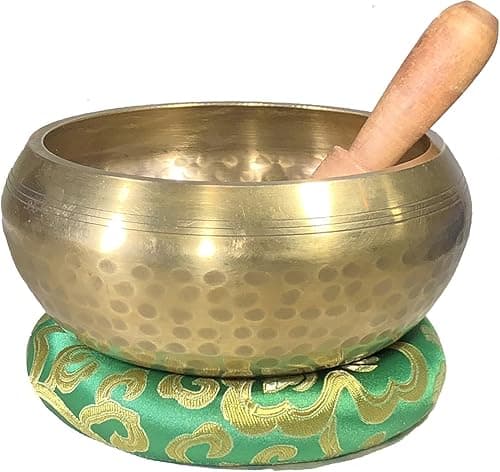
A Tibetan singing bowl is hand-hammered from a bronze alloy, typically 5–7 inches across, made by craftspeople in Nepal, India, or Tibetan diaspora communities. The hammering is what produces the sound: thousands of small irregular divots break the bowl's symmetry just enough that, when struck, it rings with a fundamental note plus two or three overtones beating against each other. The result is a complex, layered, slightly wobbly sound. The tradition is centuries old.
A crystal singing bowl is fused quartz, typically 7–10 inches across, machined to a labeled frequency — most commonly 432 Hz or 528 Hz. The geometry is precise and the surface is smooth, which is why the bowl produces a single sustained note rather than a stack of overtones. The tradition is mostly twentieth-century Western, grown alongside the modern sound-healing movement.
Different physics. Different sound. Different rituals around them. Same goal in your living room.
The Sound, Described in Plain English
A Tibetan bowl sounds like a small ensemble in a bowl. Strike it and you'll hear a fundamental — the lowest, loudest note — plus two or three overtones layered on top. Run the mallet around the rim and the note shifts subtly with your hand pressure. There's a "wobble" to the sound that practitioners describe as warmth or breath. The decay is medium: the sound builds, peaks, and fades over maybe ten to fifteen seconds.
A crystal bowl sounds like one long note from a cathedral. There's no overtone stack — just a clean, sustained drone that fills the room and decays slowly, often over twenty to thirty seconds. It's louder. It carries further. The sustain is what makes crystal bowls so common in YouTube sound baths: hit one and you have thirty seconds of usable audio without doing anything else.
If you want something that pulls your attention into a textured, intricate sound — Tibetan. If you want a single tone that fills a space — crystal.
What You Pay, and What You Get for the Money
Tibetan bowls run $25–$80 at the entry tier. The honest default is the Tibetan Singing Bowl Set (5.5") around $35, which includes a wooden striker and ring cushion — you don't need to chase accessories separately. Above $80 you're paying for size, lineage, or hand-tuning by a named maker. None of it is necessary for a home practice.
Crystal bowls run $50–$200 at the entry tier. The honest default is the Crystal Singing Bowl 8" (432Hz) around $60. Above $150 you're mostly paying for diameter or for boutique colored quartz. The sound difference between a $60 8-inch crystal bowl and a $400 boutique is real, but it's not "ten times better" real.
Pricing is tracked against current Amazon listings and shifts week to week, so treat the dollar figures as anchors, not promises.
At the very low end, both categories have stock-photo trap listings — gorgeous studio photos, no audio sample, generic "sound therapy" copy. Skip them. Look for listings with audio clips or review counts that mention sound specifically.
Forgiveness and Learning Curve
A Tibetan bowl is forgiving. Strike it gently, run the mallet around the rim with sloppy hand position, hold it at a slight tilt — it still rings. Beginners get a satisfying sound on day one. The technique gets better over weeks, but there's no failure mode that sounds like nothing.
A crystal bowl is less forgiving. Press too hard and the rim screeches. Move the mallet too fast and you get a stuttering buzz. Sit it on a slightly uneven surface and the sustain dies. Most beginners need about two weeks of regular play before a crystal bowl sounds intentional rather than accidental.
This is the single biggest reason we put Tibetan first: faster reward, faster habit, faster practice.
Tuning Claims — What's Real and What Isn't
Crystal bowls are genuinely machined to a labeled frequency. Hold a tuner up to a 432 Hz crystal bowl and the meter will agree. Whether 432 Hz has any property that 440 Hz doesn't is a separate, mostly spiritual conversation — but the tuning itself is real.
Hand-hammered Tibetan bowls are a different story. They are not tuned to specific chakra notes. The hammering process is too irregular for that level of precision, and traditional makers were never aiming for it in the first place. Any Amazon listing that promises "F# for heart chakra" or "C for root chakra" on a hand-hammered bowl is guessing or marketing.
The honest framing for buying a Tibetan bowl is: "this one sounds good to me." Not "this one is my throat-chakra bowl." If a seller is leaning on chakra-note matching for a hand-hammered bronze bowl, that's a signal to scroll past. Machine-pressed brass bowls can hit a specific frequency, but they sound flat, which defeats the point.
Use Cases — Pick the Bowl That Fits the Practice
- Solo morning meditation. Tibetan. Smaller, warmer, quieter — good for a room with a closed door and one person sitting.
- Group sound bath at home, yoga class, podcast outro. Crystal. Louder, more presence, fills a larger space without needing amplification.
- Travel. Tibetan. Bronze survives a backpack; quartz doesn't.
- Recording or streaming a session. Crystal. Single clean note mics up better than a stack of overtones.
- Beginner who isn't sure yet. Tibetan. Always.
Build-Quality Red Flags (Both Categories)
Tibetan red flags: machine-pressed bowls dressed up as hand-hammered (look for irregular hammer divots in close-up photos — perfectly smooth means machine-pressed), listings with no audio sample, and "antique" claims with no provenance. The mallet matters too: a cheap felt mallet flattens any bowl. A wooden mallet with a thin leather or suede wrap is the cheapest meaningful upgrade you can make.
Crystal red flags: chips on the rim (a chipped crystal bowl never rings cleanly again), listings without a labeled frequency (if they can't tell you the Hz, they didn't tune it), and plastic mallets. A suede-wrapped striker is what crystal bowls want.
For both: skip any set that doesn't include a ring cushion. The bowl has to sit on a soft surface or the bottom rim deadens the sound. That's a five-dollar accessory that ruins a sixty-dollar bowl if missing.
What About Tuning Forks?
Worth a quick aside because the searches overlap. Tuning forks — like the 528Hz Tuning Fork Set (Solfeggio) or the Solfeggio Tuning Fork Set (7-piece) — are an adjacent tool, not a competing one. Forks produce a focused, narrow tone you hold against the body or near the ear for targeted work. Bowls produce ambient, space-filling sound for a room. Different practice, different purpose. Buy a fork in addition to a bowl, not instead of.
The Honest Take
Both bowls are Woo-Woo 5, and that's the framing the comparison needs. Neither is a wellness device in any clinical sense. Both are well-made instruments that anchor a meditation practice in a way a phone app can't. Pretending they do anything more than that insults the reader, and pretending they do anything less misses why people keep buying them.
Buy the Tibetan Singing Bowl Set (5.5") first, around $35. Sit with it for six months. If the practice sticks and you want a louder instrument for a bigger room, add the Crystal Singing Bowl 8" (432Hz) at around $60. Skip the $400 boutique bowls until you actually know what kind of sound you're chasing — most people never need to.
The bowl is the cheap part of the practice. The practice is the expensive part. If you walk away from this page with one bowl on order and a date for your first sit, we've done the job. For the broader category context — sizing, mallets, cushions, all of it — the parent singing bowls buying guide for 2026 is the next read.
Products mentioned in this post
Tibetan Singing Bowl Set (5.5")
Hand-tuned Tibetan singing bowl set for meditation and sound healing.
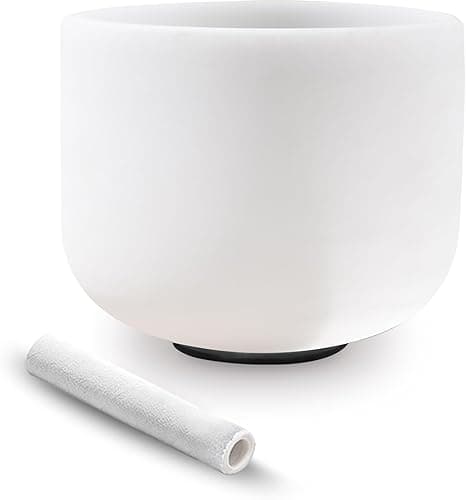
Crystal Singing Bowl 8" (432Hz)
Quartz crystal singing bowl tuned to 432Hz for chakra alignment and sound bath work.
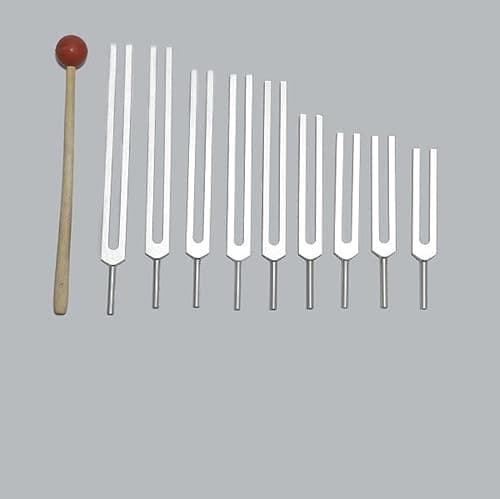
528Hz Tuning Fork Set (Solfeggio)
Solfeggio 528Hz tuning fork — used in chakra and frequency healing practice.
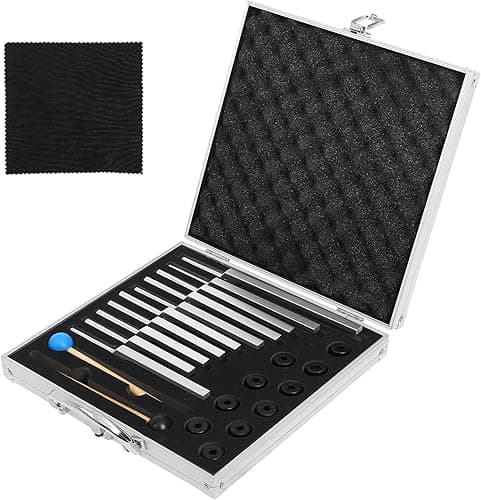
Solfeggio Tuning Fork Set (7-piece)
Full seven-piece Solfeggio tuning fork set for practitioners and home practice.
Frequently asked
- Crystal vs. Tibetan singing bowl — which should I buy first?
- Buy Tibetan first. A 5–6 inch hand-hammered bronze bowl is warmer, more forgiving, more durable, and cheaper than the crystal equivalent — around $35 versus $60 at the entry tier. Beginners get a usable sound on day one with a Tibetan bowl; crystal bowls take about two weeks of practice before they sound intentional. Add the crystal bowl as a second instrument once your practice is real.
- Do crystal singing bowls sound better than Tibetan ones?
- Different, not better. A Tibetan bowl produces a complex, layered sound — a fundamental note plus two or three overtones beating against each other. A crystal bowl produces a single clean sustained drone that fills a room and decays slowly. Tibetan is warm and intricate; crystal is loud and pure. Most home practitioners eventually own one of each.
- Are Tibetan singing bowls really tuned to specific chakras?
- Hand-hammered Tibetan bowls are not tuned to specific chakra notes. The hammering process is too irregular for that level of precision, and traditional makers were never aiming for it. Any Amazon listing that promises 'F# for heart chakra' on a hand-hammered bowl is guessing or marketing. Machine-pressed brass bowls can hit a labeled frequency, but they sound flat. Crystal bowls, on the other hand, are genuinely machined to a labeled frequency like 432 Hz or 528 Hz — that part is real.
- Does the 432 Hz tuning on a crystal bowl actually matter?
- Acoustically, no — 432 Hz has no special property that 440 Hz lacks. The 432 Hz framing is a spiritual tradition within crystal-bowl practice, not a physics claim. If the tradition speaks to you, the bowl will be well-tuned and beautifully made. If it doesn't, you're not missing anything by picking a bowl tuned to a different frequency.
- Can I use a crystal singing bowl outdoors or for travel?
- Pick a Tibetan bowl for travel. Bronze survives a backpack; quartz doesn't. A chip on the rim of a crystal bowl permanently kills its sustain — there's no fixing it. Crystal bowls belong on a stable surface in one room of your home. If you want sound work outside that setting, a Tibetan bowl or a tuning fork is the more durable choice.
Sources
- [1]Amazon product listings (current pricing) · Amazon.com · 2026-04-09
Related reading
More from the desk
Buying guides
Best Singing Bowls for Meditation in 2026: An Honest Buyer's Guide
An honest buyer's guide to singing bowls for meditation — Tibetan vs. crystal, what to look for, and why we rate the whole category a Woo-Woo 5.
Buying guides
Solfeggio Frequencies for Meditation: An Honest Review of the Tones, the Tradition, and the Tools Worth Buying
An honest look at the Solfeggio frequency tradition, what the science actually shows, and which tuning forks and bowls are worth owning for daily practice.
Buying guides
Best Tuning Forks for Sound Healing in 2026: An Honest Buyer's Guide
An honest buyer's guide to tuning forks for sound healing — weighted vs. unweighted, the Solfeggio question answered, and three home picks under $50.