Buying guides
Best Cold Plunge for Small Spaces (2026): Apartment-Friendly Picks That Actually Fit
The best cold plunge for small spaces in 2026: footprint-first picks for renters and apartment dwellers, plus when to skip the plunge entirely.
“Cold plunging probably does something — but the human evidence base is much earlier than the influencer-led narrative suggests. Treat it as a practice, not a prescription.”
You read the Huberman episode summary, watched the Wim Hof clip, priced out a Plunge at five grand, and then looked at your 700-square-foot apartment and the bathroom door that's 28 inches wide. This guide is for that exact moment. We're answering one question: what is the best cold plunge for someone with no yard, no garage, and a partner who has explicitly vetoed putting a six-foot tub in the living room.
The short version: if you have a closet or balcony corner, the Ice Barrel 300 is the one no-DIY plunge with a footprint that actually works in a small apartment. If you're a renter, travel a lot, or your "space" is the bathtub you already have, the BINYUAN Portable Ice Bath Tub folds flat between sessions. And if neither fits, we'll tell you the honest call: skip the plunge, get a sauna blanket, and use a cold shower for the cold half of contrast therapy. You'll get most of the benefit at a fraction of the floor space.
The problem: most "cold plunges" are six feet long
Walk into any cold-plunge SERP in 2026 and you'll see the same three or four products at the top: the Plunge ($5K+ with chiller), the Cold Stoic ($3K+), the Ice Barrel XL, the various stainless tubs. They're built for a backyard, a garage, or a basement utility room. The Plunge alone is roughly 67 inches long and 27 inches wide — that's two-thirds of a Manhattan bathroom, before you account for the chiller unit, the GFCI outlet, and the drain plumbing.
A typical NYC studio bathroom is about 5 by 7 feet, with a tub already taking 60 inches of one wall. A 24-inch-wide closet won't accept anything horizontal. The "best cold plunge 2026" guides almost universally ignore this, because their target reader has a backyard and their commission is bigger on the $5K SKU. We're going to flip the framing: footprint and drainage first, ceremony second.
What "small space" actually means here
Before we name picks, the constraints worth being explicit about:
- Footprint under ~4 square feet. A vertical sit-up form factor (think trash-can shape) or a tub that folds flat between uses.
- Fits through a 30-inch door. Most apartment interior doors are 30 inches; some bathroom doors are 28. If a plunge ships in a single rigid piece wider than that, it isn't getting in.
- Drains into a tub or shower. A 100-gallon plunge needs to go somewhere when you change the water. If you can't gravity-drain into your existing tub, you're bucketing — which works, but you'll do it less often than you think.
- Storable or collapsible. If you can't tuck it away when guests come over, your partner is going to lose patience.
- Total cost under ~$1,000. The whole point of this guide is that the $5K bracket doesn't fit. If we're spending $5K, we're spending it on a gym membership with a plunge.
These are the rules. Every pick below clears them.
Top pick: Ice Barrel 300 (vertical sit-up design)
The Ice Barrel 300 is the only mainstream, no-DIY cold plunge in our catalog with a form factor that genuinely fits in a small apartment. Instead of lying flat like a horizontal tub, you sit upright in it — knees up, shoulders submerged. Footprint is roughly the size of a kitchen trash can: a vertical cylinder you can wedge into a closet, a balcony corner, or the foot of a bedroom. Pricing typically runs around $400 at retail.[^amazon-product-listings]
What you get: a rigid build that holds water reliably, a lid for between-session evaporation control, and a drain plug at the base. It's the only seated-vertical option that doesn't require a contractor.
What you give up, honestly:
- No full-body horizontal submersion. Your shoulders go in; your hips and legs are folded. For most of the published cold-water research, this is fine — chest-and-shoulder immersion is what most protocols use. But if you wanted to lie back and float, this isn't that.
- Smaller water volume = harder to chill cheaply. Less water means it warms up faster between sessions, which actually helps if you're using the freezer-bottle trick (more on that below). It also means you're refilling more often if you don't have a chiller — and you almost certainly don't, in an apartment.
- It's still 100+ pounds of water once filled. Confirm your floor can handle it (usually yes, in a normal residential build) and that it sits over a load-bearing area, not the middle of a 12-foot floor span.
If you have a closet, a balcony corner, or a dead 24-inch square anywhere in your apartment, this is the pick. Woo-Woo Meter: 2.
Best portable / collapsible: BINYUAN Portable Ice Bath Tub
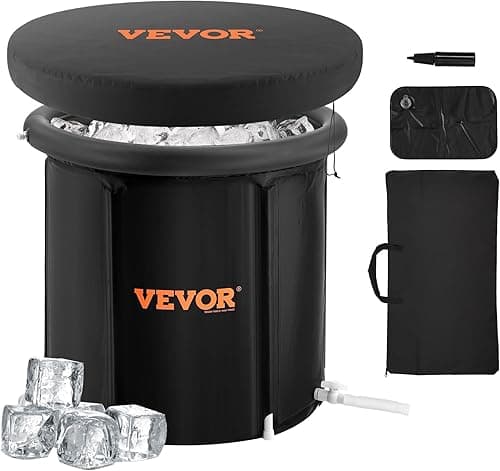
The BINYUAN Portable Ice Bath Tub is the renter-and-traveler answer. It's an inflatable, folds flat between sessions, and at roughly $80 it's the cheapest serious entry point into a real plunge practice.[^amazon-product-listings] You set it up in your bathroom, fill it with cold water and ice, use it, drain it, and roll it up.
The honest tradeoffs vs. the Ice Barrel:
- Temperature stability is worse. Inflatable walls insulate poorly compared to rigid plastic. Your water will warm faster, especially in a heated apartment. For a 5-minute session this is fine; for a 15-minute soak in summer it isn't.
- Setup overhead. It's not "open the lid and step in" — you're inflating, filling, draining. Most users settle into a 2–3×/week cadence rather than daily once the friction is real.
- Material durability. Inflatables are not 5-year products. Treat it as a 1–2 season tool you might replace.
The case for it is unambiguous: if you're a renter who can't commit to a permanent install, if you travel and want to keep a plunge practice on the road, or if you want to test whether you'll actually use a cold plunge before spending five times more, this is the right starting point. Buy it, do six weeks of consistent sessions, and then upgrade to the Ice Barrel if you've stuck with it.
The DIY route: chest freezer or insulated stock tank
A horizontal chest freezer converted to a plunge is the homeowner-with-a-basement answer. It works — there are entire YouTube subcultures around it. We're not recommending it for the apartment audience this guide is built for, and here's why:
- Electrical risk. You're modifying a 120V appliance to hold a human in water. The conversion involves disabling thermostats and adding aftermarket controllers. In a rental, this is a liability event waiting to happen.
- Mold. Freezers aren't designed for standing water. Without aggressive cleaning, you grow biofilm.
- Floor space. A chest freezer is bigger than the Ice Barrel.
- Landlord problems. A modified appliance plumbed for water in a rental unit is a conversation you don't want to have.
If you own a house with a basement and you're handy, sure. If you rent, no. Move on.
What you give up vs. a full plunge
Be clear-eyed about this: a small-space plunge feels different from a six-foot tub at a gym or recovery clinic. You give up:
- Reach. No floating, no full-body horizontal stretch.
- Water volume. Less thermal mass, faster temperature drift between sessions.
- Time-to-chill. Without a chiller, you're using ice — and ice melts faster in a smaller volume.
- Ceremony. A small tub in a bathroom is a practice, not an experience. That's actually the right framing — the evidence base for cold exposure is about consistency, not aesthetics.
Cooling without a chiller: the ice math
Almost no apartment cold plunger runs a chiller. The math on a 50–80 gallon plunge looks like this:
- To drop tap water (typically 65–75°F in summer) to a target of ~50°F, you need roughly 25–40 lbs of ice per session.
- A standard 7 lb bag from a corner bodega runs $3–$5; a 20 lb bag from a grocery store is $5–$8. You're looking at $5–$15 per session in ice.
- The freezer-bottle hack: freeze 3–4 large reusable water bottles (1L+ each) overnight, drop them in instead of buying ice. This works for the vertical form factor especially well, because the smaller water volume responds quickly. Doesn't fully replace a chiller, but it cuts ice spend by 60–80%.
- Ambient cold won't save you below 55°F. If you're hoping to stash the tub on the balcony in summer and let it self-cool, it won't. Even in winter, north-side balconies in most US cities only reliably hit sub-60°F water for two to three months.
The honest read: a small-space plunge without a chiller works as a cold-immersion practice, with sessions in the 55–60°F range most of the year. To consistently hit the 50°F target Wim Hof types reference, you're either buying ice every session or you're not in an apartment.
Setup, drainage, and where to actually put it
The questions that matter that no other guide covers:
- Bathroom or balcony? Bathroom is easiest — drain runs right into the tub or shower. Balcony works if you have a working drain and don't mind hauling water in. Bedroom corner is the worst option (leak risk, no drain).
- Drainage. A standard garden-hose-end on a vertical plunge gravity-drains into a tub in 10–15 minutes. Without that, you're bucketing 50+ gallons. People who bucket do not stay consistent.
- Leak liability. If you live above another unit, a single 50-gallon spill is a five-figure insurance claim. Use a containment tray or a waterproof mat under any plunge you put on a non-tile surface. This is the thing nobody mentions.
- Landlord considerations. Most leases don't explicitly prohibit a plunge, but they do prohibit "alteration" and "water damage." A non-permanent, draining-into-tub setup is fine for almost any lease. A chest-freezer conversion is not.
The smaller alternative: skip the plunge, do contrast
If reading the above made you tired, here's the honest off-ramp: most of the published cold-water immersion benefits — mood, alertness, post-exercise inflammation — are also achieved by contrast therapy, which you can do with zero floor space.
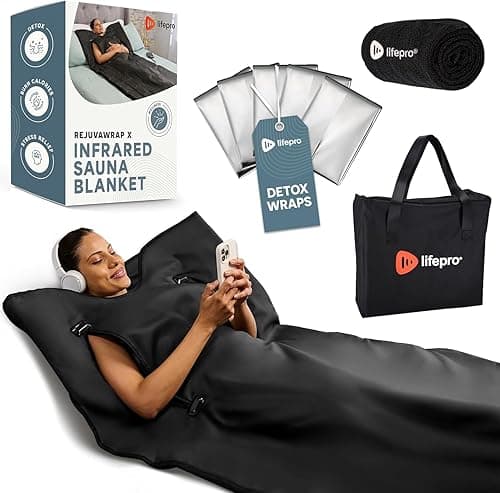
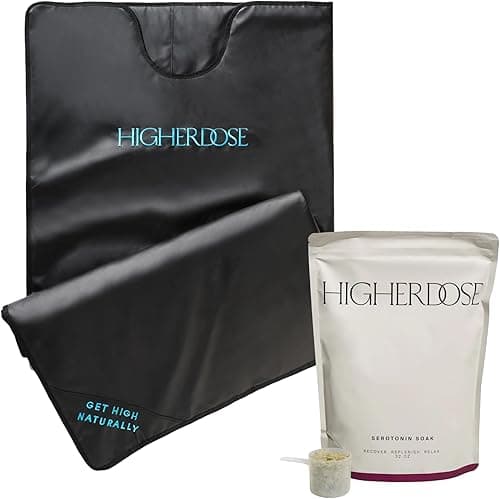
The setup: a sauna blanket for the heat side, your existing shower for the cold side. The LifePro Infrared Sauna Blanket at around $250 is the budget pick; the HigherDOSE V4 at around $600 is the premium build.[^amazon-product-listings] Either one rolls up under your bed. Heat for 30 minutes, cold shower for 2–3 minutes, repeat. Total floor space: zero.
This is not a "settling for less" call. For 600-square-foot apartments where the plunge is genuinely going to be a friction point, contrast-via-blanket is the better long-term practice — because the practice you'll actually do beats the gear you bought and gave up on.
What the evidence actually says
The published cold-water research is real but earlier-stage than the influencer narrative suggests. A 2022 review of voluntary cold-water exposure studies found genuine signals for inflammation, brown-fat activation, and mood, but flagged that most trials were small, short, and used heterogeneous protocols.[^espeland-cold-water-2022] Translation: cold exposure probably does something, but the longevity and metabolic claims that drive the $5K-tub purchase are still ahead of the evidence.
For a small-space buyer, this matters: don't spend like the science is settled. Spend like you're testing a practice. The $80 BINYUAN is a perfectly defensible test rig. If you're still using it weekly six weeks from now, then we can talk about the $400 Ice Barrel as an upgrade.
The honest take
Woo-Woo Meter: 2. Cold exposure has real published evidence for inflammation, mood, and brown-fat activation; the longevity, immune, and metabolic claims still outrun the literature. In an apartment, the practice is what matters; the gear just has to remove enough friction that you keep doing it.
Our recommendations, by reader profile:
- Closet or balcony corner, want zero-DIY: the Ice Barrel 300. The vertical sit-up design is the small-space pick.
- Renter, traveler, or first-time tester: the BINYUAN Portable Ice Bath Tub plus a bag of ice. Cheapest way to find out if you'll stick with it.
- No floor space, partner veto, or you've tried plunges and bounced off: skip it. Get a LifePro or HigherDOSE sauna blanket and use a cold shower for the cold half. You'll get most of the upside at a fraction of the floor space.
- Already paying for a gym with a plunge: just use that. Honest answer.
If you want the longer comparison between the heat side and cold side of recovery, the cold plunge vs sauna blanket post covers the next decision after this one. And if compact recovery is your theme, the best compact massage gun for travel writeup pairs naturally with this one. The rating logic we use across the site lives in what is the Woo-Woo Meter.
Products mentioned in this post
Ice Barrel 300 Cold Plunge
The portable cold plunge that brought ice baths into normal homes.
BINYUAN Portable Ice Bath Tub
Foldable budget ice bath — the cheapest way to start a cold plunge practice.
LifePro Infrared Sauna Blanket
Amazon's best-selling infrared sauna blanket — recovery and relaxation in one wrap.
HigherDOSE Infrared Sauna Blanket V4
Premium medical-grade infrared sauna blanket with a 90-day trial — the influencer favorite.
Frequently asked
- What is the smallest cold plunge that actually fits in an apartment?
- The Ice Barrel 300 is the only mainstream, no-DIY cold plunge with a footprint small enough for most apartments. Its vertical sit-up form factor is roughly the size of a kitchen trash can — you sit upright with shoulders submerged rather than lying flat. The other apartment-viable option is an inflatable like the BINYUAN, which folds flat between sessions and stores in a closet.
- Can you put a cold plunge in a bathroom?
- Yes, and it's the best apartment location for one specific reason: drainage. A vertical plunge with a hose-end drain plug gravity-drains into the bathtub in 10–15 minutes, which is the difference between a sustainable practice and an abandoned one. The constraints are floor weight (any normal residential floor handles a 100-gallon plunge fine over a load-bearing area) and clearance (most plunges fit through a 30-inch bathroom door; verify your specific door before buying).
- Do you need a chiller for a cold plunge in an apartment?
- Almost no apartment cold plunger uses a chiller — they're expensive, loud, and require dedicated GFCI outlets that most rentals don't have in the right places. The realistic alternative is ice, at roughly 25–40 lbs per session to bring tap water to ~50°F, which costs $5–$15. The freezer-bottle hack (freezing 3–4 large reusable bottles overnight and dropping them in instead) cuts ice spend 60–80% and works especially well with smaller-volume vertical plunges.
- How much does the cheapest cold plunge for an apartment cost?
- The BINYUAN Portable Ice Bath Tub runs around $80 and is the cheapest legitimate way to start a cold plunge practice indoors. The Ice Barrel 300 sits at around $400 for a no-DIY rigid build. Both are well below the $3,000–$5,000 bracket of marquee plunges like Plunge or Cold Stoic, which were never designed for apartment use anyway.
- Is a cold shower as effective as a cold plunge?
- Mostly, for the most-cited benefits. The published evidence base for cold-water immersion is strongest for mood, alertness, and post-exercise inflammation, and a cold shower hits all three. The thing a plunge gives you that a shower doesn't is full chest-and-shoulder immersion at a controlled temperature for a sustained duration — which matters more for cold-adaptation training than for the daily benefits. For most apartment dwellers, contrast therapy with a sauna blanket plus cold shower covers the high-leverage upside without the floor-space problem.
Sources
- [1]Health effects of voluntary exposure to cold water — a continuing subject of debate · International Journal of Circumpolar Health · 2022-09-18
- [2]Amazon product listings (current pricing) · Amazon.com · 2026-04-09
Related reading
More from the desk
Category deep-dives
Cold plunge vs sauna blanket: which one actually moves the needle?
Two of the most popular hormetic-stress wellness practices compared. The science, the practicality, and which one to start with.
Buying guides
Best infrared sauna blanket 2026: how to pick one (and when to buy a tent instead)
Best infrared sauna blanket in 2026 — HigherDOSE V4 vs LifePro vs the $150 generic, plus the compliance math nobody else does and when to buy a tent instead.
Buying guides
Theragun vs Hypervolt: which percussion massager is actually worth it in 2026
Theragun vs Hypervolt in 2026 — stall force, noise, ergonomics, and the compliance math nobody else does. Plus a $50 alternative that fits 80% of buyers.