Comparison
Oura Ring Gen 4 vs Whoop 4.0
The two flagship recovery wearables compared head-to-head: hardware, subscription, sleep, HRV, and which one fits which person.
If you're shopping the recovery-tracker category in 2026, this is the matchup that matters. Oura and Whoop sit at the top of the pile, both have strong sleep and HRV science behind them, and they take very different approaches to hardware, subscription, and the data they show you.
Here's our straight-talk comparison: who each one is for, what each one is missing, and what we'd actually pay for.
Side by side
The full spec sheet
| Spec | 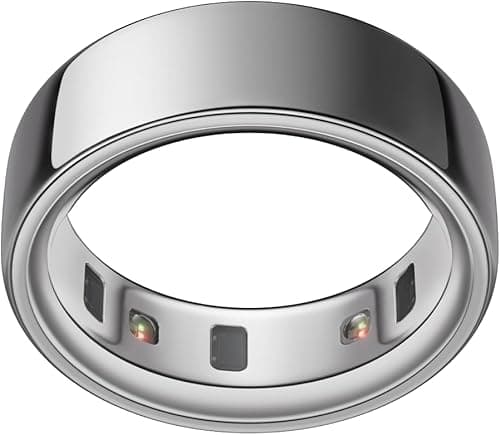 Oura Oura Ring Gen 4 - Heritage $349 | 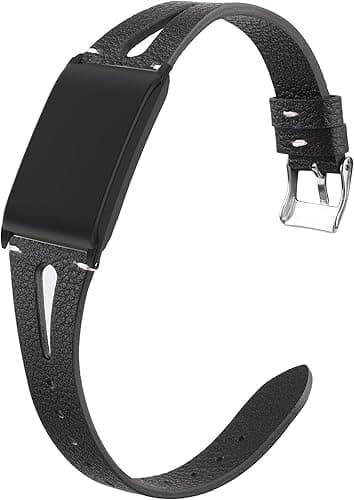 Whoop Whoop 4.0 Strap $239 |
|---|---|---|
| Woo-Woo Meter | ||
| Form factor | Smart ring | Wrist or upper-arm strap |
| Upfront price | $349 | $239 |
| Subscription | Optional ($5.99/mo) | Required ($30/mo or annual) |
| Battery life | ~4–7 days | ~4–5 days |
| Sleep tracking | Yes — strong | Yes — strong |
| HRV tracking | Nightly | Continuous |
| Skin temperature | Yes | Yes |
| Blood oxygen | Nightly | Spot + continuous |
| Step counting | Yes | No (deliberate) |
| Strain / readiness model | Readiness Score | Strain + Recovery |
| Display | No (phone app only) | No (phone app only) |
| Water resistance | 100m | 10m |
Our take
Pick the one that fits.
Verdict
Pick Oura if…
You want a 'set it and forget it' sleep and HRV tracker, you don't want a subscription you can't escape, and you want something invisible under work clothes.
Verdict
Pick Whoop if…
You train hard most days and want the cleanest 'how hard should I push today' output of any wearable. You're fine paying every year because hardware upgrades come with the subscription.
The hardware
Oura is a ring. Whoop is a strap. That single fact decides most of this for most people. Oura is invisible under any work outfit, never has to come off, and charges in a tiny dock once every few days. Whoop is more sensor-rich (skin temperature, blood oxygen, more granular HRV sampling) but it's a band on your wrist or upper arm that you have to remember to charge, and it's harder to ignore at a wedding.
Both feel premium. Both are well-built. Both have honest customer-service track records.
The subscription question
This is where they actually diverge. Oura is one upfront payment for the ring plus an optional subscription for the deeper analytics — and crucially, the basics still work without the subscription. Whoop is a subscription-only model: the band is technically free or low-cost up front, but you pay every year, and if you stop paying, the band stops working.
Whoop fans love this because it means hardware upgrades come "for free" (you get the new band when it ships). Oura fans hate the idea on principle. Both are defensible business models. Pick the one whose incentives match your purchasing reflex.
What each one is best at
Sleep tracking — Honestly, both are good. Oura has the longer published research library and more independent third-party validation studies. Whoop has more sensors per session but less external validation.
HRV and recovery — This is Whoop's home turf. The strain/recovery framework is the cleanest "what should I do today" output of any consumer wearable, and the daily cycle is hard to beat for athletes. Oura's "Readiness Score" is conceptually similar but feels less actionable for people training hard.
Daily wearability — Oura wins by a mile. The ring just disappears.
Sport-specific tracking — Whoop, especially for strength sports.
Which one we'd actually buy
If you sleep poorly and just want to fix that without thinking about it, get the Oura. If you train hard every day and want a single number telling you how hard to push, get the Whoop. Both are excellent at their specialty. Neither is a bad choice.
Frequently asked
- Can I use Oura without the subscription?
- Yes — the basic sleep, HRV, and activity tracking still works. The subscription unlocks the deeper analytics, trends, and content. Unlike Whoop, the hardware doesn't get bricked if you stop paying.
- Is Whoop more accurate than Oura?
- On a per-session sensor basis, Whoop samples more aggressively. On peer-reviewed validation, Oura has the longer track record. For most users the practical difference is small — the bigger differentiator is what each device is designed to optimize for.
- Which has better sleep tracking?
- Both are at the top of the consumer category. Oura has more published validation against polysomnography. Whoop has slightly richer in-session sensor data. Either is a solid choice for sleep.
- Can I wear them in the shower or swimming?
- Yes for both. Oura is rated to 100m. Whoop is rated to 10m and is fine for showers and pool swims.
Sources
- [1]An Overview of Heart Rate Variability Metrics and Norms · Frontiers in Public Health · 2017-09-28
- [2]Oura Research Library · Oura · 2026-01-01unverified